Citizens band radio
A license-free shortwave two-way radio service for personal and business use.
Last updated
Citizens band radio, or CB radio, is a short-range, two-way voice communication system that operates on the 27 MHz band (also known as the 11-meter wavelength) in the high-frequency range. It is a type of land mobile radio service, distinct from other personal radio services like FRS, GMRS, MURS, UHF CB, and amateur (“ham”) radio. In most countries, no license is required to use CB, and it can be used for both business and personal conversations.
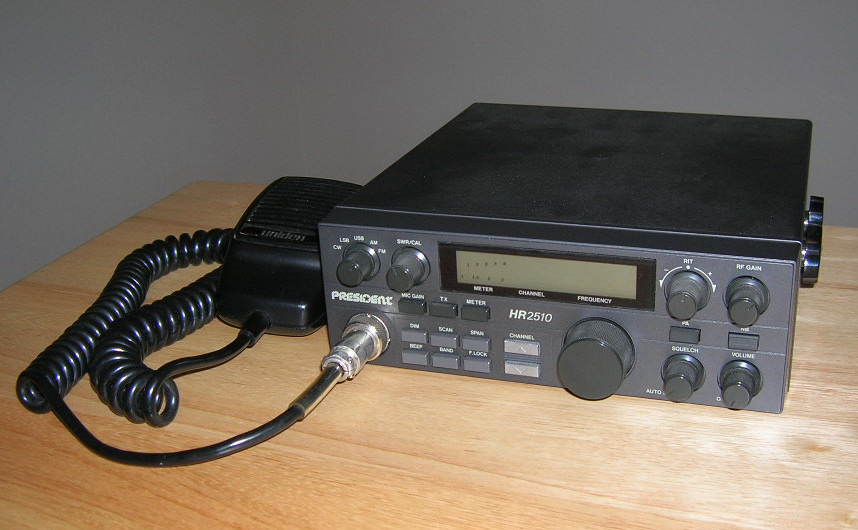
Like other land mobile services, multiple users in the same area share a single frequency channel, but only one person can transmit at a time. Radios normally sit in receive mode, listening for others on the channel.
To speak, users press a “push-to-talk” button, which activates the transmitter. In the US, Canada, the EU, and the UK, transmitter power is capped at 4 watts for AM and FM, and 12 watts PEP for SSB. Despite these limits, illegal amplifiers are commonly used to boost range.
Antennas
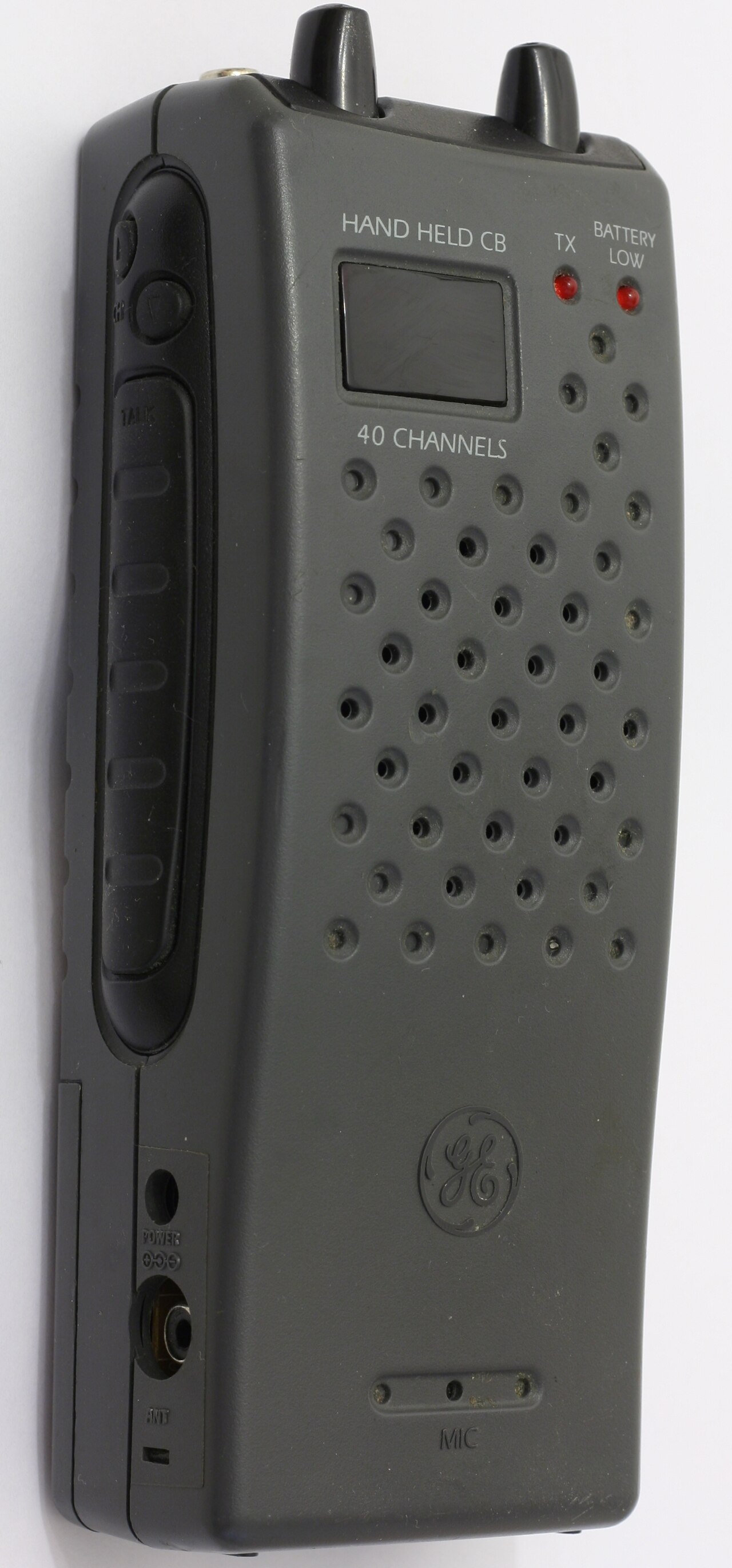
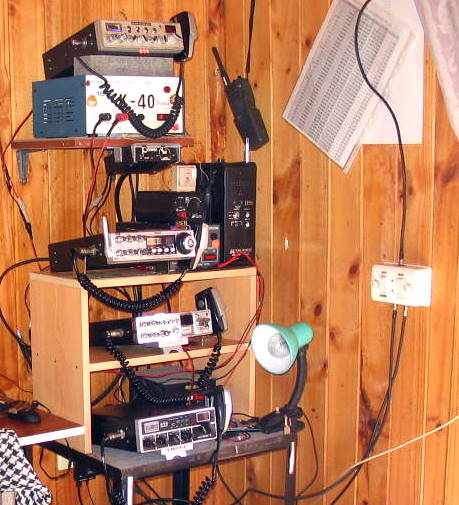
With a standard omnidirectional vertical antenna, CB radios typically achieve a line-of-sight range of 5 to 30 kilometers, depending on terrain. However, changing radio propagation conditions can sometimes allow communication over much greater distances. Base stations can also be connected to directional Yagi–Uda antennas, often called beams or Yagis.
Many countries have created similar radio services, sometimes under different names—like Canada’s General Radio Service—but they generally use the same 26–28 MHz frequencies, have similar technical standards, and serve similar purposes. Even when a license is required, eligibility is usually straightforward. Some nations also offer personal radio services in the UHF band, such as Europe’s PMR446 and Australia’s UHF CB.
History
United States
United States
The CB radio service began in the United States as one of several personal radio services regulated by the FCC. These services were introduced in 1945 to allow citizens a radio band for personal communication, including radio-controlled model airplanes and family or business conversations. The original CB radios, from 1948, operated on the 460–470 MHz UHF band and came in two classes: “A” and “B.” Class B radios had simpler technical requirements and a narrower frequency range. Al Gross founded the Citizens Radio Corporation in the late 1940s to manufacture Class B handhelds for the public.
Quick Facts
- Frequency band
- 27 MHz (11-meter wavelength)
- Typical range
- 5 to 30 km (line of sight)
- Original uhf band
- 460–470 MHz (Class A and B, 1948)
- Original number of channels
- 23
Facts from the source article.
Lore & Background
The citizens band radio service originated in the United States as one of several personal radio services regulated by the Federal Communications Commission (FCC), beginning in 1945. In 1948, original CB radios operated on the 460–470 MHz UHF band, with two classes: A and B. Al Gross established the Citizens Radio Corporation during the late 1940s to manufacture Class B handhelds, selling over 100,000 units primarily to farmers and the US Coast Guard. On September 11, 1958, CB service Class D was created on 27 MHz, which became what is commonly known as Citizens Band. Only 23 channels were available; the first 22 came from the former amateur radio service 11-meter band, and channel 23 was shared with radio-controlled devices.
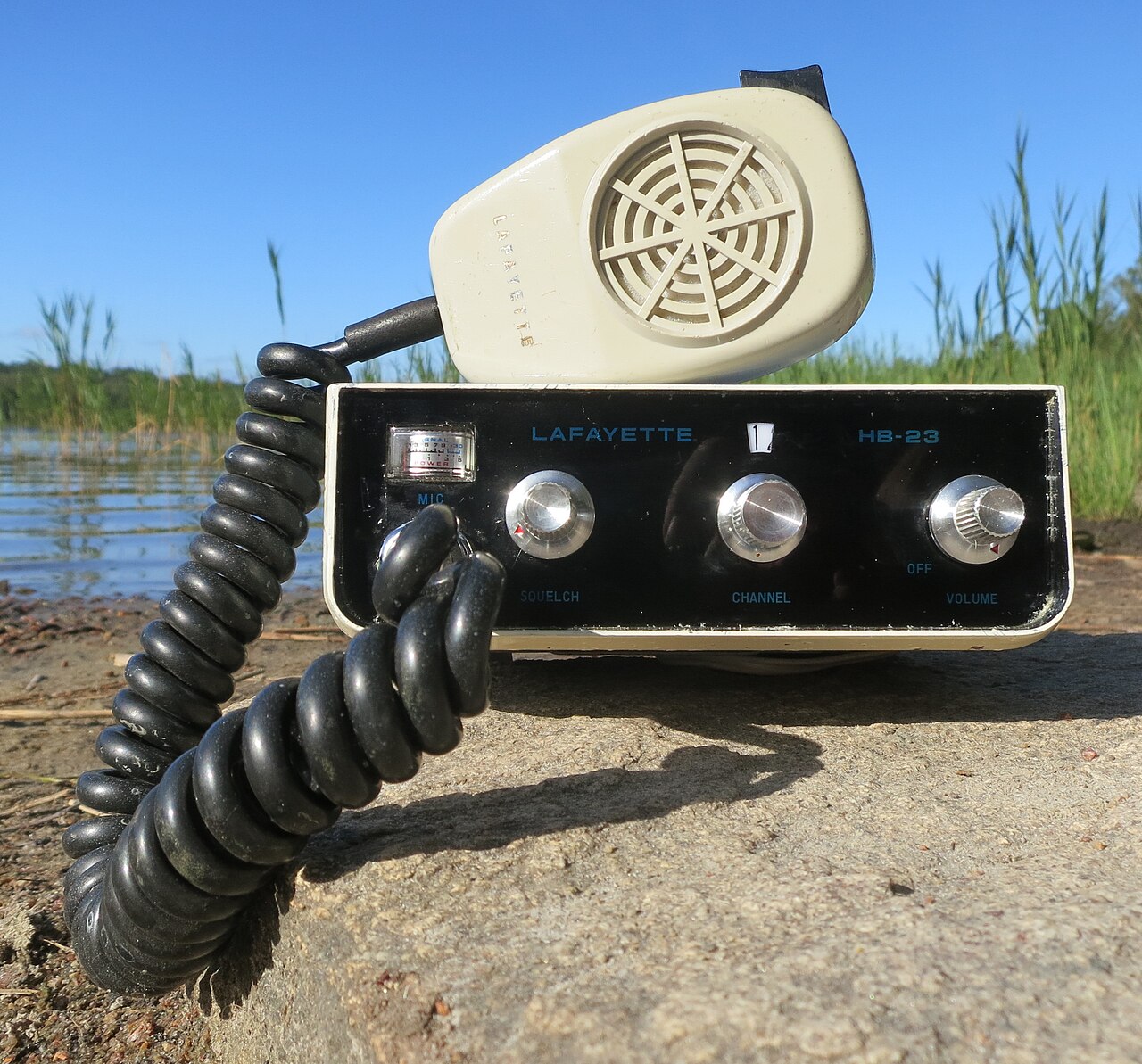
During the 1960s, the service was used by small businesses, truck drivers, and radio hobbyists. By the late 1960s, advances in solid-state electronics reduced the weight, size, and cost of radios, giving the public access to a communications medium previously limited to specialists.
CB clubs formed, and a CB slang language evolved alongside ten-code similar to that used in emergency services. After the 1973 oil crisis, the U.S. government imposed a nationwide 55 mph speed limit, and drivers—especially commercial truckers—used CB radios to locate fuel, notify others of speed traps, and organize blockades and convoys during a 1974 strike. The radios were crucial for independent truckers paid by the mile.
Originally, CB radios required a callsign and a purchased license ($20 in the early 1970s, reduced to $4 on March 1, 1975). However, during the peak of the CB craze, many people ignored the requirement and invented their own nicknames ("handles").
Lax enforcement led to widespread disregard of regulations on antenna height, distance communications, licensing, call signs, and transmitter power. Individual licensing ended on April 28, 1983. Multiple countries have created similar radio services with varying technical standards and licensing requirements, often using similar frequencies (26–28 MHz) and technical standards.
Origins and the Shift to 27 MHz
The CB radio service traces its roots to 1945, when the FCC set aside spectrum so ordinary Americans could communicate by radio for personal purposes like model-airplane control and family or business coordination. The earliest designs targeted the 460–470 MHz UHF band, split into Class A and Class B units. Al Gross's Citizens Radio Corporation built over 100,000 Class B handhelds in the late 1940s, selling mainly to farmers and the Coast Guard. Yet UHF hardware proved too bulky and expensive for mainstream consumers.
The turning point came on September 11, 1958, when the FCC created Class D service on the 27 MHz band, drawing 22 channels from the former amateur 11-metre allocation and adding a 23rd shared with radio-control devices. This frequency, still regulated under Part 95 of the Code of Federal Regulations since the 1970s, is what most people recognize as Citizens Band. The old UHF spectrum was largely reassigned to business and public-safety users, with Class A becoming the ancestor of today's GMRS and Class B a more distant forebear of the Family Radio Service.
The 1970s Craze and Trucker Culture
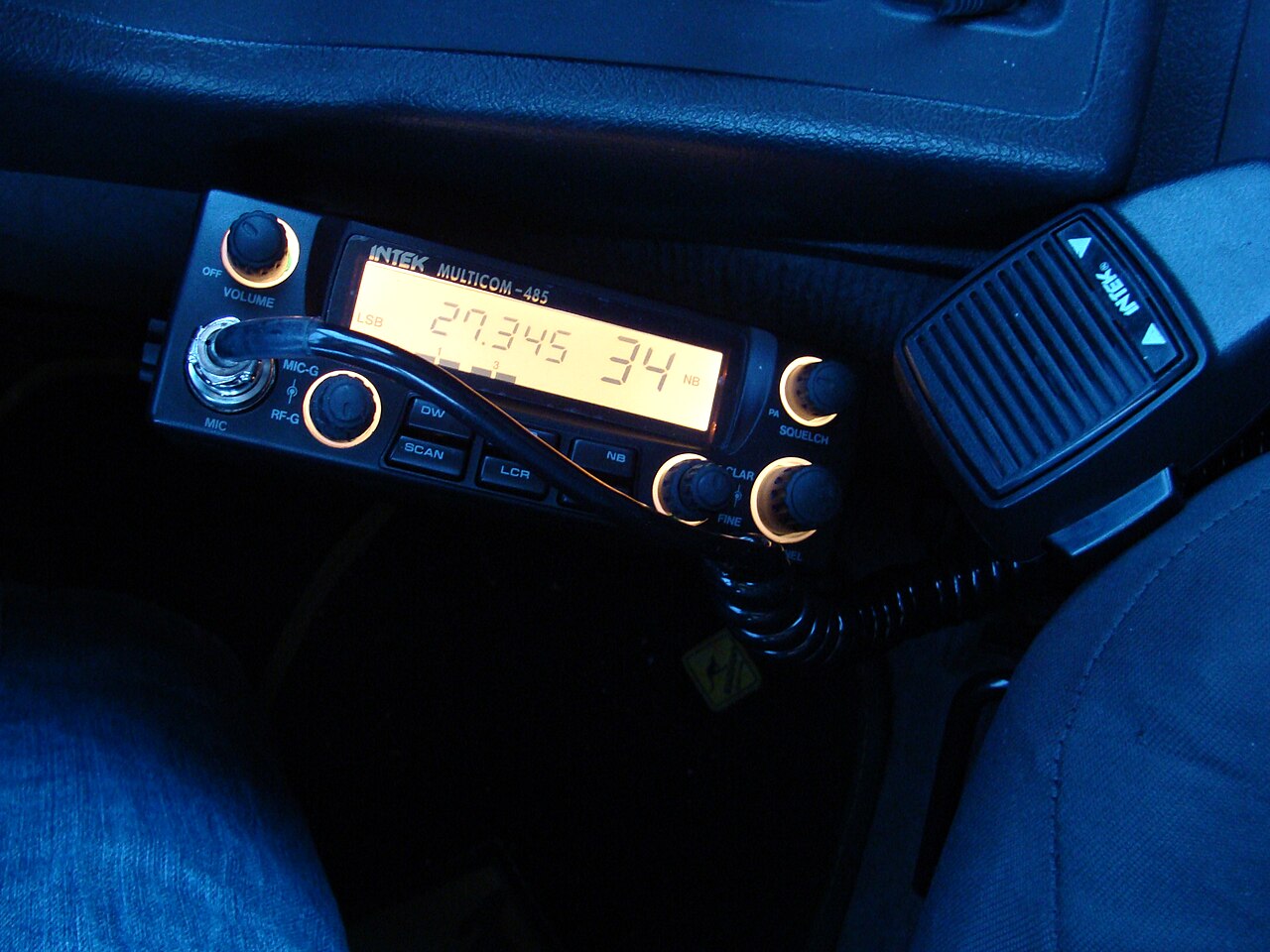
The 1973 oil crisis supercharged CB radio's popularity. With a federal 55 mph speed limit in place and fuel rationing widespread, independent truckers—who were often paid per mile and saw their earnings shrink under the new speed cap—relied on CB channels to find stations with fuel, warn about speed traps, and coordinate convoys and blockades during a 1974 strike against trucking regulations. The medium then spilled into mainstream American life. Early rules required a purchased license (costing $20 in the early 1970s, later cut to $4) and an official callsign, but at the peak of the craze most users simply invented colourful handles and ignored antenna-height and power limits.
Lax enforcement accelerated the disregard of regulations. Individual licensing finally ended on April 28, 1983. The cultural footprint was enormous: films like Smokey and the Bandit, Breaker! Breaker!, Handle with Care, and Convoy, plus TV shows including The Dukes of Hazzard and the animated CB Bears, all leaned heavily on CB radio as a symbol of 1970s American rebellion and community.
How CB Radio Actually Works
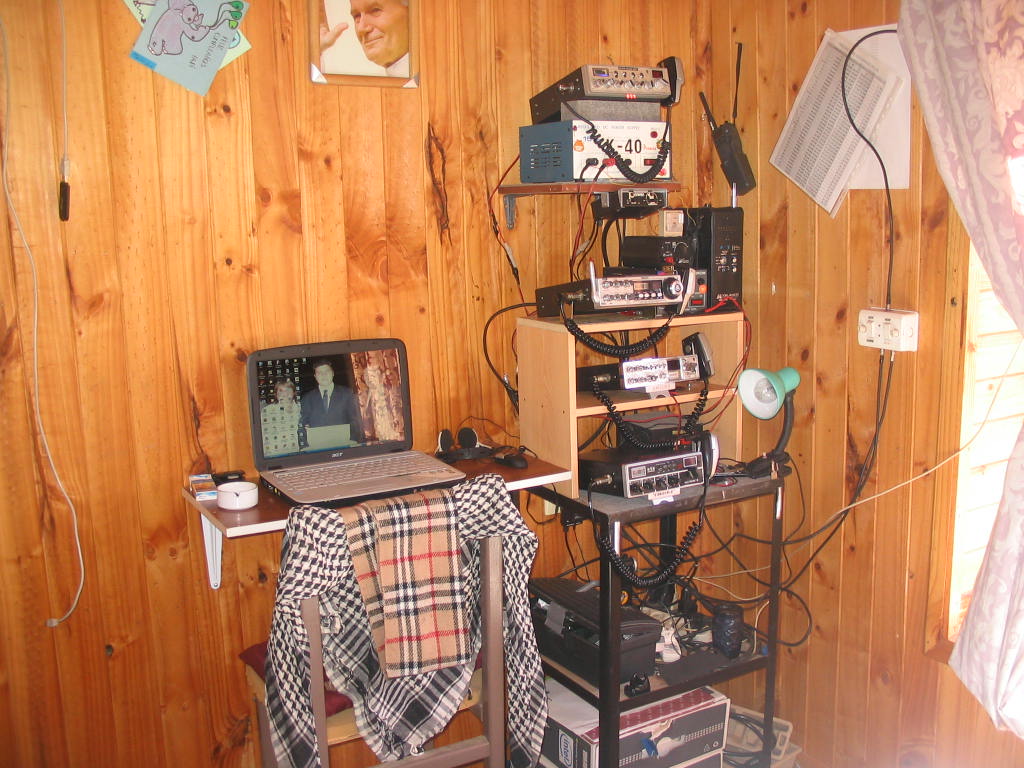
CB radio operates as a land-mobile, one-to-many voice system in the high-frequency shortwave band near 27 MHz, the 11-metre wavelength. Multiple radios in a given area share a single frequency channel, but only one transmitter can be active at any moment. A set sits in receive mode by default, listening to others on that channel; when a user wants to speak, they press a push-to-talk button that activates the transmitter, and participants on the channel take turns. In the United States, Canada, the EU, and the UK, transmitter output is capped at four watts for AM and FM modes and 12 watts PEP for single-sideband, though illegal amplifiers to extend range remain common.
A typical omni-directional vertical antenna yields roughly 5 to 30 kilometres of line-of-sight range, varying with terrain, though unusual propagation conditions can occasionally carry signals much farther. Fixed base stations sometimes employ directional Yagi-Uda antennas, colloquially called a beam or simply a Yagi, to push coverage in a specific direction. CB is legally distinct from FRS, GMRS, MURS, UHF CB, and the Amateur Radio Service, each of which occupies its own regulatory niche.
A Global Family of Personal Radio Services
The concept of a license-light, personal two-way radio service is not uniquely American. Numerous countries have established analogous allocations, often under different names—Canada, for example, calls its version the General Radio Service—yet they frequently occupy the same 26–28 MHz window and follow comparable technical standards. Where licensing is required, eligibility criteria tend to be straightforward. Beyond the HF band, several nations also offer personal radio services in the UHF spectrum: Europe's PMR446 and Australia's UHF CB are prominent examples.
The U.S. itself maintains a broader ecosystem of personal radio allocations, including the VHF high-band Multi-Use Radio Service and the various descendants of the original 1945 UHF classes. An unsuccessful 1973 petition to create a Class E CB service at 220 MHz, then part of the amateur 1.25-metre band, was blocked by amateur radio organizations and others, illustrating how the boundaries between personal, business, and amateur spectrum have long been contested. Together, these services form a global patchwork of short-range voice communication tailored to local regulatory cultures while sharing the common goal of putting a simple two-way radio within reach of ordinary citizens.
Reader's Guide
The growing popularity of CB radios in the 1970s was frequently depicted in film, television, music, and books, cementing CB radio's status as a nationwide craze in the United States. Movies such as Smokey and the Bandit (1977), Breaker!
Breaker! (1977), Handle with Care (also released as Citizens Band; 1977), and Convoy (1978) made heavy reference to the phenomenon, as did television series such as Movin' On (debuted in 1974), The Dukes of Hazzard (debuted in 1979), and the animated series CB Bears (debuted in 1977). The phenomenon also inspired several country and rock music songs in 1975 and 1976, including C. W. McCall's novelty song "Convoy" (1975), which climbed to #1 on the Billboard Hot 100 in January 1976. Betty Ford, the First Lady of the United States, used the CB handle "First Mama."
CB radio's legacy includes its role as a widely accessible, license-free communication medium that empowered individuals and small businesses. It demonstrated the public's appetite for personal two-way radio, influencing later services such as FRS, GMRS, and MURS.
The service continues to be used today, with illegal amplifiers to increase range being common. Base stations are usually operated on household AC power but can also be used from a vehicle's DC power system or an emergency battery source. CB radios using an omni-directional vertical antenna typically have a range of about 5 to 30 km depending on terrain for line-of-sight communication, though various radio propagation conditions may intermittently allow communication over much greater distances.
Frequently Asked Questions
Do I need a license to use a CB radio?
In most countries, no license is required to operate CB radio, making it freely available to the general public. This license-free status is a defining feature that separates it from regulated services like amateur radio.
How far can a CB radio signal typically reach?
Under normal line-of-sight conditions, CB signals generally travel between 5 and 30 kilometers. Actual range varies depending on terrain, antenna height, and the transmitter's output power.
What are the maximum transmitter power limits for CB radio?
In the US, Canada, the EU, and the UK, transmitters are capped at 4 watts for AM/FM modes and 12 watts PEP when using SSB. These limits help manage interference among the many users who share each frequency channel.
More in Radio Spectrum
Sources
Compiled from Wikipedia and the sources listed below. Text from Wikipedia is available under CC BY-SA 4.0; this entry is adapted from it.
- Wikipedia: Citizens band radio (CC BY-SA 4.0).
Spotted an error? Know more?
Reader corrections go straight into our review queue. Suggest an edit · How this site is sourced