Frequently Asked Questions
The most-asked questions about quadcopters and multirotor drones.
What is a quadcopter?
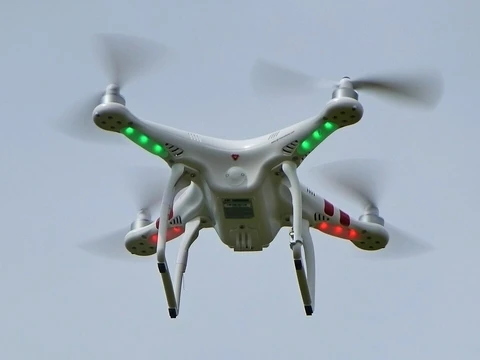
A quadcopter is a small unmanned aircraft that uses four rotating propellers mounted at the corners of a square or X-shaped frame to generate lift and thrust. It steers and changes altitude by spinning each motor at a slightly different speed, eliminating the need for any fixed-wing control surfaces.
How does a multirotor drone differ from a quadcopter?
Multirotor is the umbrella term for any unmanned aircraft powered by multiple rotors, while quadcopter specifically denotes a four-rotor configuration. Hexacopters (six rotors) and octocopters (eight rotors) sit under the multirotor label and generally trade a bit of agility for greater redundancy and payload headroom.
What are the core components of a typical multirotor build?
At minimum you need a structural frame, one electronic speed controller per motor, brushless motors with matched propellers, a flight controller running stabilization firmware, a lithium-polymer battery, and a radio transmitter paired with an onboard receiver. More advanced builds layer in GPS modules, a camera, and a telemetry link for real-time data.
Who are some key figures in the drone world?
Frank Zapala, a former U.S. Air Force pilot, is widely credited with popularizing the consumer quadcopter after his 2008 YouTube flight video and the HeliMax product line that followed. On the open-source side, the developer communities behind PX4 and ArduPilot have shaped how hobbyists and commercial operators program and tune their aircraft.
What regulations should a new pilot know about?
In most countries, operators must register their drone with the national aviation authority and observe limits on maximum altitude, visual-line-of-sight operation, and restricted zones near airports. In the United States, the FAA's Part 107 rules govern commercial flights, while recreational pilots fall under the 2021 recreational rule and the TRUST online course requirement.
What is the rough history of the modern quadcopter?
Early multirotor research appeared in the 1980s within military labs, but the hobbyist-friendly quadcopter really emerged between 2008 and 2012 as affordable brushless motors, lightweight LiPo batteries, and open-source flight controllers became widely available. The 2013 launch of the DJI Phantom is often cited as the moment stable, camera-equipped quadcopters crossed into mainstream consumer hands.
What are the most common real-world uses for multirotor drones?
They are routinely deployed for aerial photography and videography, agricultural crop scouting, infrastructure inspection, search-and-rescue sweeps, and experimental package delivery. In the competitive scene, FPV multirotors race in organized leagues on both indoor and outdoor circuits around the globe.
What is a flight controller and why is it important?
The flight controller is the onboard computer that reads sensor inputs—gyroscope, accelerometer, barometer, GPS—and adjusts each motor's speed hundreds of times per second to keep the aircraft level and responsive. The firmware you choose, whether Betaflight, ArduPilot, or PX4, largely determines the tuning options, failsafe behaviors, and flight modes available to the pilot.
What is FPV flying?
FPV, or first-person view, is a piloting style in which the operator watches a live video feed from a small camera mounted on the drone, usually through a headset, creating the sensation of physically being the aircraft. It is the foundational discipline behind drone racing and freestyle acrobatics.
Where should a complete beginner start?
The most practical first step is to pick up a small, inexpensive micro or 'whoop' quadcopter and practice basic takeoffs, hovers, and landings in a safe open area until the controls feel intuitive. Pairing that with a few hours in a simulator such as Liftoff or Velocidrone builds muscle memory without putting expensive hardware at risk.