
Public domain
Creative works free from exclusive intellectual property rights.

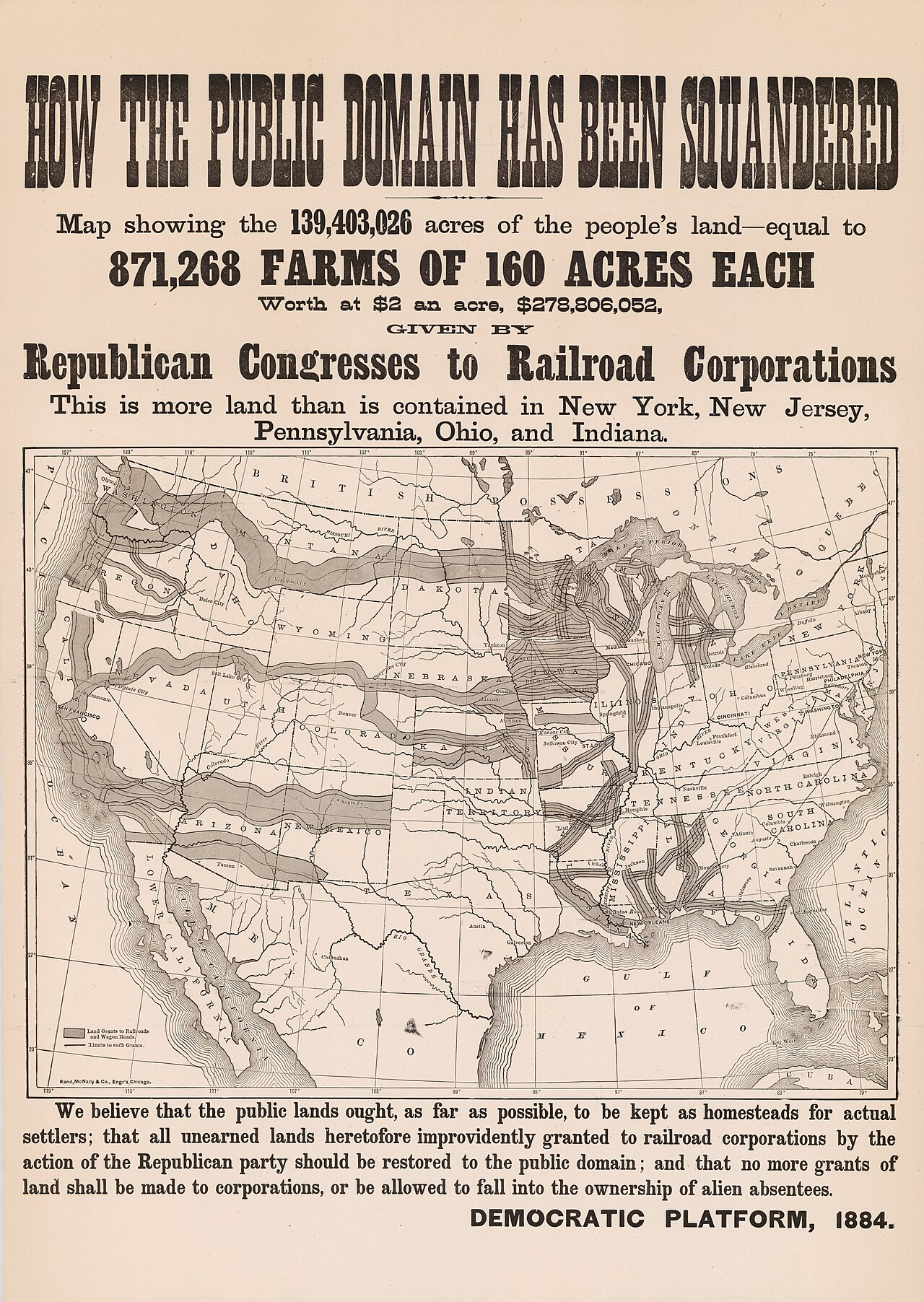
Democratic Party · Public domain
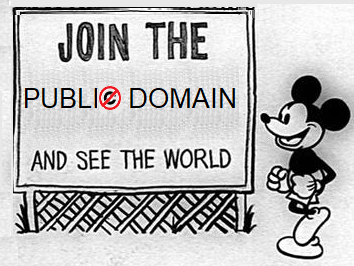
The public domain includes any creative work that isn’t covered by exclusive intellectual property rights. Those rights might have expired, been given up, or never applied in the first place. Since nobody owns the exclusive rights, anyone can legally use or refer to these works without asking for permission. For instance, works by William Shakespeare, Ludwig van Beethoven, Miguel de Cervantes, Zoroaster, Lao Zi, Confucius, Aristotle, L. Frank Baum, Leonardo da Vinci, and Georges Méliès are in the public domain—either because they were made before copyright existed or because their copyright term ran out. Some works aren’t protected by a country’s copyright laws at all; in the United States, that includes things like Newtonian physics formulas and cooking recipes. Other works are intentionally placed into the public domain by their creators, such as reference implementations of cryptographic algorithms. The term “public domain” isn’t usually used when a creator keeps some rights—in those cases, using the work is called “under license” or “with permission.”
Because rights vary by country and jurisdiction, a work might be protected in one place and in the public domain in another. Some rights depend on registration in each country; if registration isn’t required or isn’t done, the work can be public domain there. The phrase “public domain” is also sometimes used interchangeably with looser terms like “public sphere” or “commons,” including ideas such as the “commons of the mind,” the “intellectual commons,” and the “information commons.”
**History** Though the word “domain” wasn’t used this way until the mid-1700s, the idea goes back to ancient Roman law, which had a system of property rights that included things that couldn’t be privately owned. Romans defined these as *res nullius* (things not yet taken), *res communes* (things shared by all people, like air, sunlight, and the ocean), *res publicae* (things shared by all citizens), and *res universitatis* (things owned by Rome’s municipalities). The concept of a “public domain” grew out of *res communes*, *res publicae*, and *res universitatis*.
When Britain’s first copyright law, the Statute of Anne, was passed in 1710, the term “public domain” didn’t appear. But similar ideas were developed by British and French legal thinkers in the 1700s, using phrases like *publici juris* or *propriété publique* for works not covered by copyright. The exact phrase “fall in the public domain” comes from mid-1800s France, where it described the end of a copyright term. French poet Alfred de Vigny compared a work’s copyright expiring to it falling “into the sink hole of public domain.” Intellectual property lawyers often still treat the public domain as just what’s left when copyrights, patents, and trademarks expire or are abandoned. Legal scholar Paul Torremans described copyright as “a little coral reef of private right jutting up from the ocean of the public domain.” Copyright law differs by country, and American legal scholar Pamela Samuelson noted that the public domain is “different sizes at different times in different countries.”
**Definition** Definitions of the public domain’s boundaries, especially regarding copyright, often see it as a negative space—works no longer under copyright or never protected by it. According to James Boyle, this common usage treats the public domain as public property and copyrighted works as private property. But the term can be more detailed, including, for example, uses of copyrighted works allowed by exceptions like fair use. A conceptual definition from Lange says the public domain “should be a place of sanctuary for individual creative expression, a sanctuary conferring affirmative protection against the forces of private appropriation that threatened such expression.” Patterson and Lindberg described it not as a territory but as a concept: certain materials—air, sunlight, rain, space, life, creations, thoughts, feelings, ideas, words, numbers—are not subject to private ownership, and the materials of our cultural heritage must be free for everyone to use, just as matter is needed for biological survival.
**Public domain by medium**
**Books** A public-domain book is one with no copyright, one created without a license, or one whose copyright has expired or been forfeited. In most countries, copyright protection ends on January 1, 70 years after the death of the last living author. The longest copyright term is in Mexico.
- label
- Public Domain
- field
- Intellectual Property Law
- known_for
- Works free from exclusive intellectual property rights
- earliest_legal_roots
- Ancient Roman law (res nullius, res communes, res publicae, res universitatis)
- phrase_origin
- Mid-19th-century France
- notable_examples
- Works of Shakespeare, Beethoven, Cervantes, Leonardo da Vinci
Lore & Background
The public domain encompasses all creative works to which no exclusive intellectual property rights apply, either because those rights have expired, been forfeited, waived, or are inapplicable. Because no single entity holds exclusive rights, anyone may legally use or reference such works without permission. Notable examples include the works of William Shakespeare, Ludwig van Beethoven, Miguel de Cervantes, Aristotle, Leonardo da Vinci, and Georges Méliès—some created before copyright existed, others whose copyright terms have expired. Certain works are never covered by copyright law in a given country; in the United States, for instance, Newtonian physics formulas and cooking recipes are excluded. Other works are actively dedicated to the public domain by their creators, such as reference implementations of cryptographic algorithms. The term is not normally applied when a creator retains residual rights; such use is referred to as "under license" or "with permission." Rights vary by country and jurisdiction, so a work may be subject to rights in one nation and be in the public domain in another. Some rights depend on country-by-country registration; absence of required registration can place a work in the public domain. The term is sometimes used interchangeably with imprecise concepts like the public sphere or commons, including the "commons of the mind" and "information commons." Historically, the concept traces to ancient Roman law, which defined things that cannot be privately owned as *res nullius* (unappropriated things), *res communes* (commonly enjoyed by mankind, such as air and sunlight), *res publicae* (shared by all citizens), and *res universitatis* (owned by municipalities). The phrase "fall in the public domain" emerged in mid-19th-century France to describe the end of copyright term, and copyright law itself has been described as a "little coral reef of private right jutting up from the ocean of the public domain," differing in size across countries and times.
Reader's Guide
The public domain is a foundational concept in intellectual property law, representing works that are no longer in copyright or were never protected. Its boundaries vary by country and jurisdiction, as rights depend on registrations and laws that differ across nations. The public domain includes works created before copyright existed, works whose copyright has expired, works not covered by copyright laws (such as Newtonian physics formulae and cooking recipes in the United States), and works actively dedicated by authors. It serves as a source for building blocks of new knowledge, with values identified by Pamela Samuelson including the creation of new knowledge. The term is sometimes used interchangeably with 'public sphere' or 'commons', though definitions vary, with some regarding it as a negative space of unprotected works and others including uses permitted by copyright exceptions. Notable examples of public domain works include those by William Shakespeare, Ludwig van Beethoven, Miguel de Cervantes, and Leonardo da Vinci.
Did You Know?
- The phrase 'fall in the public domain' originated in mid-19th-century France.
- In the United States, items excluded from copyright include ideas, facts, and principles, though their specific expression may be copyrightable.
The Patchwork of Global Copyright Terms
The public domain is not a single, unified concept across the world. In most African and Asian nations, along with Belarus, Bolivia, and New Zealand, a creator's work becomes freely available fifty years after their death. Bangladesh, India, and Venezuela extend that window to sixty years. Across much of Europe, South America, and parts of western Africa, the standard is seventy years after death for works published during the creator's lifetime, though unpublished material granted to a first publisher carries a separate twenty-five-year term. This means a single book can be freely reproducible in one country while still under copyright in another, and the exact year a work becomes public domain shifts depending on where you stand.
A Constellation of Voices Entering Freedom
German novelist Thomas Mann, whose Buddenbrooks and Doctor Faustus are celebrated for their dense symbolism and penetrating exploration of the artist's inner life, joins the freely available canon alongside French essayist Léon Werth, Italian novelist Guido Battelli, and British writer Clemence Housman. American letters gain James Agee, author of A Death in the Family, and Dale Carnegie, whose How to Win Friends and Influence People has guided generations. The arts world welcomes poets Wallace Stevens and Paul Claudel, Swiss composer Arthur Honegger, Italian composer Francesco Balilla Pratella, and Russian composer Isaak Dunayevsky. Film and screenwriting contribute the work of director Lloyd Bacon and screenwriters William C. deMille and Robert Riskin, while visual artists Yves Tanguy and Fernand Léger see their canvases freed. In the sciences and philosophy, the publications of Albert Einstein, Sir Alexander Fleming, Hermann Weyl, Herbert Stanley Jevons, and Spanish thinker José Ortega y Gasset (in European countries outside Spain) all become openly accessible.
Legislative Shifts and Their Long Echoes
When a nation lengthens its copyright term, the ripple effects can span decades.
American Icons Cross the Threshold
Among the literary treasures now unshackled are William Faulkner's As I Lay Dying, Dashiell Hammett's complete novel The Maltese Falcon, and Agatha Christie's first Miss Marple mystery, The Murder at the Vicarage. Young readers' canon gains the original Nancy Drew story The Secret of the Old Clock and the first Dick and Jane Elson-Gray Readers. Stage and poetry contribute Noël Coward's Private Lives and T. S. Eliot's Ash Wednesday. The novel shelf fills with Evelyn Waugh's Vile Bodies, John Dos Passos' The 42nd Parallel, Edna Ferber's Pulitzer-winning Cimarron, Dorothy L. Sayers' Strong Poison, J. B. Priestley's Angel Pavement, Olaf Stapledon's science fiction Last and First Men, W. Somerset Maugham's Cakes and Ale, and Bertrand Russell's The Conquest of Happiness. Sigmund Freud's Civilization and Its Discontents joins in its original German. Children's literature welcomes The Little Engine That Could, Swallows and Amazons, and The Cat Who Went to Heaven.
Gallery
Frequently Asked Questions
Who is Public domain?
Public domain is the collective pool of creative works—texts, music, images, inventions—for which no individual or entity holds exclusive intellectual property rights. In practical terms, it means anyone can copy, adapt, or redistribute those works without seeking permission or paying a fee.
What are Public domain's powers/role?
Its core function is to guarantee that certain works remain freely accessible to the entire public, bypassing the need for licenses or royalties. This keeps the flow of culture, knowledge, and innovation open rather than locked behind a single rights-holder.
How does Public domain's story end?
Works typically enter the public domain when their copyright term expires, when the creator deliberately waives all rights, or when the work was never eligible for protection in the first place. Once a work crosses that threshold, its status is generally permanent and cannot be re-claimed by a private owner.
Why is Public domain important?
It serves as the raw material from which new art, scholarship, and technology are built, ensuring that no single generation can permanently monopolize shared cultural heritage. Without it, every derivative work would require a chain of permissions, stifling both creativity and public access.
More in Public Law 1-24
Spotted an error? Know more?
This is a living reference — every entry is fact-audited, and reader corrections feed straight into our audit queue. Suggest an edit · See this site's audit record