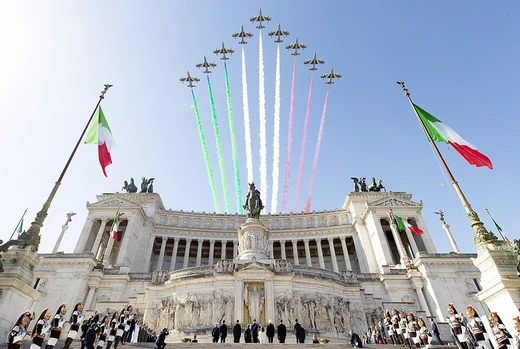
Nowruz
Nowruz is the Iranian New Year, rooted in Zoroastrianism and spring equinox.

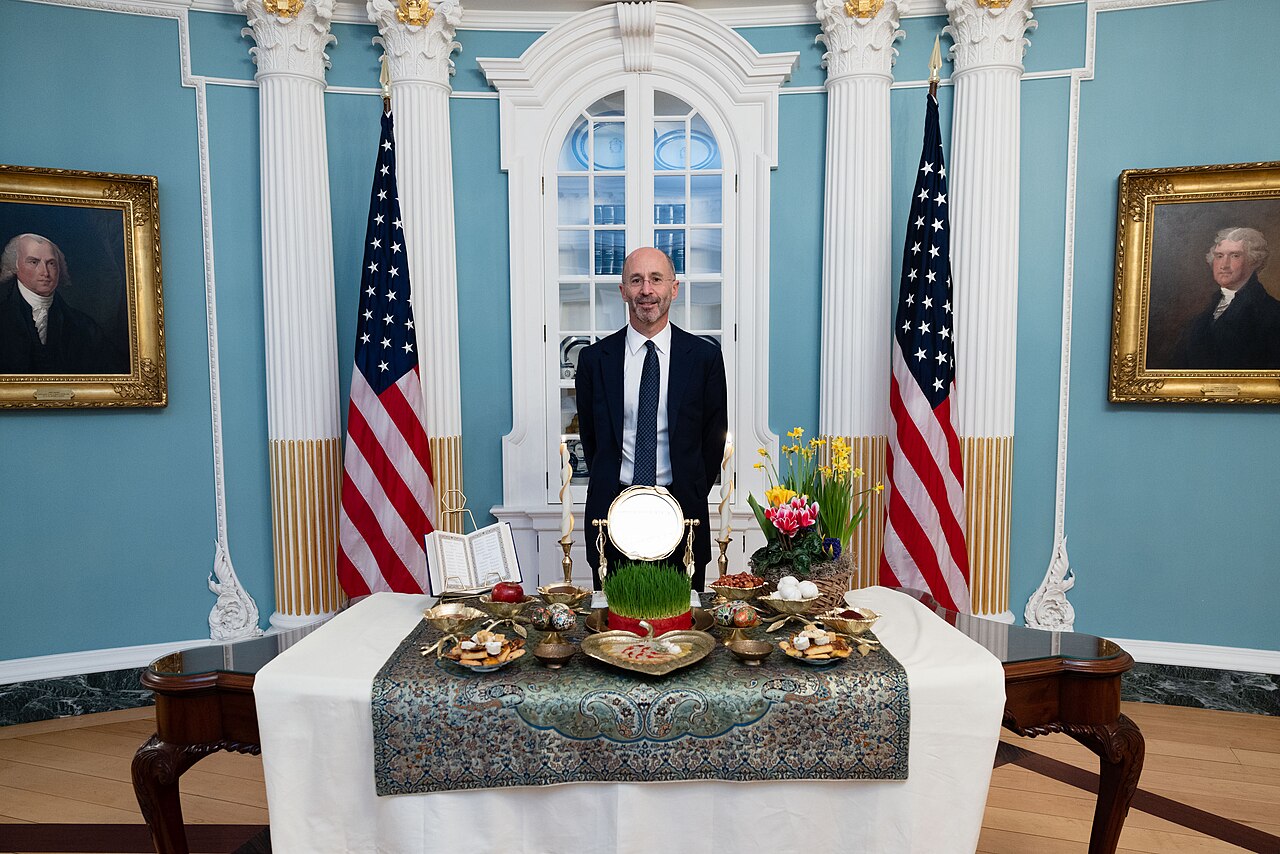
U.S. Department of State · Public domain
Nowruz, meaning "new day" in Persian, is the New Year’s celebration on the Iranian calendar—specifically the Solar Hijri calendar still used today. Originally observed by Iranian peoples, it has spread across many Persian-influenced cultures around the world. The festival is tied to the spring equinox in the Northern Hemisphere, so it typically lands between March 19 and March 22 on the Gregorian calendar. While most people now treat it as a secular holiday, it remains sacred for Zoroastrians, Baháʼís, and Ismaili Shia Muslims.
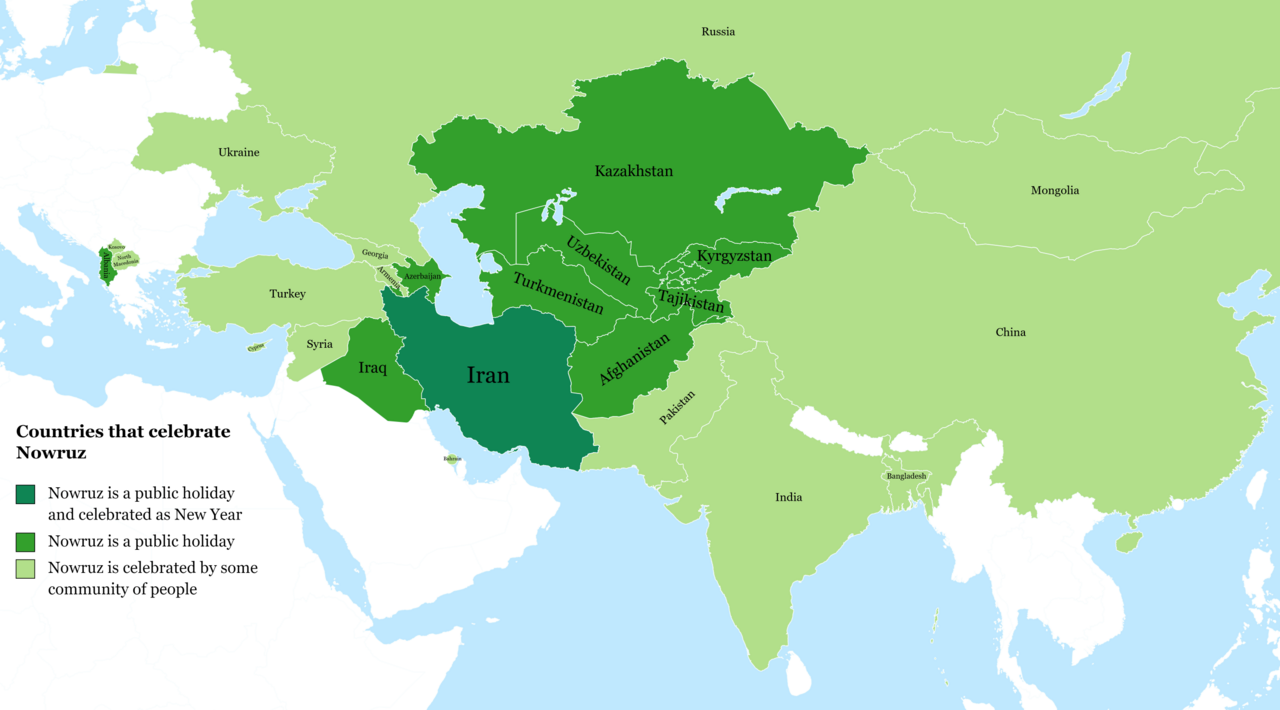
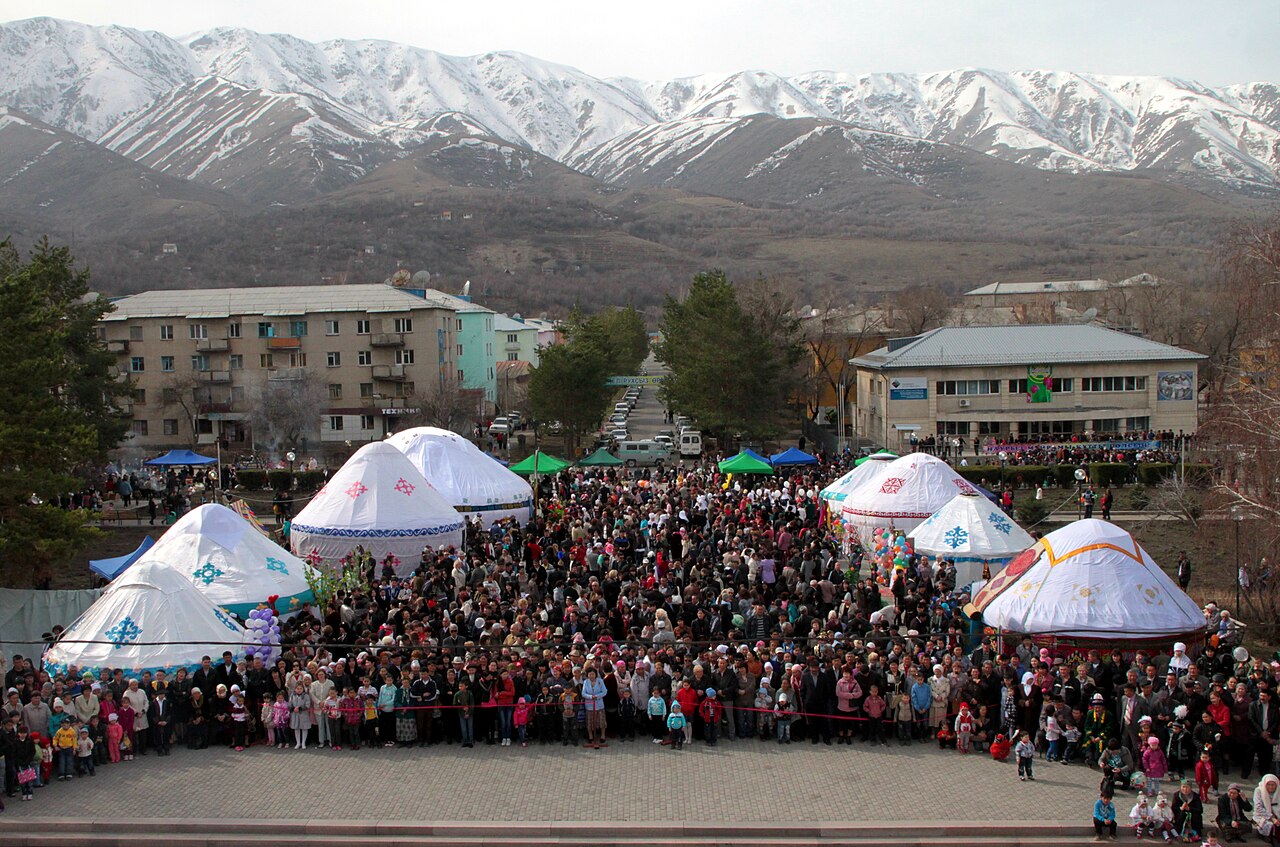
The roots of Nowruz go back over 3,000 years to Zoroastrianism, and it has been celebrated across West Asia, Central Asia, the Caucasus, the Black Sea Basin, the Balkans, and South Asia. For the Northern Hemisphere, it marks the start of spring. Customs vary widely among communities but often include fire and water rituals, dances, gift exchanges, and poetry readings.
The first day of the Iranian calendar falls on the March equinox, around March 21. In the 11th century, the scholar Omar Khayyam reformed the calendar so that Nowruz would always begin at the vernal equinox. The astronomer Tusi later defined it as the day when the sun entered Aries before noon. Nowruz is the first day of Farvardin, the first month of the Solar Hijri calendar, which is the official calendar in Iran and was formerly used in Afghanistan. In February 2010, the United Nations General Assembly adopted Resolution 64/253, officially recognizing the "International Day of Nowruz."
The word "Nowruz" combines the Persian words for "new" and "day." In Classical Persian, it was vocalized differently, and in Middle Persian it had another form. Modern pronunciations vary: Dari and Tajiki speakers say it one way, while Iranian Persian speakers use another (especially in the Tehrani accent). English spellings include Norooz, Novruz, Nowruz, Navruz, Nauruz, and Newroz.
Nowruz is timed to the vernal equinox in the Northern Hemisphere. In Iran, the Solar Hijri calendar uses precise astronomical observations and a sophisticated intercalation system—more accurate than the Gregorian calendar. The day of Nowruz begins at midnight between two consecutive solar noons that bracket the exact moment of the March equinox. If the equinox occurs before noon in Tehran, that day is Nowruz; if after noon, the next day is. Each 2,820-year great grand cycle includes 2,137 normal years of 365 days and 683 leap years of 366 days, giving an average year length of 365.24219852 days—just 0.00000026 days shorter than Newcomb’s mean tropical year, but it drifts about half a day over a cycle compared to the current average vernal equinox year.
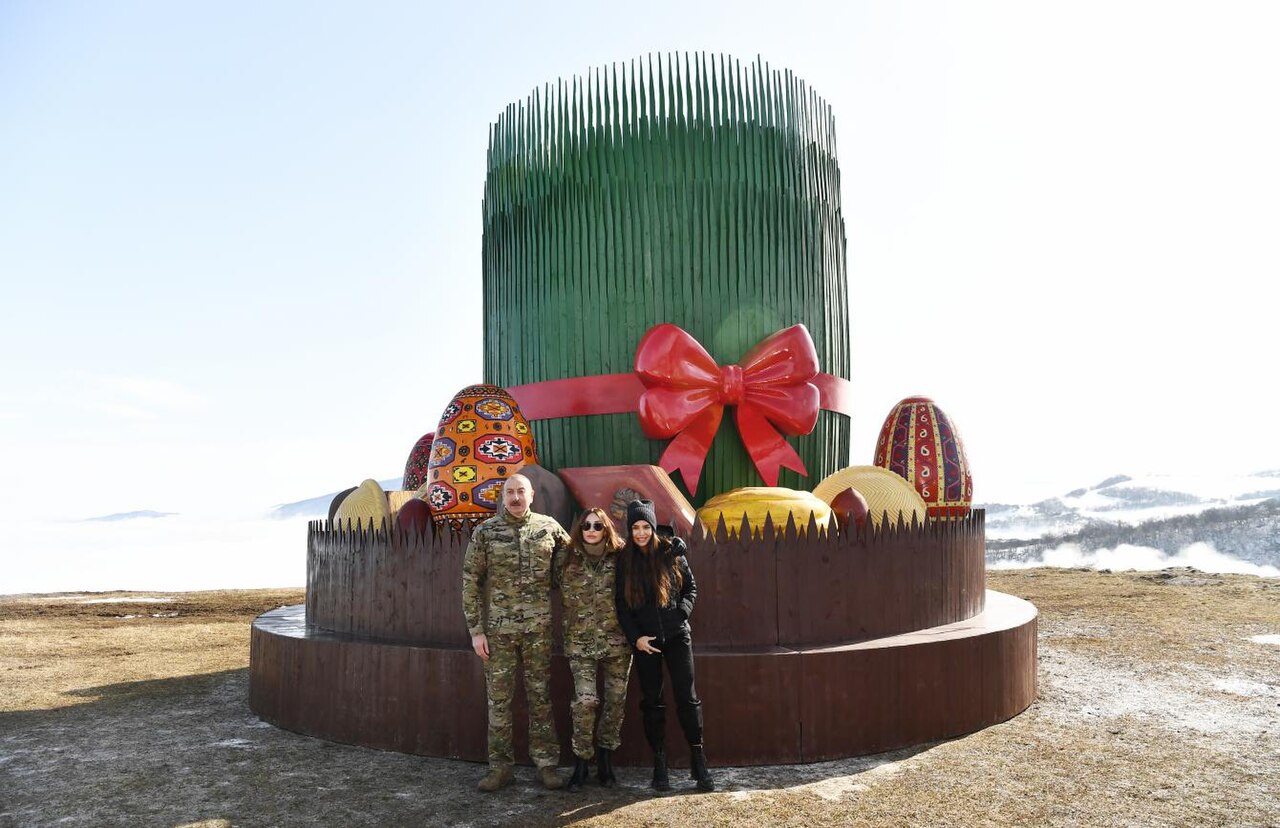
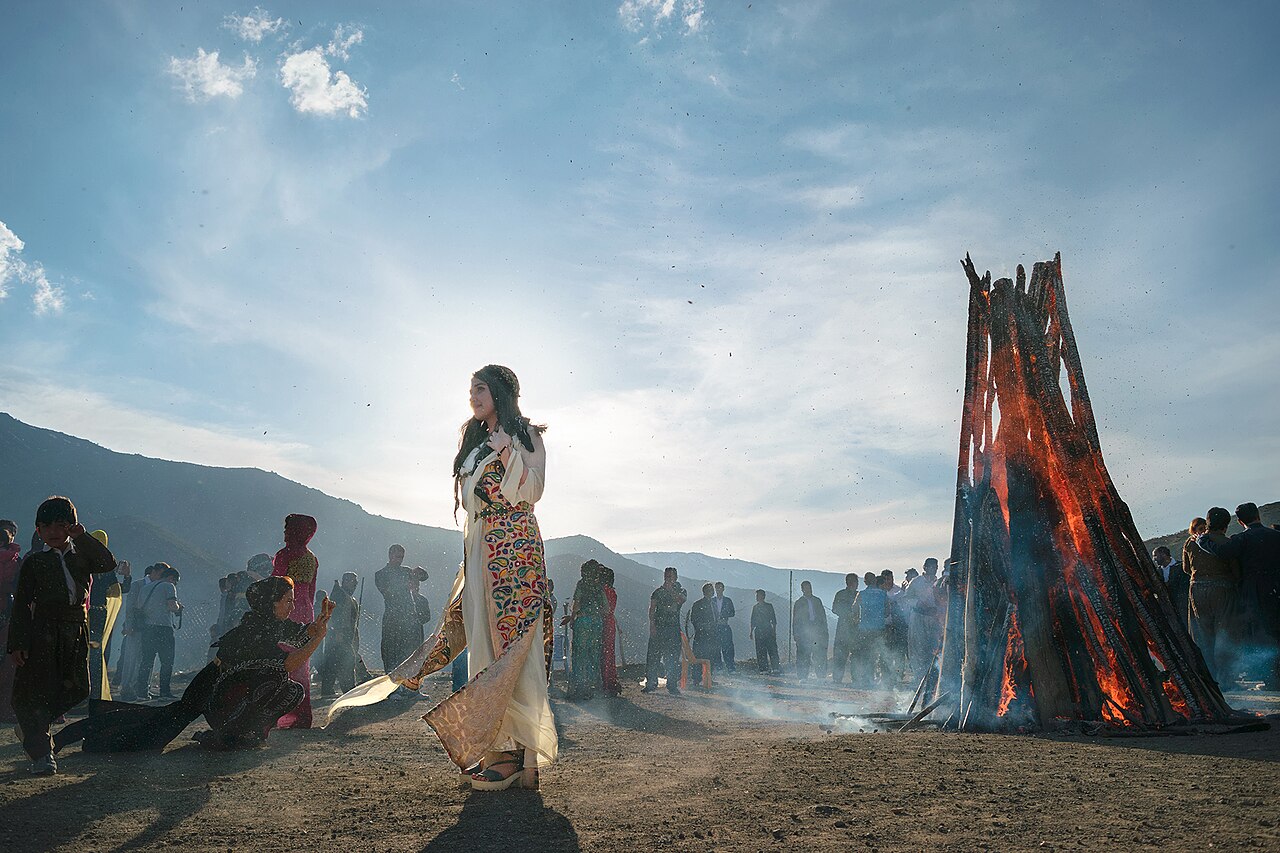
Chaharshanbe Suri is a prelude to Nowruz, celebrated on the eve of the last Wednesday before the New Year in Iran. People jump over bonfires, set off firecrackers, and light fireworks. In Azerbaijan, preparations begin a month earlier, with a festival each Tuesday for four weeks, honoring water, fire, earth, and wind. On the holiday eve, graves of relatives are visited. Iranians sing to the fire, "my yellow is yours, your red is mine," asking it to take away illness and bring warmth and energy. Trail mix and berries are served. Spoon banging—similar to Halloween trick-or-treating—involves people in disguises going door-to-door, banging spoons against plates or bowls for snacks. In Azerbaijan, children leave caps or baskets on neighbors’ thresholds and hide nearby, waiting for candies, pastries, and nuts. The fire-jumping ritual also appears in Armenia’s Trndez feast, a purification celebration forty days after Jesus’s birth.
In Iran, Nowruz holidays last thirteen days. On the thirteenth day, called Sizdah Bedar, people leave home to enjoy nature and picnic outdoors. The greenery grown for the Haft-sin setting is thrown away, usually into running water. Young single people, especially girls, often tie the leaves of the greenery before discarding it.
- field
- New Year festival
- known_for
- Marking the spring equinox and the first day of the Solar Hijri calendar
- region
- Iranian and Persianate cultures worldwide
- calendar_position
- First day of Farvardin, first month of the Solar Hijri calendar
Lore & Background
Nowruz, meaning "new day" in Persian, is the New Year’s Day on the Iranian calendar, observed by Iranian peoples for millennia and now celebrated by many Persianate cultures worldwide. Its roots lie in Zoroastrianism, and it has been practiced for over 3,000 years across West Asia, Central Asia, the Caucasus, the Black Sea Basin, the Balkans, and South Asia. Today, most celebrants treat it as a secular holiday, though it remains a holy day for Zoroastrians, Baháʼís, and Ismaili Shia Muslims. The festival is tied to the Northern Hemisphere’s spring equinox, usually falling between 19 and 22 March on the Gregorian calendar. For the Northern Hemisphere, it marks the start of spring. Customs vary widely among communities but include fire and water rituals, dances, gift exchanges, and poetry recitations. A key prelude in Iran is Chaharshanbe Suri, celebrated on the eve of the last Wednesday before Nowruz, involving jumping over bonfires, fireworks, and spoon-banging traditions similar to trick-or-treating. In Azerbaijan, preparations begin a month earlier with weekly Tuesday festivals honoring water, fire, earth, and wind. The Nowruz holidays in Iran last thirteen days, culminating in Sizdah Be-dar, when people picnic outdoors and discard greenery grown for the Haft-sin setting, often into running water. The United Nations recognized Nowruz as an International Day in 2010.
Reader's Guide
It marks the beginning of spring and the new year in the Solar Hijri calendar, which is based on precise astronomical observations and an intercalation system more accurate than the Gregorian calendar. Customs include fire and water rituals, dances, gift exchanges, and poetry recitations. Prelude celebrations include Chaharshanbe Suri, with bonfire jumping and spoon-banging traditions. The thirteen-day holiday ends with Sizdah Bedar, a day of outdoor picnics and pranks. Various foundation myths exist, including one from the Shahnameh attributing Nowruz to the mythical King Jamshid. Its roots are partly in Mithraism and Zoroastrianism, with Zoroastrianism considering it the holiest of its seven major festivals.
Did You Know?
- Nowruz is the first day of Farvardin, the first month of the Solar Hijri calendar, which is the official calendar in Iran and Afghanistan.
- The Shahnameh credits the foundation of Nowruz to the mythical Iranian King Jamshid, who instituted the festival after his own glorification and discovery of arts.
- Chaharshanbe Suri, celebrated on the eve of the last Wednesday before Nowruz, includes jumping over bonfires and the tradition of spoon banging.
Ancient Roots and Living Faith
Nowruz traces its origins to Zoroastrianism and has been observed for more than three millennia across a vast stretch of the world, from West Asia and Central Asia through the Caucasus, the Black Sea Basin, the Balkans, and into South Asia. What began as a sacred observance within one of humanity's oldest faiths has evolved into a broadly shared cultural festival. In the modern era, the majority of those who celebrate Nowruz do so as a secular holiday, yet it retains its status as a holy day for Zoroastrians, Bahá'ís, and Ismaili Shia Muslims. The festival is anchored to the Northern Hemisphere spring equinox, which places it somewhere between 19 and 22 March on the Gregorian calendar. Its reach today extends well beyond the Iranian peoples who first observed it, embracing a wide array of Persianate cultures around the globe. The word itself, a pairing of the Persian words for 'new' and 'day,' carries the simple promise of renewal that has drawn communities to this celebration for over three thousand years.
The Science of the Spring Equinox
The timing of Nowruz rests on one of the most precise calendrical systems ever devised. In the eleventh century, the scholar Omar Khayyam reformed the Iranian calendar so that the new year would always align with the vernal equinox. The astronomer Tusi later defined Nowruz as the day on which the sun entered Aries before noon. The Solar Hijri calendar, which uses Nowruz as the first day of its opening month Farvardin, relies on a sophisticated intercalation system that makes it more accurate than the Gregorian calendar used across Europe. Its great grand cycle spans 2,820 years, containing 2,137 ordinary years of 365 days and 683 leap years of 366 days, yielding an average year length of 365.24219852 days. That figure differs from Newcomb's mean tropical year by a mere 2.6 × 10⁻⁷ of a day, roughly one-fiftieth of a second. The exact moment of Nowruz is determined by whether the equinox falls before or after solar noon in Tehran, a rule that pins the celebration to a specific midnight between two consecutive noons.
Chaharshanbe Suri – The Eve of Renewal
The festival of Chaharshanbe Suri, literally 'Festive Wednesday,' serves as the most vivid prelude to Nowruz in Iran, falling on the evening before the last Wednesday of the old year. Communities gather around bonfires, leap over the flames, and set off firecrackers and fireworks in a burst of collective energy. A beloved poetic refrain is chanted toward the fire: 'my yellow is yours, your red is mine,' a symbolic exchange in which the flame is asked to absorb the celebrant's weakness and illness in return for warmth, health, and vitality. Trail mix and berries are shared during the gathering. A playful tradition called spoon banging sees people in disguise going door to door, striking spoons against plates and collecting packaged snacks, echoing a spirit similar to trick-or-treating. In Azerbaijan, the preparation stretches across four Tuesdays, each dedicated to one of the four elements—water, fire, earth, and wind—while in Armenia, the fire-jumping ritual survives in the church feast of Trndez.
Thirteen Days and the Farewell to Green
The Nowruz holiday in Iran stretches across a full thirteen days, and its closing ceremony, Sizdah Be-dar, marks a deliberate return to the outdoors. On the thirteenth day, families and friends leave their homes to picnic in nature, celebrating the arrival of spring in the open air. The sprouted greenery that has been growing as part of the Haft-sin table is gathered up and cast into running water, a symbolic release of the old year's growth. Young single people, particularly young women, tie the leaves of the greenery before discarding it, silently expressing a wish to find a romantic partner. The day is also steeped in lighthearted mischief; jokes and pranks are played on one another in a manner reminiscent of April Fools' Day. Together, these customs bookend the thirteen-day celebration with a sense of gratitude for the new season and a gentle, humorous farewell to the rituals that carried the community through the transition.
Gallery
Frequently Asked Questions
What is Nowruz?
Nowruz is a New Year celebration marking the arrival of spring, observed primarily by Iranian and Persian-speaking communities around the world. It signals the first day of Farvardin, the opening month of the Solar Hijri calendar.
When does Nowruz fall on the Gregorian calendar?
The holiday is anchored to the Northern Hemisphere spring equinox, so it typically lands somewhere between March 19 and March 22. The exact date shifts slightly from year to year depending on the astronomical timing of the equinox.
How old is Nowruz?
The festival has been passed down for more than three millennia, with origins traceable to Zoroastrian traditions in ancient Persia. Today it is celebrated across West Asia, Central Asia, the Caucasus, the Balkans, and South Asia.
What are common Nowruz traditions?
Families often set out a haft-sin table featuring seven items beginning with the Persian letter 's' to symbolize renewal and abundance. Other customs include jumping over small bonfires during Chaharshanbe Suri, visiting relatives, and sharing sweets.
More in Public Holidays & Observances 1-24
Spotted an error? Know more?
This is a living reference — every entry is fact-audited, and reader corrections feed straight into our audit queue. Suggest an edit · See this site's audit record