
Forgetting
Forgetting is the loss or modification of stored memories.

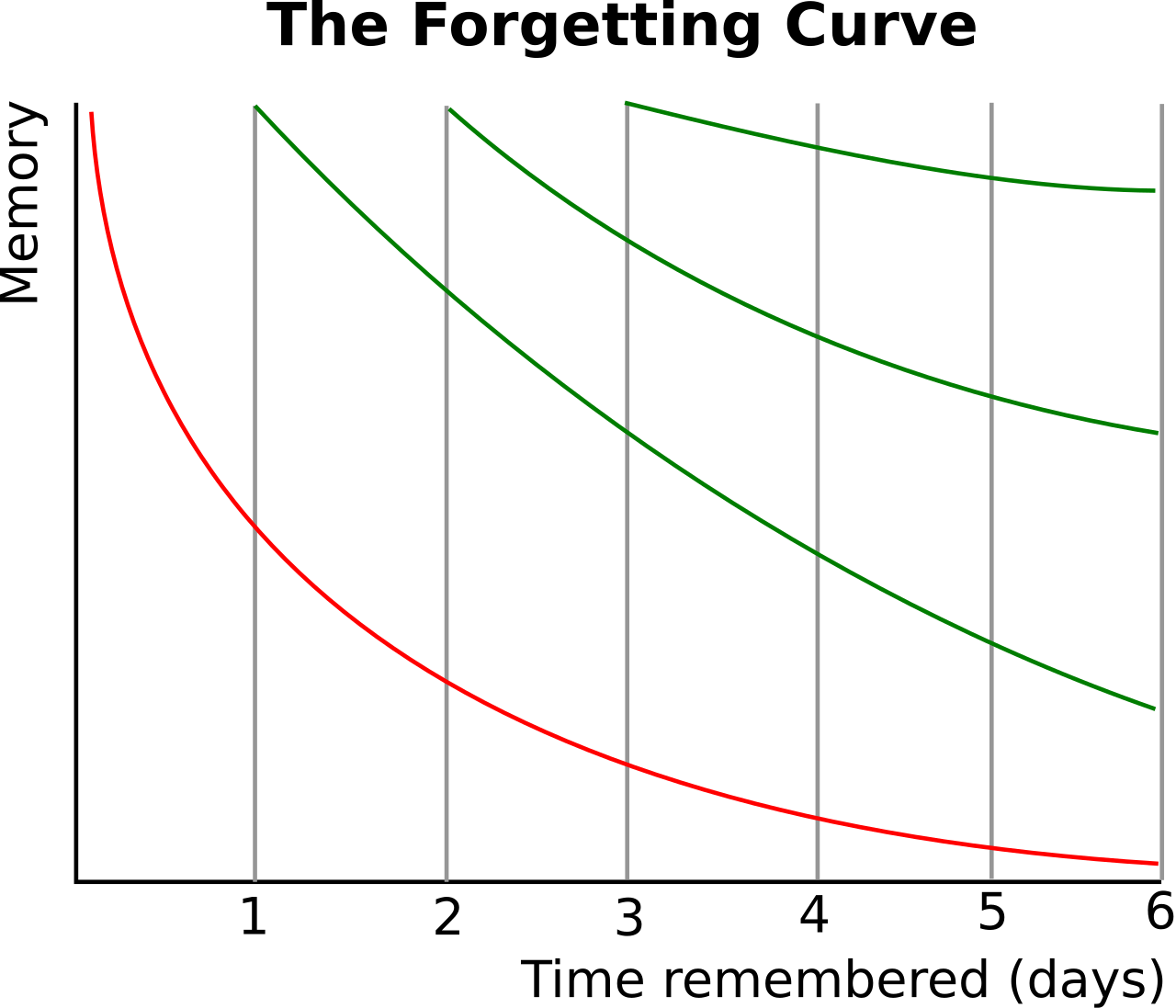
The original uploader was Icez at English Wikipedia . · Public domain
Forgetting, or disremembering, refers to the apparent loss or alteration of information that has already been encoded and stored in either short-term or long-term memory. This process can be spontaneous or gradual, making it difficult or impossible to retrieve old memories from storage. Older adults frequently report problems with remembering, learning new things, and retaining fresh information.
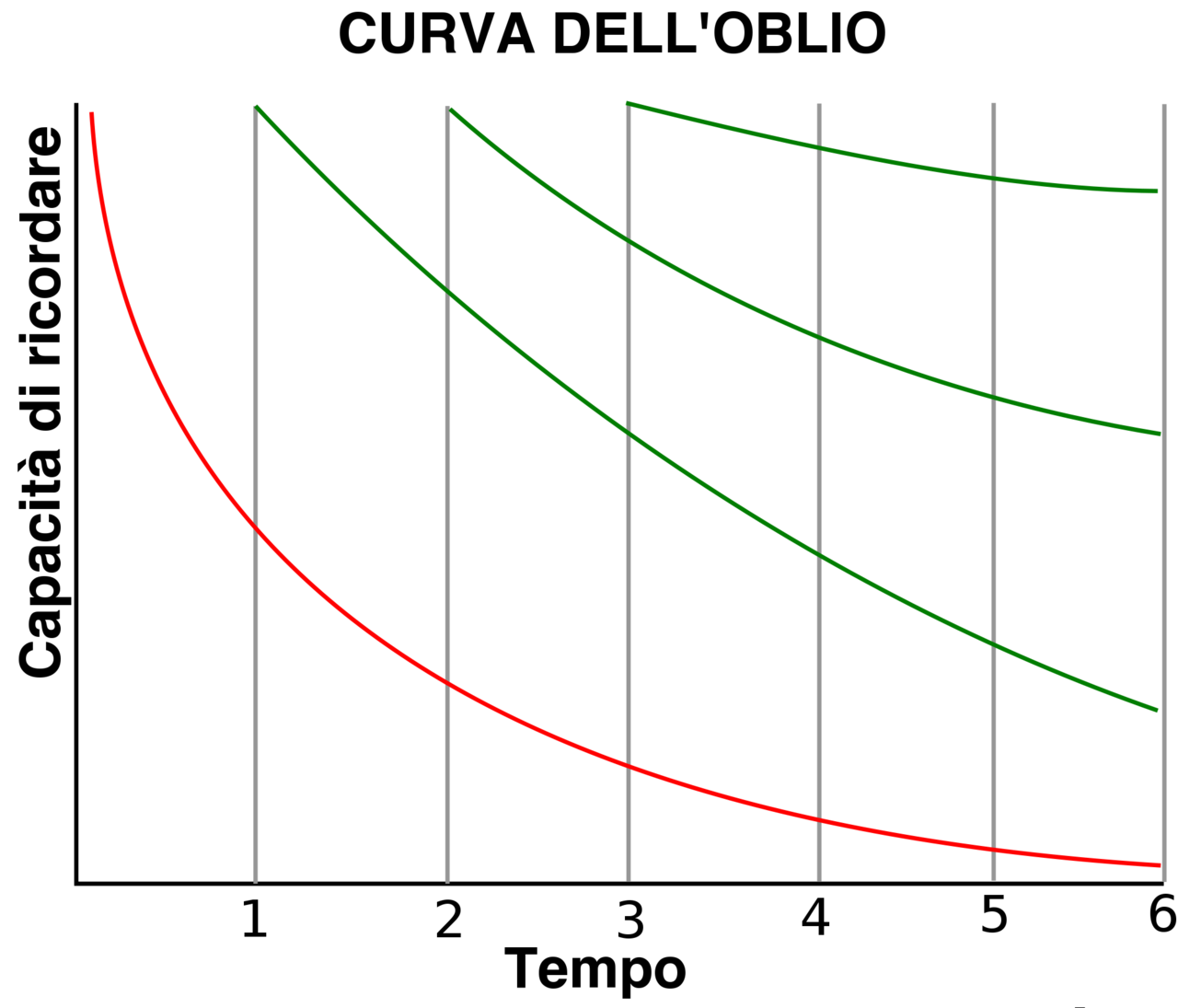
Research indicates that retention improves when information is rehearsed more often, as rehearsal helps move information into long-term memory. The relationship between time and how much is remembered—known as a forgetting curve—has been studied extensively. Current evidence suggests that a power function best describes this curve mathematically.
Failing to recall an event does not necessarily mean it is permanently lost. Certain health behaviors can help reduce how often forgetting occurs. Staying physically active is one of the simplest ways to keep the brain healthy and lower inflammation, which in turn helps prevent forgetting. Older adults who are more active tend to experience fewer episodes of forgetting than those who are less active. A healthy diet also supports brain health and healthy aging, leading to less frequent forgetting.
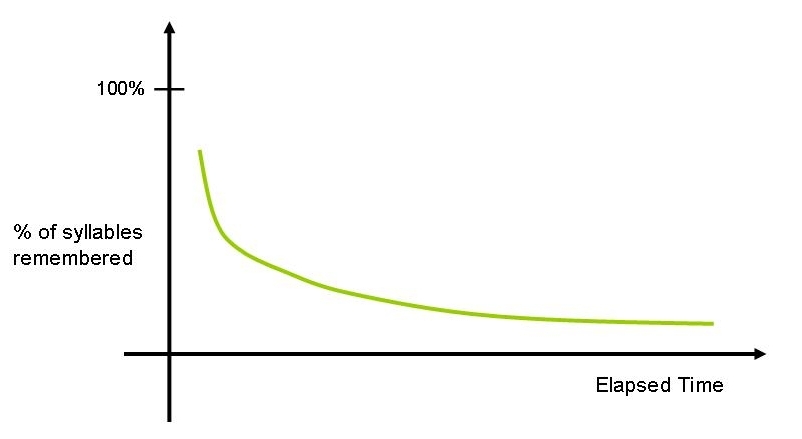
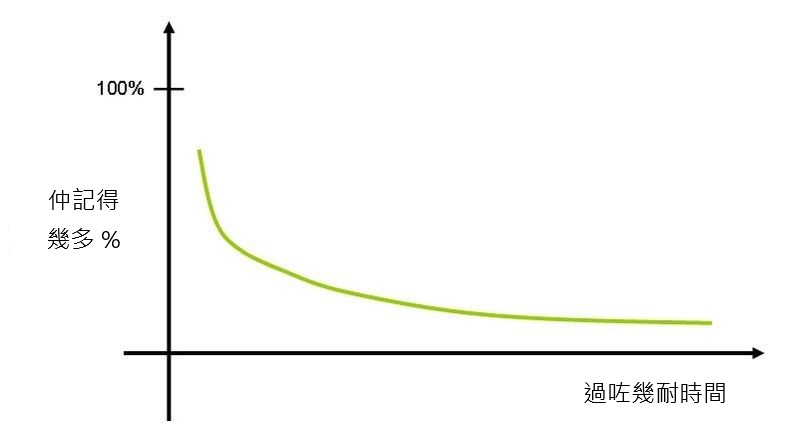
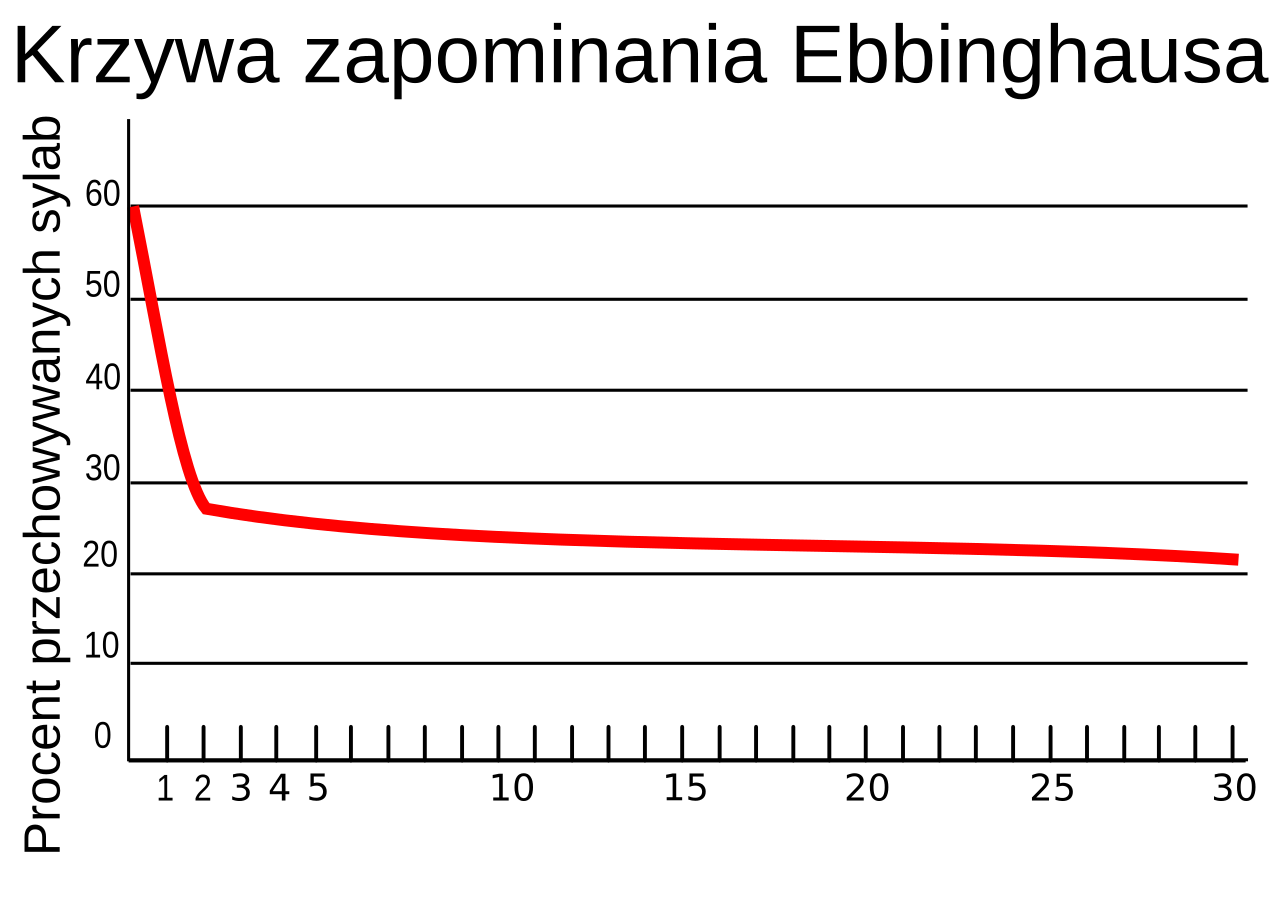
The German psychologist Hermann Ebbinghaus was among the first to study the mechanisms of forgetting, conducting experiments on himself in 1885. He memorized lists of three-letter nonsense syllables (two consonants with a vowel in the middle) and measured how long it took to relearn each list after various time intervals. He discovered that forgetting follows a systematic pattern: it happens rapidly at first and then levels off. Although his methods were basic, his core findings have been confirmed by more rigorous research. The resulting Ebbinghaus forgetting curve shows that much of what we forget is lost soon after learning, and that the rate of forgetting eventually stabilizes.
Around the same time, Sigmund Freud proposed that people intentionally forget to push unpleasant thoughts and feelings into the unconscious, a process he called repression. Whether memory repression actually occurs, and how often, is debated. Mainstream psychology holds that true repression is very rare.
In the 1960s, Richard Atkinson and Richard Shiffrin proposed a process model of memory, often called the modal model or Atkinson-Shiffrin model. It describes three separate types of memory: sensory memory, short-term memory, and long-term memory, each with its own capacity and duration. How quickly information is forgotten depends on which type of memory stores it. Sensory memory fades after a few seconds. Short-term memory is lost after about 20 years. Long-term memory can last for minutes or decades, but it may be forgotten if the retrieval processes fail. For unwanted memories, modern terminology distinguishes between unconscious repression (which is disputed) and conscious thought suppression.
Forgetting is measured using several methods based on recall. In a recall test, participants must identify material they previously learned. They are shown the original list along with extra items and asked to pick out the ones from the original list; the more they recognize, the less they have forgotten. Free recall involves presenting a list of items one at a time (for example, reading 20 words aloud every four seconds) and then asking the subject to write down as many as possible in any order. Prompted recall is similar but includes hints or prompts—stimuli not present during learning—to increase the chance of producing the correct response. The degree of forgetting is measured by how many prompts are missed or how many are needed to trigger the behavior. The relearning method, used by Ebbinghaus, measures forgetting by how much training is required to reach a previous level of performance. He memorized nonsense syllables until he could repeat a list twice without error, then after a delay he relearned the list and counted how many attempts it took; fewer attempts meant less forgetting. Recognition tasks give participants a list to remember, then present that list mixed with new items and ask them to identify the original ones.
- field
- Psychology
- known_for
- Forgetting curves, Ebbinghaus forgetting curve, modal model of memory
- key_researchers
- Hermann Ebbinghaus, Sigmund Freud, Richard Atkinson, Richard Shiffrin
Quick Facts
- Symptoms
- Difficulty in remembering recent events, problems with language, disorientation, mood swings
- Complications
- Dementia
Facts from the source article.
Lore & Background
One of the first to study the mechanisms of forgetting was the German psychologist Hermann Ebbinghaus. Using himself as the sole subject, he memorized lists of three-letter nonsense syllable words and measured his capacity to relearn a given list after various time periods. He found that forgetting occurs in a systematic manner, beginning rapidly and then leveling off. His results, plotted as the Ebbinghaus forgetting curve, led to two conclusions: much of what is forgotten is lost soon after original learning, and the amount of forgetting eventually levels off. Around the same time, Sigmund Freud theorized that people intentionally forget things to push bad thoughts into the unconscious, a process he called 'repression.' There is debate as to whether memory repression really occurs, and mainstream psychology holds that true memory repression occurs only very rarely.
Reader's Guide
Forgetting is a central concept in the study of human memory, with its mechanisms first systematically analyzed by Hermann Ebbinghaus. His forgetting curve demonstrated that memory loss follows a predictable pattern: rapid initial decline followed by a plateau. This foundational work has been reaffirmed by more methodologically sound methods. Later, the modal model of memory proposed by Richard Atkinson and Richard Shiffrin in the 1960s explained forgetting in terms of three distinct memory stores: sensory memory, short-term memory, and long-term memory. Each store has different capacities and durations, with forgetting rates varying accordingly. Modern research emphasizes that forgetting does not necessarily mean permanent loss; retrieval failure can occur due to missing cues. Studies show that retention improves with increased rehearsal, which helps transfer information into long-term memory. Health behaviors such as staying active and maintaining a healthy diet can help prevent forgetting, particularly in older adults. The four main theories of forgetting are cue-dependent forgetting, organic causes, interference theories, and motivated forgetting (including unconscious repression and conscious thought suppression).
Did You Know?
- Forgetting curves have been extensively analyzed, and the most recent evidence suggests a power function provides the closest mathematical fit.
- Older adults who were more active were found to have had fewer episodes of forgetting compared to those who were less active.
- Hermann Ebbinghaus used himself as the sole subject in his experiments on forgetting.
- The modal model of memory suggests information in sensory memory is forgotten after only a few seconds.
The Pioneer's Solitary Laboratory
In the early 1880s, a German psychologist named Hermann Ebbinghaus embarked on what would become one of the most influential self-experiments in the history of cognitive science. After each learning session, he would wait varying intervals and then test how much he could still recall, meticulously recording his results. He then plotted these data points onto a graph, producing the curve that now bears his name. His 1885 monograph, Über das Gedächtnis, later rendered in English as Memory: A Contribution to Experimental Psychology, laid out both the findings and a mathematical formula to approximate the decay. Crucially, Ebbinghaus measured the rate at which memory faded but did not investigate how spaced review might slow that fade. Despite the study's limited scope, his work marked a watershed: he was the first researcher to design rigorous, repeatable experiments on forgetting, and his choice of artificial, controlled stimuli set a template that experimental psychology would follow for generations.
The Arithmetic of Fading
Ebbinghaus did not merely sketch a curve; he proposed a precise formula to quantify the loss. In his model, a variable called "savings" expresses how much relearning time is reduced on a second trial compared to the first, functioning much like a retention percentage. A savings value of one hundred percent means every item from the original session is still perfectly accessible, while seventy-five percent indicates that recovering the forgotten items takes only a quarter of the original learning duration. The formula incorporates time in minutes, measured from one minute before the learning session ended, along with two fixed constants that shape the curve's steepness. The broader picture the curve paints is striking: without conscious effort to review, a person's grasp of newly acquired material tends to halve within mere days or weeks. The durability of a memory trace—its underlying strength—determines how long recall remains possible.
Flattening the Decline
Ebbinghaus recognized that forgetting is not a fixed, immutable process. He proposed that the speed of decay depends on how meaningful the material is, how it is mentally represented, and even physiological states such as stress and sleep. Importantly, he believed the baseline forgetting rate is remarkably similar across individuals, with differences in performance largely attributable to one's skill in forming mnemonic representations. From this insight he derived two practical strategies: improving how information is encoded through mnemonic techniques, and reinforcing it through active recall, particularly when spaced over time. His key observation was that each successful repetition lengthens the interval before the next review is needed—early repetitions might fall within days, while later ones can stretch to years. Building new knowledge on top of what is already known also made recall easier, and every repetition visibly flattened the curve. Later research added that a higher degree of initial learning produces a slower forgetting rate. Practitioners have since suggested that reviewing within the first twenty-four hours, or at roughly ten to twenty percent of the time before the information will be needed, represents the optimal moment to reset the decay cycle.
When the Curve Breaks
Not every memory obeys the tidy exponential decline that Ebbinghaus charted. Some recollections appear largely immune to the interference and noise that erode ordinary recall, and scholars continue to debate whether the standard curve accurately describes how people remember events of profound personal or historical significance. Proponents of "flashbulb memory" point to the vivid, persistent recollections of moments like the Kennedy assassination or the September 11 attacks as evidence that certain impressions bypass the usual decay. Yet other researchers have compared contemporaneous written accounts with those recorded years later and found substantial discrepancies, suggesting that memories quietly absorb after-acquired information and reshape themselves over time. This tension has real-world consequences: extensive research into eyewitness identification testimony has demonstrated that such accounts are demonstrably unreliable, a finding that carries weight in legal proceedings. The phenomenon of transience—forgetting simply through the passage of time—remains one of the seven fundamental categories of memory failure outlined in The Seven Sins of Memory, yet the exceptions and variations keep the field actively investigating the boundaries of the curve.
Gallery
Frequently Asked Questions
What is Forgetting in psychology?
Forgetting is the gradual or sudden inability to retrieve information that was once successfully encoded into short- or long-term memory. It reflects the apparent loss or alteration of previously stored material rather than the information never having been learned in the first place.
How does Forgetting operate within the memory system?
In the modal (multi-store) model of memory, forgetting can strike at encoding, storage, or retrieval. Ebbinghaus's classic forgetting curve shows that the steepest drop-off in recall happens right after initial learning, after which the rate of loss flattens considerably.
Who are the key researchers most associated with Forgetting?
Hermann Ebbinghaus first quantified memory decay experimentally using nonsense syllables, and Sigmund Freud examined motivated and repressed forms of forgetting. Richard Atkinson and Richard Shiffrin later refined the picture through their multi-store framework, giving researchers a structured map of where forgetting can intervene.
Why is Forgetting considered important rather than just a flaw?
Forgetting acts as a natural filtering mechanism that helps the brain discard low-priority details and keep cognitive resources available for what matters. Understanding its mechanisms is essential for education design, clinical work with amnesia or trauma, and broader memory research.
How does Forgetting differ from amnesia?
Forgetting is a universal, everyday process that follows predictable decay curves, while amnesia usually results from brain injury, illness, or psychological trauma and produces discrete gaps in recall. In short, forgetting is a gradual thinning of accessible memory, whereas amnesia is a more abrupt, localized loss.
More in Psychology 1-21
Spotted an error? Know more?
This is a living reference — every entry is fact-audited, and reader corrections feed straight into our audit queue. Suggest an edit · See this site's audit record