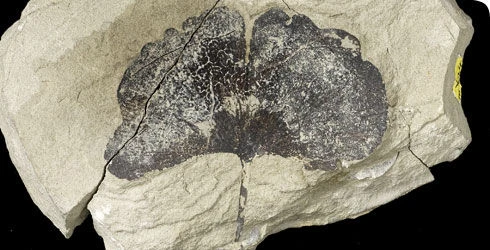
Trochodendroides
Extinct katsura relative with distinctive palmate leaf venation.
Trochodendroides, an extinct flowering plant genus, belongs to the katsura family, Cercidiphyllaceae. Its fossils are common in Cretaceous through Paleogene Northern Hemisphere deposits, especially northeastern Russia and parts of North America. Scientists once placed it in the Trochodendraceae family.
Quick Facts
- Family
- Cercidiphyllaceae
- Temporal range
- Cretaceous to Paleogene
- First known fossils
- Early Cretaceous of British Columbia and Alberta
- Latest known fossils
- Jilin, China
- Notable associated genera
- Jenkinsella, Alasia
- Typical leaf venation
- Palmate, brochidodromous
Facts from the source article.
Did You Know?
- Trochodendroides fossils have been found in Saskatchewan, Alberta, British Columbia, North Dakota, South Dakota, Montana, Wyoming, China, Mongolia, Russia, and the UK.
- Modern katsura trees inhabit mountainous regions of Japan and China in cool, dense forests with high humidity.
Description
Leaves attributed to Trochodendroides are typically ovate to elliptical, with entire to slightly serrated margins. Their most distinctive feature is palmate, brochidodromous venation, where several primary veins radiate from the base and connect via looping secondary veins. Fossil specimens range from small shrub-like leaves to larger tree-sized foliage. No definitive reproductive structures are assigned, but consistent co-occurrence with infructescences (Jenkinsella) and pollen-bearing structures (Alasia) suggests these may belong to the same plant taxon.
Paleoenvironment
Trochodendroides inhabited diverse habitats. Early Cretaceous fossils from British Columbia and Alberta indicate fluvial–lacustrine settings influenced by volcanic activity. Later Cretaceous records show broader ecological tolerance: Santonian fossils from Alberta suggest coastal plain environments, while Cenomanian specimens from Russia indicate cooler climates with winter temperatures around 5.5 °C. Maastrichtian fossils from the Hell Creek Formation in the western US point to wetland habitats. Fossils from Mongolia's Nemegt Formation represent a seasonally wet environment comparable to the modern Okavango Delta, with occasional dry periods. Paleogene fossils from China indicate a temperate environment. Trochodendroides fossils commonly co-occur with conifers like Metasequoia and angiosperms such as Platanus.
More in Prehistoric Trees
Spotted an error? Know more?
Reader corrections go straight into our review queue. Suggest an edit · How this site is sourced