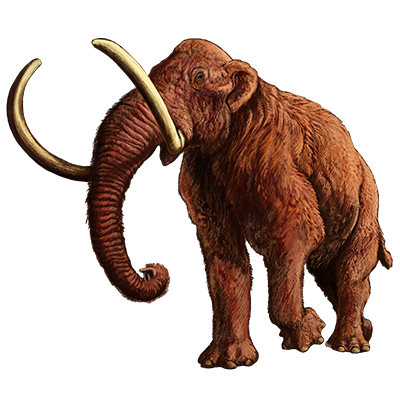
Woolly mammoth
Extinct ice-age elephant relative, adapted to cold and hunted by humans.

James St. John · CC BY 2.0
The woolly mammoth (Mammuthus primigenius) is an extinct mammoth species that existed from the Middle Pleistocene through to the Holocene. It was among the final members of a mammoth lineage that started with the African Mammuthus subplanifrons in the early Pliocene. Its nearest living relative is the Asian elephant. The woolly mammoth split from the steppe mammoth roughly 800,000 years ago in Siberia. In North America, it lived alongside the Columbian mammoth (Mammuthus columbi), and DNA evidence shows the two species interbred. Mammoth remains were familiar in Asia long before Europeans encountered them, and their origin was often attributed to legendary creatures. The species was identified as an extinct elephant by Georges Cuvier in 1796.
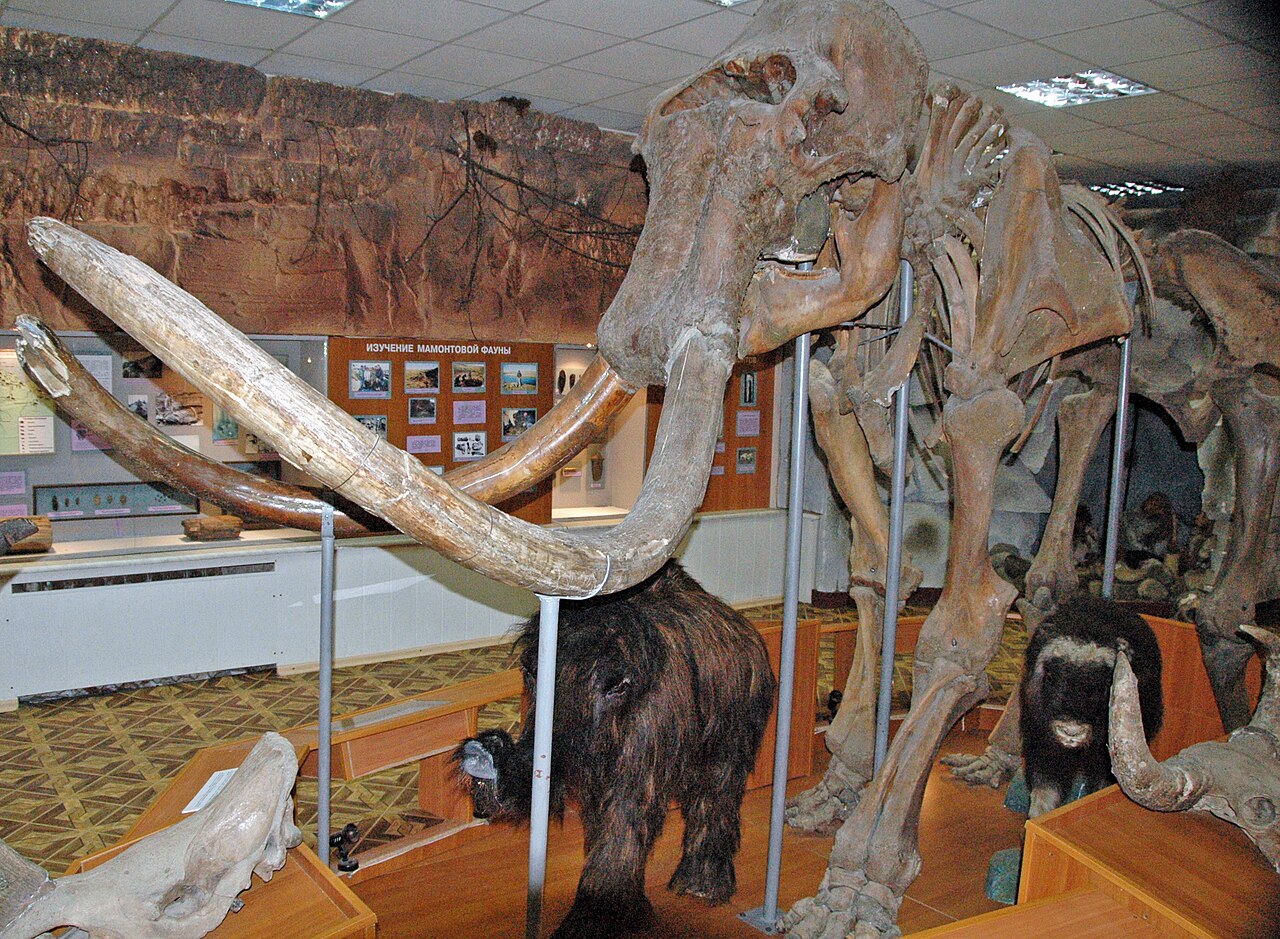
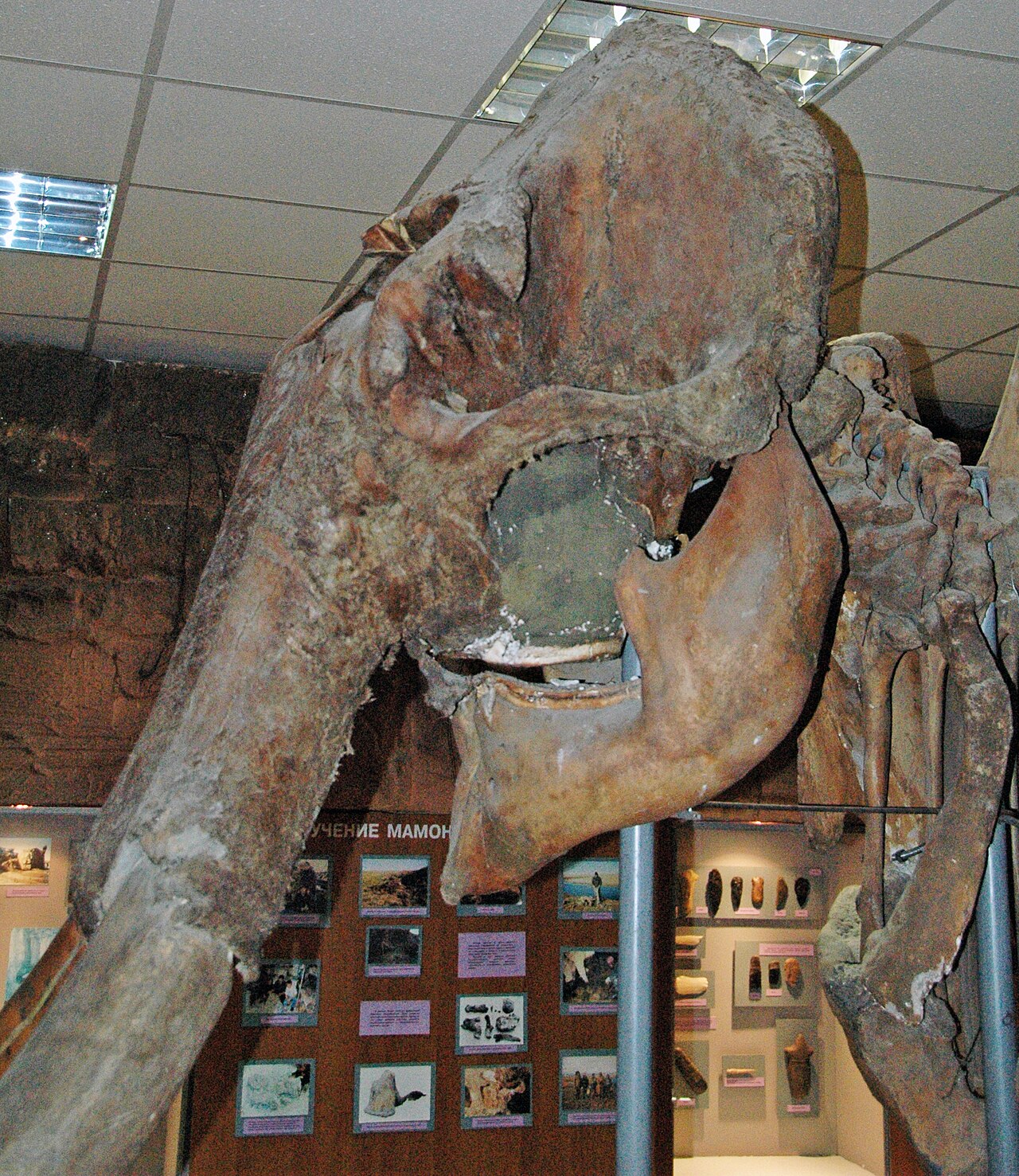
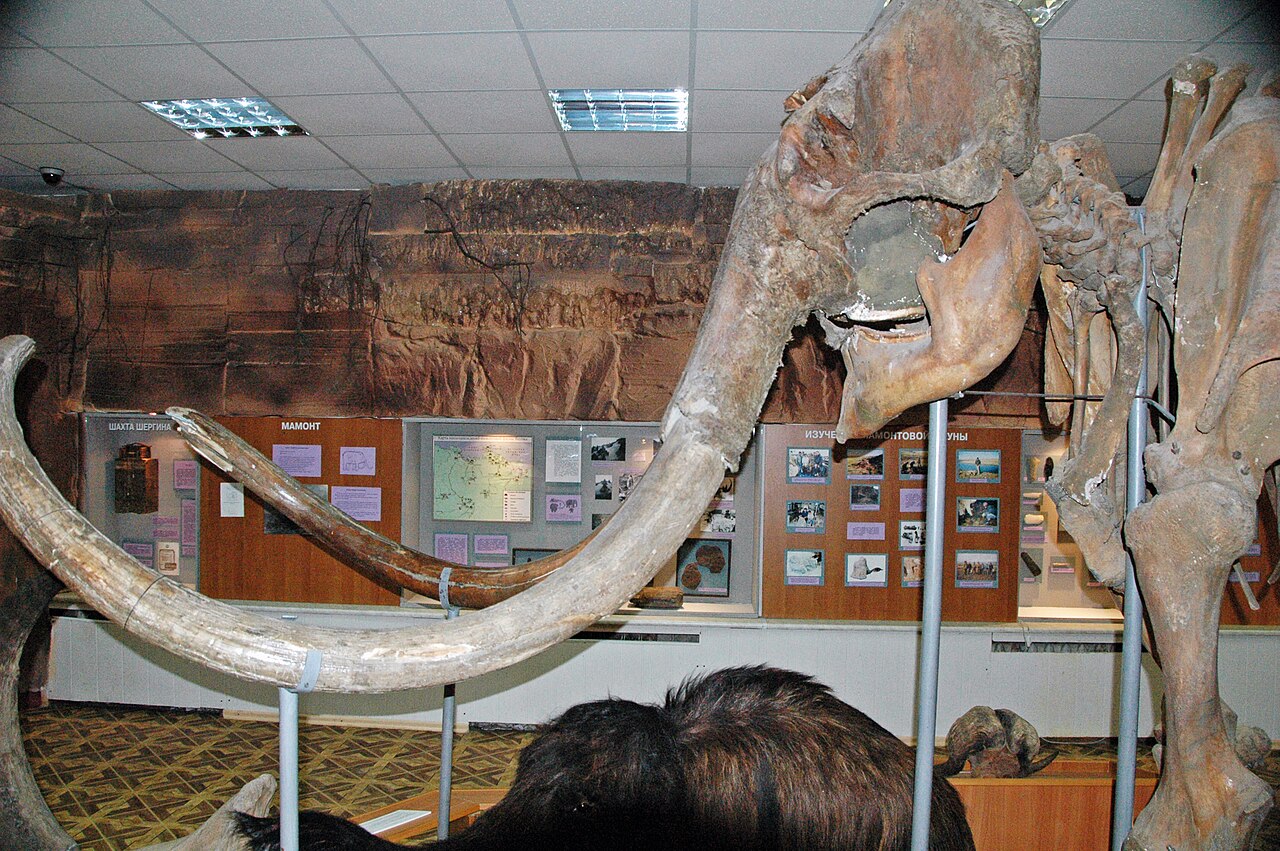
Because of frozen carcasses found in Siberia and North America, along with skeletons, teeth, stomach contents, dung, and prehistoric cave paintings, the woolly mammoth’s appearance and behavior are among the most thoroughly studied of any prehistoric animal. It was about the same size as modern African elephants. Males stood a certain height at the shoulder and weighed a certain amount; females were smaller, and newborns weighed about a specific amount. The animal was heavily adapted to cold climates during glacial periods, including the last ice age. It had a coat of long guard hairs over a shorter undercoat, with color ranging from dark to light. Its short ears and tail helped prevent frostbite and heat loss. It possessed long, curved tusks and four molars that were replaced six times over its lifetime. Behavior resembled that of modern elephants: it used its tusks and trunk for manipulating objects, fighting, and foraging. Its diet mainly consisted of forbs and grasses. Individuals could likely live up to 60 years. Its habitat was the mammoth steppe, which covered northern Eurasia and North America.
Early humans lived alongside the woolly mammoth, hunting it for food and using its bones and tusks to create art, tools, and dwellings. The population declined at the end of the Late Pleistocene. The last mainland Siberian populations persisted until roughly 10,000 years ago, though isolated groups survived on St. Paul Island until 5,600 years ago and on Wrangel Island until 4,000 years ago. After extinction, humans continued using mammoth ivory as a raw material, a practice that continues today. The completion of the mammoth genome project in 2015 sparked discussion about possibly reviving the species through various methods, but none are currently feasible.
Taxonomy Native Siberians and Native Americans long knew of woolly mammoth remains and interpreted them in various ways. Remains later reached other parts of Asia and Europe, where they were also explained differently before modern science. The first remains studied by scientists were fossilized teeth and tusks from Siberia, examined by British physician Hans Sloane in 1728. Sloane was the first to recognize they belonged to elephants. He offered a biblical explanation, suggesting they were buried during the Great Flood and that Siberia had once been tropical before a drastic climate shift. Others argued the flood had carried elephants from the tropics to the Arctic. Sloane’s paper relied on travelers’ descriptions and a few scattered bones from Siberia and Britain; he discussed whether the remains were from elephants but drew no firm conclusions.
In 1738, German zoologist Johann Philipp Breyne argued that mammoth fossils were a type of elephant. He could not explain why a tropical animal would be found in cold Siberia and suggested the Great Flood had transported them there. In 1796, French biologist Georges Cuvier was the first to identify woolly mammoth remains not as modern elephants moved to the Arctic, but as an entirely new, extinct species—a concept not widely accepted at the time. Following Cuvier’s identification, German naturalist Johann Friedrich Blumenbach gave the species its scientific name, *Elephas primigenius*, in 1799, placing it in the same genus as the Asian elephant. The name means “first-born elephant.” Cuvier proposed *Elephas mammonteus* a few months later, but the earlier name stuck. In 1828, British naturalist Joshua Brookes used the name *Mammuthus borealis* for woolly mammoth fossils in his collection, coining a new genus name.
The origin of the word “mammoth” is unclear. According to the Oxford English Dictionary, it comes from an old Vogul word *mēmoŋt* meaning “earth-horn.” It might be a version of *mehemot*, the Arabic form of the biblical *behemoth*. Another possible origin is Estonian, where *maa* means “earth” and *mutt* means “mole.” The word first appeared in Europe in the early 17th century, referring to *maimanto* tusks from Siberia. U.S. President Thomas Jefferson, keenly interested in paleontology, helped popularize the term.
- Scientific name
- Mammuthus primigenius
- Time period
- Middle Pleistocene to Holocene
- Size
- Males 2.67–3.49 m shoulder height, 3.9–8.2 t; females 2.3–2.6 m, 2.8–4 t
- Closest living relative
- Asian elephant
Lore & Background
It was well adapted to cold environments, with fur consisting of long guard hairs and a shorter undercoat, short ears and tail to minimize frostbite and heat loss, and long curved tusks. Its diet was mainly forbs and grasses, and individuals could probably reach age 60. The Columbian mammoth lived alongside it in North America, and DNA studies show the two hybridized. Remains of woolly mammoths were long known in Asia before reaching Europe, where they were often explained as legendary creatures. The word 'mammoth' may originate from Vogul, Arabic, or Estonian; it was first used in Europe in the early 17th century for tusks from Siberia.
Reader's Guide
The woolly mammoth is significant as one of the most iconic ice-age megafauna, providing extensive insights into prehistoric life through frozen carcasses, cave paintings, and DNA studies. The species coexisted with early humans, who used its remains for food, art, tools, and dwellings. After extinction, humans continued using its ivory, a tradition that persists today. Its taxonomy was clarified by researchers from the 1970s onward, retaining all species in the genus Mammuthus. The word 'mammoth' entered common language as an adjective for anything of surprisingly large size, partly due to Thomas Jefferson.
Did You Know?
- The woolly mammoth's closest living relative is the Asian elephant.
- Males reached shoulder heights up to 3.49 m and weighed up to 8.2 t.
- The word 'mammoth' was first used in Europe in the early 17th century for tusks from Siberia.
Deep Roots and the Long Road to Recognition
The woolly mammoth did not appear in a vacuum. It represented the final chapter in a lineage of proboscideans that stretched back to the early Pliocene, when the African species Mammuthus subplanifrons first walked the Earth. Its nearest living cousin is the Asian elephant, and in North America it shared range with the Columbian mammoth, with which genetic evidence confirms interbreeding occurred. For centuries, scattered bones and tusks surfaced across Asia and Europe, and local peoples wove them into myths about legendary beasts.
Built for the Ice: Anatomy and Survival
The woolly mammoth was a creature sculpted by relentless cold. Standing roughly as tall as a modern African elephant, adult bulls measured between 2.67 and 3.49 metres at the shoulder and carried between 3.9 and 8.2 tonnes of body mass, while females stood 2.3 to 2.6 metres and weighed 2.8 to 4 tonnes. A newborn calf tipped the scales at around 90 kilograms. To endure glacial winters, the animal wore a double-layered coat: long, coarse guard hairs over a dense, shorter undercoat, with colour ranging from dark to light across individuals. Ears and tail were deliberately short, a design that curtailed heat loss and reduced the risk of frostbite. Curved tusks grew long and served multiple purposes—fighting, foraging, and manipulating objects—much as an elephant's trunk does. The jaw held four molars that were cycled through six replacements over a lifespan that could stretch to sixty years. Its daily menu consisted mainly of grasses and forbs, and its home was the vast mammoth steppe that blanketed northern Eurasia and North America during the last ice age.
Shared Landscapes and a Slow Disappearance
The woolly mammoth did not live in isolation from humanity. Early human groups shared the mammoth steppe with these giants, hunting them for meat and repurposing their massive bones and tusks into tools, works of art, and even structural elements of dwellings. This intimate relationship meant that mammoth remains became deeply embedded in human material culture long before the species vanished. The population began its long decline toward the close of the Late Pleistocene. Yet the story did not end there. Even after the species was gone, humans continued to harvest mammoth ivory as a raw material, a practice that has carried into the modern era. The mammoth thus left a dual legacy—both as a living neighbour on the Pleistocene landscape and as a resource whose remnants still shape human craft.
Frozen Windows, Ancient Genomes, and a Living Word
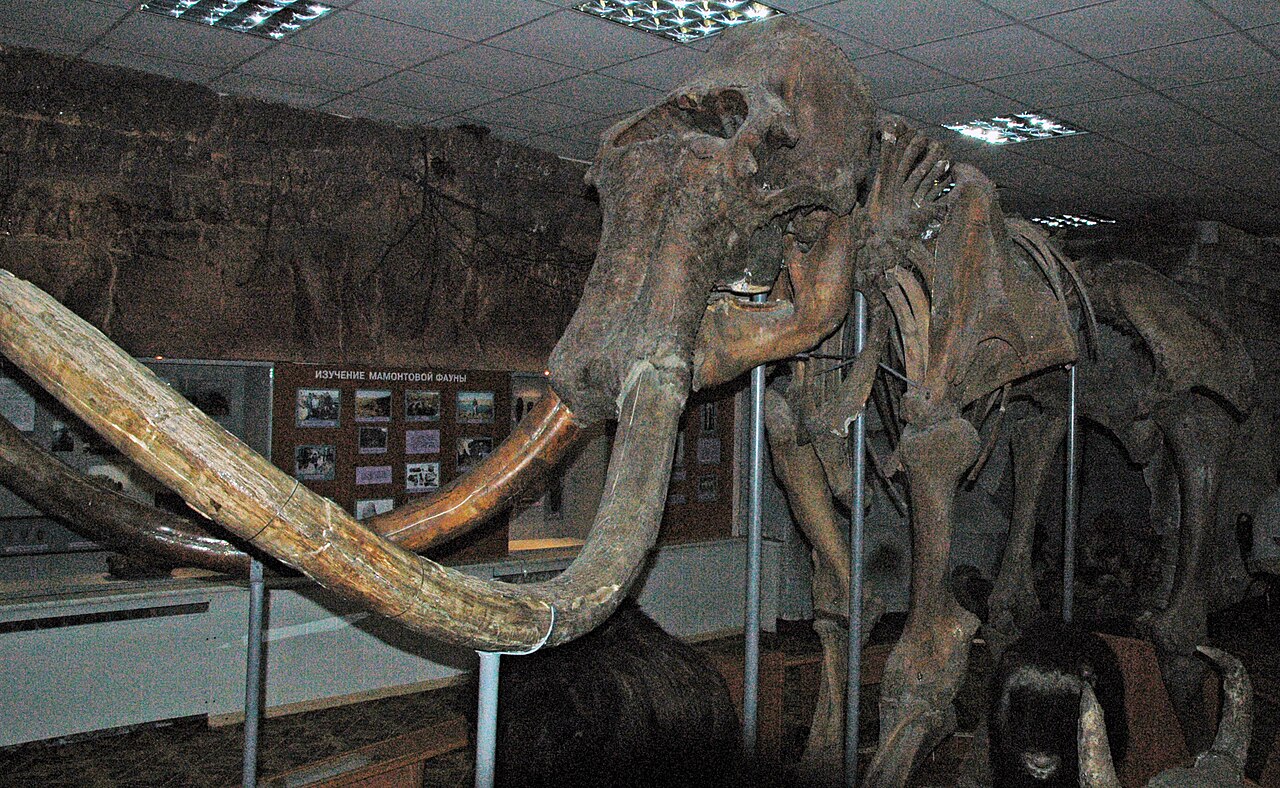
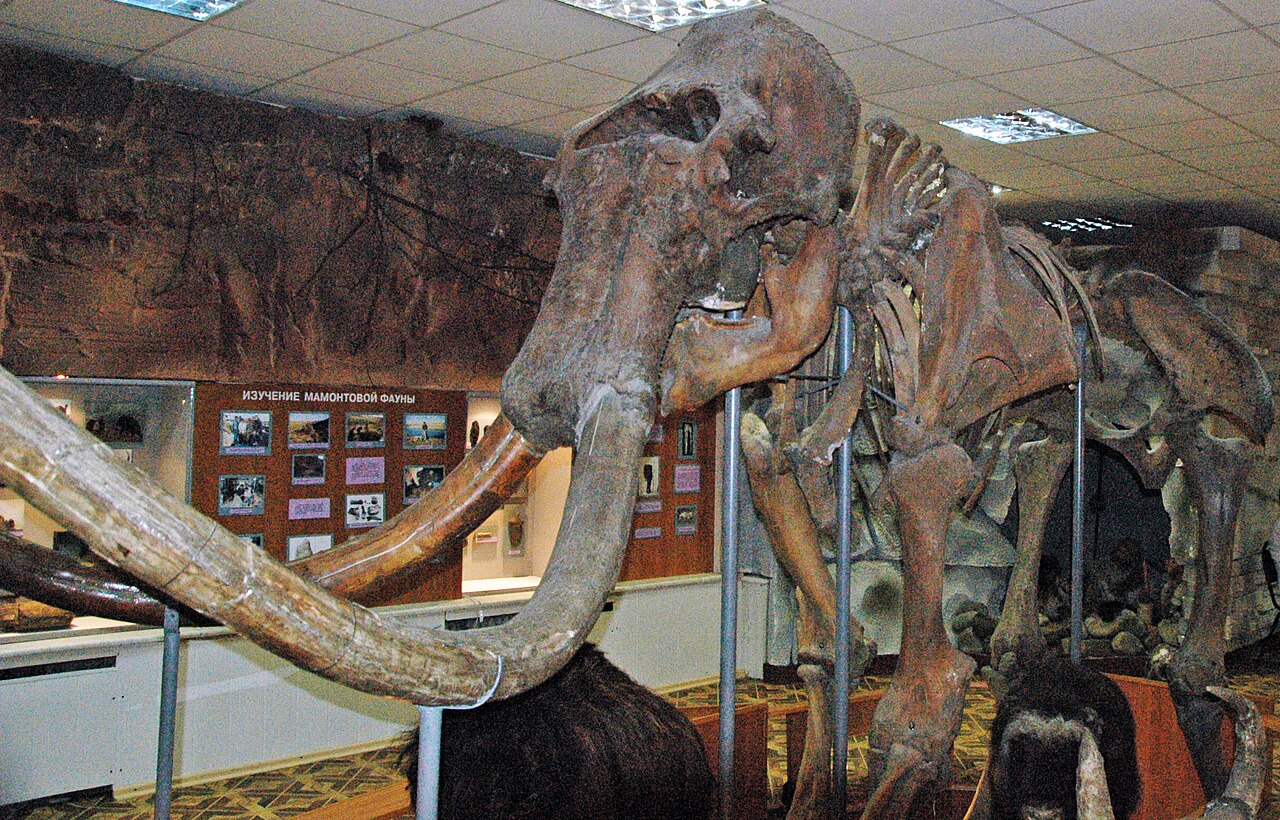
No prehistoric animal is known in such vivid detail as the woolly mammoth. Frozen carcasses pulled from Siberian and North American permafrost, alongside skeletons, teeth, preserved stomach contents, dung, and life-sized depictions in prehistoric cave paintings, have given researchers an almost photographic record of its appearance and habits. As of now, none of those proposed approaches are technically feasible, but the conversation itself has reshaped how people think about extinction and genetic heritage. The word "mammoth" itself carries a rich etymological trail.
Gallery
Frequently Asked Questions
Who is Woolly mammoth?
The woolly mammoth (Mammuthus primigenius) was a cold-adapted elephant relative that roamed the Northern Hemisphere's ice-age plains from the Middle Pleistocene onward. It represented one of the final links in a long lineage of mammoth species that began with the African Mammuthus subplanifrons in the early Pliocene.
What are Woolly mammoth's powers/role?
As a massive herbivore, males could stand up to 3.49 m at the shoulder and weigh as much as 8.2 tonnes, while females reached around 2.6 m and 4 tonnes. Its thick coat, short ears, and long curved tusks made it perfectly equipped to forage and survive in glacial conditions.
How does Woolly mammoth's story end?
The species went extinct during the Holocene epoch, with the last surviving populations isolated on remote islands. Its disappearance closed out an entire mammoth lineage that had persisted for millions of years.
Why is Woolly mammoth important?
It is one of the best-studied prehistoric animals, preserved in frozen carcasses, bone assemblages, stomach contents, dung, and ancient cave paintings. Its direct coexistence with early humans—who hunted it and repurposed its bones and tusks for tools and art—makes it a crucial window into the relationship between people and megafauna.
What is Woolly mammoth's closest living relative?
The Asian elephant is the woolly mammoth's nearest extant cousin within the elephant family. That close kinship has allowed researchers to fill in gaps about mammoth biology and behavior by comparing the two.
More in Prehistoric Beasts 1-24
Spotted an error? Know more?
This is a living reference — every entry is fact-audited, and reader corrections feed straight into our audit queue. Suggest an edit · See this site's audit record