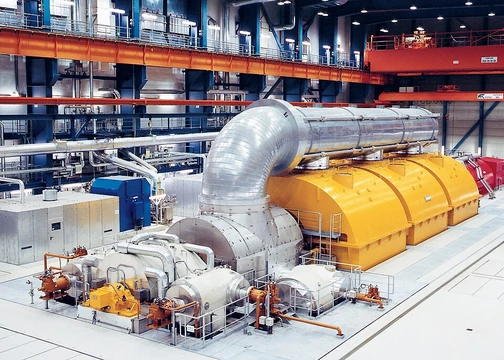
Fossil fuel power station
Thermal power stations burning fossil fuels to generate electricity.
Last updated
A majority of the world's electrical energy is supplied by fossil fuel power stations.[1] Carbon dioxide, a greenhouse gas that significantly drives global warming, is emitted in large quantities by fossil-fueled power stations.[2] Compared to equivalent amounts of petroleum or natural gas, coal is an impure fuel that generates more greenhouse gas and pollution.[3]
Last updated 2026-10-03 from the source article.
Quick Facts
- Field
- Electricity generation
- Known for
- Burning fossil fuels to produce the majority of the world's electrical energy
- Primary fuels
- Coal
- oil
- natural gas
- Typical efficiency
- 37% for coal and oil-fired plants; 56–60% for combined-cycle gas-fired plants
- Major emissions
- Carbon dioxide
- nitrogen oxides
- sulfur oxides
- mercury
- fly ash
- Global warming impact
- Major emitters of CO2, a greenhouse gas contributing to global warming
Facts from the source article.
Key facts and history
Coal is the most abundant fossil fuel and is a relatively cheap fuel for thermal power stations.[3] Combined-cycle gas-fired plants can achieve 56–60% thermal efficiency.[4] Modern coal plants use scrubbers to filter exhaust air, but their pollutants are still several times greater than natural gas plants.[5] Utility-scale electrical generators that run on coal or oil typically achieve a thermal efficiency of about 37%.[4]
A thermal power station can be used in a combined heat and power (CHP) system to deliver both electric power and heat.[6] If conventional fossil fuels continue to be burned, combined heat and power district heating (CHPDH) represents the most cost-effective method for reducing carbon emissions.[6]
What the cited sources add
The EPA's 2015 rule is projected to reduce toxic metal and nutrient discharges from steam electric plants by 1.4 billion pounds annually.[7] The same rule is estimated to reduce water withdrawal by 57 billion gallons per year.[7] A 2017 Power Mag article describes a Salt Splitter-RO pilot plant that was operated on flue-gas desulfurization wastewater from a coal-fired power plant.[8] That system achieved total electrical power savings of 38% compared to an evaporator.[8]
The EPA reports that in 2022, 60% of U.S. electricity came from burning fossil fuels, mostly coal and natural gas.[9] CO₂ emissions from U.S. fossil fuel combustion increased by 8% from 2020 to 2022.[9]
References
- Wikipedia, "Fossil fuel power station" (CC BY-SA 4.0), which cites: "Getting Wind and Sun onto the Grid", International Energy Agency (original not read by us) en.wikipedia.org
- Wikipedia, "Fossil fuel power station" (CC BY-SA 4.0), which cites: Heidari, "A Review of Greenhouse Gas Emission Liabilities as the Value of Renewable Energy for Mitigating Lawsuits for Climate Change Related Damages", Renewable and Sustainable Energy Reviews, 2016, p. 899–908 (original not read by us) en.wikipedia.org
- Wikipedia, "Fossil fuel power station" (CC BY-SA 4.0), which cites: Trivelpiece, "The Future of Nuclear Research Centers", Oak Ridge National Laboratory Review, 1993, p. 28 (original not read by us) en.wikipedia.org
- Wikipedia, "Fossil fuel power station" (CC BY-SA 4.0), which cites: Sonal Patel, "Who Has the World's Most Efficient Coal Power Plant Fleet?", 4 January 2017 (original not read by us) en.wikipedia.org
- Wikipedia, "Fossil fuel power station" (CC BY-SA 4.0), which cites: "Steam Electric Power Generating Effluent Guidelines – 2015 Final Rule", US Environmental Protection Agency (EPA), 2020-09-04 (we also read that source) en.wikipedia.org
- Wikipedia, "Fossil fuel power station" (CC BY-SA 4.0), which cites: "Claverton-energy.co.uk" (we also read that source) en.wikipedia.org
- "Steam Electric Power Generating Effluent Guidelines – 2015 Final Rule", US Environmental Protection Agency (EPA), 2020-09-04. facts only, no text reused. epa.gov
- "Lowering Cost and Waste in Flue Gas Desulfurization Wastewater Treatment", Power Mag, March 2017. facts only, no text reused. powermag.com
- "Sources Climate Change", EPA, 2012. facts only, no text reused. epa.gov
Each numbered sentence above was checked against the source it cites before publication. Sentences citing Wikipedia adapt text from the English Wikipedia article Fossil fuel power station (contributors), used under CC BY-SA 4.0; this entry is available under the same licence. Other sources were used for facts only; no text or images are copied from them.
More in Power Generation
Sources
Compiled from Wikipedia and the sources listed below. Text from Wikipedia is available under CC BY-SA 4.0; this entry is adapted from it.
- Wikipedia: Fossil fuel power station (CC BY-SA 4.0).
- Word definitions: the Codexery glossary, each quoted from its Wikipedia article.
Spotted an error? Know more?
Reader corrections go straight into our review queue. Suggest an edit · How this site is sourced