Degredado
Portuguese convict exiles who served the crown overseas.
Degredado, a Portuguese term from the 15th to 18th centuries, originally described anyone legally restricted in movement, speech, or labor. Its root, from Latin decretum, means "a decreed one." As Portugal’s penal transportation system grew, the word came to specifically mean an exiled convict, with the exile itself called degredo.
Quick Facts
- Etymology
- from Latin decretum
- Period of prominence
- 15th to 18th centuries
- Notable degredados
- António Fernandes
- João Nunes
- Luís de Moura
- Bachelor of Cananeia
- João Ramalho
Facts from the source article.
Background
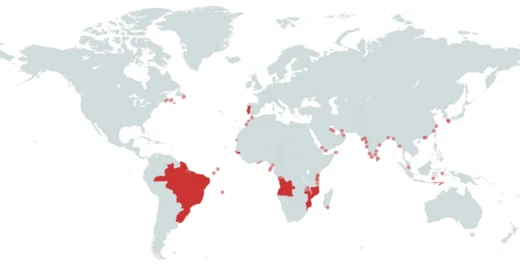
Degredados were individuals exiled from Portugal, mostly common criminals but also including political prisoners and religious dissenters like backsliding New Christians. Their exile was not always a direct sentence; some faced long prison terms or execution but chose to commute those penalties to a shorter period of overseas service for the crown. These exiles proved crucial during the Portuguese Age of Discovery, playing an outsized role in establishing colonies, especially in Africa and Brazil. Typically, they were deposited in a colony or left on an unfamiliar coastline for the duration of their sentence. Many received specific royal instructions, and good performance could lead to a reduced sentence or pardon. Common duties involved setting up staging posts and warehouses, working as laborers in new settlements, or manning small forts. Those abandoned on unknown shores, called lançados or "the launched ones," were often tasked with inland exploration, seeking legendary cities or contacting unknown peoples. Some degredados, like António Fernandes, gained lasting fame as explorers. While many fulfilled their terms well enough to earn pardons, probably just as many ignored their exile conditions. Some jumped ship at safer ports, others stowed away on vessels returning to Europe, some formed outlaw colonies beyond crown oversight, and others "went native," building new lives among local populations and erasing their pasts entirely.
History
During the 15th and 16th centuries, Portuguese ships heading out for exploration and conquest typically included a few degredados. These individuals were used for dangerous or unpleasant jobs that regular sailors avoided. When a ship reached an unknown coast, a degredado was often the first to go ashore to see if the local people were dangerous. After initial contact, degredados would stay overnight in native settlements to gather intelligence and build goodwill. If fighting broke out, they were the ones sent to deliver messages between the ship and local leaders. Over the 16th and 17th centuries, degredados became a major part of Portuguese colonial settlements. They made up a large share of the population in places like Morocco, the Atlantic islands, São Tomé and Príncipe, Angola, Benguela, and Mozambique. In Brazil, many early colonies relied on them. For example, Espírito Santo was founded in 1536 with about 70 degredados, and Salvador, the first capital, was established in 1549 with roughly 400 to 600 degredados.
Famous degredados
João Nunes, a New Christian degredado taken by Vasco da Gama on the first expedition to India, was the first to go ashore in Calicut due to his rudimentary knowledge of Hebrew and Arabic; he uttered the famous phrase 'We came to seek Christians and spices'. Luís de Moura, a degredado taken by Pedro Álvares Cabral on the second armada in 1500, was dropped off in East Africa and served for many years as the effective Portuguese factor and representative to the Sultan of Malindi. António Fernandes, a sometime carpenter exiled to Sofala in either 1500 or 1505, conducted overland exploration trips in 1512–1515, 300 miles deep into the lands of the Monomatapa and Matabeleland. The 'Bachelor of Cananeia', a mysterious New Christian degredado abandoned on the coast of southern Brazil in 1502, raised himself into a major chieftain of the Carijó Indians and led a raid to sack the Portuguese colony of São Vicente in 1533. João Ramalho, either a degredado or a shipwrecked sailor left in southern Brazil around 1511, established himself as a lesser chieftain among the Tupiniquim and helped the Portuguese establish São Vicente and later São Paulo.
More in Portuguese Empire
Spotted an error? Know more?
Reader corrections go straight into our review queue. Suggest an edit · How this site is sourced