Frequently Asked Questions
The most-asked questions about porites and poritid corals.
What exactly is Porites?
Porites is a genus of stony (scleractinian) corals in the family Poritidae, and it is one of the most species-rich and geographically widespread coral lineages on the planet. It encompasses both massive boulder-forming and branching species found across tropical and subtropical reefs worldwide.
How many species are in the genus?
Taxonomists currently recognize roughly one hundred or more described species of Porites, making it one of the largest genera within Poritidae. Ongoing molecular and morphological studies continue to split or merge names, so the tally shifts as new research emerges.
Where do poritid corals live?
Members of Poritidae are found in every tropical and subtropical ocean, ranging from shallow reef crests down to mesophotic depths well beyond fifty meters. Porites in particular tolerates a wide spectrum of light levels and wave-energy conditions, which is a big part of why it is so cosmopolitan.
What makes Porites look different from, say, Acropora?
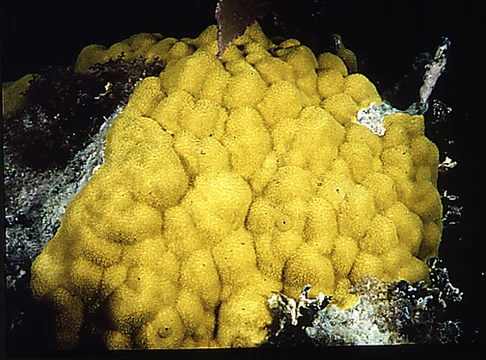
Porites typically builds dense, rounded boulders or thick plates with a granular or finely textured surface, whereas Acropora tends to form delicate staghorn or table shapes. Porites also lacks the prominent axial corallites and rapid tip-growth that are hallmarks of acroporid corals.
What ecological role does Porites play on a reef?
As one of the slowest-growing major reef builders, Porites forms the structural backbone of many reefs and can persist for centuries, providing stable substrate for a huge array of invertebrates and fish. Its dense skeleton also makes it a key natural archive for paleoclimate and paleoceanographic research.
How do Porites corals reproduce?
Most Porites species broadcast-spawn, releasing clouds of eggs and sperm into the water column during a coordinated seasonal event. A few species, however, are brooders that carry developing embryos internally before releasing free-swimming planulae.
Can I keep Porites in a home reef tank?
Yes—many Porites species are considered beginner-friendly in the reef aquarium because they tolerate a range of water parameters and grow slowly enough not to overwhelm a system. They do best with stable alkalinity, moderate flow, and moderate-to-high lighting.
What is a 'poritid' coral, and how is that different from just 'Porites'?
The term 'poritid' refers to the entire family Poritidae, which also includes genera such as Favites, Pseudosiderastrea, and Favia in addition to Porites itself. So every Porites is a poritid, but not every poritid is a Porites.
Why do scientists care so much about Porites?
Because of its slow growth and long lifespan, a single Porites colony can record hundreds to thousands of years of environmental change in its skeletal bands. That makes it a natural time capsule for studying past shifts in temperature, salinity, and ocean chemistry.
Where should a newcomer start learning about poritid corals?
Begin by learning the basic growth forms—massive, encrusting, branching—and the family-level differences between Porites, Favites, and Pseudosiderastrea. From there, picking one or two local species and observing their polyps, spawning behavior, and position on the reef will give you a solid intuitive foundation.