Oligomer
Molecule of a few repeating units from monomers.

An oligomer is a molecule built from a small number of repeating structural units, which are derived, either actually or conceptually, from simpler molecules called monomers. The name is constructed from the Greek elements *oligo-*, meaning "a few," and *-mer*, meaning "parts"; the corresponding adjective is *oligomeric*. This concept is typically contrasted with that of a polymer, which is generally understood to contain a very large number of units, potentially thousands or millions. However, no sharp boundary exists between the two, and one proposed distinguishing criterion is whether the molecule’s properties change significantly when one or a few units are removed.
Oligomers with a specific number of units are named using Greek prefixes with the suffix *-mer*: a dimer has two units, a trimer three, a tetramer four, a pentamer five, and a hexamer six. The arrangement of these units can vary: they may form a linear chain, a closed ring (as in 1,3,5-trioxane, a cyclic trimer of formaldehyde), or a more complex structure, such as the cube-like core of tellurium tetrabromide, a tetramer. When all units are identical, the molecule is a homo-oligomer; otherwise, it is a hetero-oligomer. Collagen, composed of three identical protein chains, is an example of a homo-oligomeric protein.
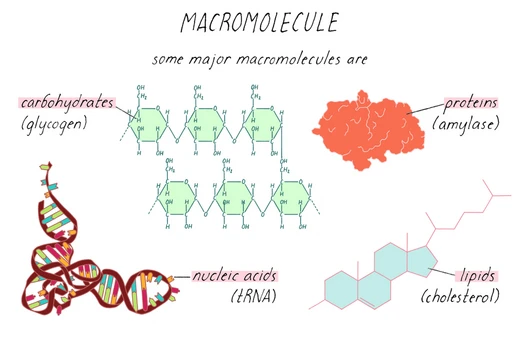
Many biologically important oligomers are macromolecules, including proteins and nucleic acids. Hemoglobin is a protein tetramer. An oligomer of amino acids is an oligopeptide or simply a peptide; an oligosaccharide is an oligomer of monosaccharides; and an oligonucleotide is a short, single-stranded fragment of DNA, RNA, or similar analogs like peptide nucleic acid. The units of an oligomer may be connected by covalent bonds, often formed through condensation or bond rearrangement, or by weaker forces such as hydrogen bonds. In biochemistry, the term *multimer* is used for oligomers of proteins that are not covalently bound; for instance, the major capsid protein VP1 of polyomaviruses self-assembles into a multimer of 72 pentamers held together by local electric charges.
Many oils, such as liquid paraffin, are oligomeric. Plasticizers, widely used to soften thermoplastics like PVC, are oligomeric esters. Polybutene is an oligomeric oil used in putty. Oligomerization is the chemical process that converts monomers into macromolecular complexes with a finite degree of polymerizati
- field
- Chemistry and biochemistry
- known_for
- Molecules with a few repeating units, contrasted with polymers
- types
- Dimer, trimer, tetramer, pentamer, hexamer
- examples
- Collagen (homo-oligomeric protein), hemoglobin (protein tetramer), melam (dimer of melamine), 1,3,5-trioxane (cyclic trimer of formaldehyde)
Lore & Background
Oligomers are molecules composed of a small number of repeating structural units, derived from smaller monomers. The term comes from Greek roots meaning "a few parts," and the adjective form is oligomeric. An oligomer with a specific number of units is named using Greek prefixes with the suffix -mer: a dimer has two units, a trimer has three, a tetramer has four, a pentamer has five, and a hexamer has six. The arrangement of these units can vary: they may form a linear chain, a closed ring (as seen in cyclic oligomers like crown ethers), or a more complex, cube-like structure. If all units are identical, the molecule is a homo-oligomer; if different, it is a hetero-oligomer. There is no sharp dividing line between an oligomer and a polymer, though one proposed criterion is whether removing a few units significantly changes the molecule's properties. Biologically important oligomers include proteins (such as hemoglobin, a tetramer), oligopeptides (short chains of amino acids), oligosaccharides (chains of simple sugars), and oligonucleotides (short fragments of nucleic acids like DNA or RNA). Oligomers may be connected by covalent bonds, often formed through condensation reactions, or by weaker forces such as hydrogen bonds. In biochemistry, a multimer refers to an oligomer of proteins that are not covalently bound, held together by local electric charges. Many oils, such as liquid paraffin and polybutene, are oligomeric, and plasticizers are oligomeric esters used to soften thermoplastics. The process of forming oligomers from monomers is called oligomerization, and when chain transfer limits the size, it is termed telomerization. In the oil and gas industry, "green oil" refers to oligomers produced in ethylene plant reactors, consisting mainly of unsaturated hydrocarbons.
Reader's Guide
Oligomers are significant in chemistry and biochemistry as intermediate-sized molecules bridging monomers and polymers. Their properties can vary with unit count, making them useful in understanding structure-function relationships. In biology, oligomeric proteins like collagen and hemoglobin are essential for structure and oxygen transport. In industry, oligomers appear as oils (e.g., liquid paraffin, polybutene) and plasticizers used to soften thermoplastics like PVC. The term multimer is used for non-covalently bound protein oligomers, such as the VP1 capsid protein of polyomaviruses. Oligomerization converts monomers to macromolecular complexes with finite degree of polymerization; telomerization limits size via chain transfer. In petrochemical production, green oil refers to oligomers (C4 to C20) formed in hydrogenation reactors, mostly aliphatic dienes. The concept remains flexible, with no sharp boundary between oligomers and polymers.
Did You Know?
- The name oligomer comes from Greek oligo- ("a few") and -mer ("parts").
- An oligomer with six units is called a hexamer.
- Hemoglobin is a protein tetramer.
- Green oil in the oil and gas industry is a mixture of C4 to C20 unsaturated oligomers.
Definition and Nomenclature
An oligomer is a molecular construct made up of a small number of repeating units that can be traced back to simpler building blocks called monomers. The word itself draws from Greek roots: "oligo-" meaning "a few" and "-mer" meaning "parts," giving us a name that literally describes the modest scale of the assembly. The adjective form, "oligomeric," is used when these molecules are referenced in broader chemical discussions. What sets an oligomer apart from a polymer is not a hard numerical boundary but rather a conceptual one. A polymer typically contains thousands or even millions of units, while an oligomer holds just a handful. One proposed way to draw the line is to ask whether removing one or a few units would noticeably alter the molecule's properties. When an oligomer has a precise count of units, Greek numerical prefixes are paired with the "-mer" suffix to produce names like dimer (two units), trimer (three), tetramer (four), pentamer (five), and hexamer (six). This naming system provides immediate clarity about the molecule's scale.
Structural Diversity and Classification
The repeating units within an oligomer can be arranged in remarkably varied geometries. A linear chain is the simplest configuration, as seen in melam, which is a dimer of melamine. At the other end of the spectrum, units can close into a ring, exemplified by 1,3,5-trioxane, a cyclic trimer derived from formaldehyde. More intricate architectures are also possible; tellurium tetrabromide, for instance, forms a tetramer of TeBr4 around a cube-like core. Beyond geometry, oligomers are further classified by the nature of their constituent units. When every unit is identical, the molecule is termed a homo-oligomer. Collagen, a protein built from three identical chains, serves as a classic example. When the units differ from one another, the prefix "hetero-" is applied, yielding the term hetero-oligomer. The connections between units can range from strong covalent bonds—often produced through bond rearrangement or condensation reactions—to weaker interactions such as hydrogen bonds, adding yet another layer of structural and functional diversity.
Biological Significance
In the living world, oligomers play a central role in the architecture of macromolecules. Proteins and nucleic acids, for example, frequently exist as oligomeric assemblies. Hemoglobin, the oxygen-carrying protein in red blood cells, is a tetramer composed of four subunits. Short chains of amino acids are called oligopeptides or simply peptides, while oligosaccharides represent oligomeric assemblies of simple sugars. In the realm of nucleic acids, an oligonucleotide is a short single-stranded fragment of DNA or RNA, and analogous short fragments can be synthesized from artificial backbones such as peptide nucleic acid or Morpholinos. In biochemistry, the term "multimer" specifically describes protein oligomers whose subunits are held together by non-covalent forces rather than covalent bonds. A striking example is the major capsid protein VP1 of polyomaviruses, which self-assembles into a multimer of 72 pentamers, with local electric charges guiding the arrangement.
Industrial Applications and Formation
Oligomers are not confined to the laboratory or the cell; they permeate everyday industrial chemistry. Many common oils, including liquid paraffin, are oligomeric in nature. Plasticizers, which are oligomeric esters, are widely employed to soften thermoplastics such as PVC and can be produced either by linking monomers together or by separating them from the heavier fractions of crude oil. Polybutene, another oligomeric oil, finds use in the manufacture of putty. The chemical process that converts monomers into these finite macromolecular complexes is called oligomerization, distinguished from full polymerization by its limited degree of chain growth. A related technique, telomerization, imposes even tighter size constraints by introducing chain transfer under controlled conditions. In the oil and gas sector, the term "green oil" describes oligomers generated in C2, C3, and C4 hydrogenation reactors at ethylene plants; this mixture contains roughly 90% aliphatic dienes alongside about 10% alkanes and alkenes, produced through the oligomerization of alkenes using various heterogeneous and homogeneous catalysts.
Frequently Asked Questions
What is an oligomer?
An oligomer is a molecule built from a small number of repeating units that originate from monomers. It sits between a simple monomer and a full polymer in terms of chain length.
How does an oligomer differ from a polymer?
A polymer contains many repeating units, while an oligomer contains only a few. There is no universally agreed cutoff, but one practical test is whether removing a handful of units noticeably shifts the molecule's properties.
What are the main types of oligomers?
They are commonly named by unit count: dimer (2), trimer (3), tetramer (4), pentamer (5), and hexamer (6). These labels simply reflect how many monomer units are linked together.
Can you give real-world examples of oligomers?
Hemoglobin is a protein tetramer, and collagen is a homo-oligomeric protein made of repeating subunits. In small-molecule chemistry, 1,3,5-trioxane is a cyclic trimer of formaldehyde, and melam is the dimer of melamine.
Where does the word 'oligomer' come from?
It is built from the Greek prefix oligo- meaning 'a few' and the suffix -mer meaning 'parts.' The related adjective form is 'oligomeric,' used to describe any structure or property tied to those few repeating units.
More in Polymers And Macromolecules 1-24
Spotted an error? Know more?
This is a living reference — every entry is fact-audited, and reader corrections feed straight into our audit queue. Suggest an edit · See this site's audit record