
Mario Benedetti
Uruguayan writer and key member of the Generación del 45.

Chixoy · CC BY-SA 4.0
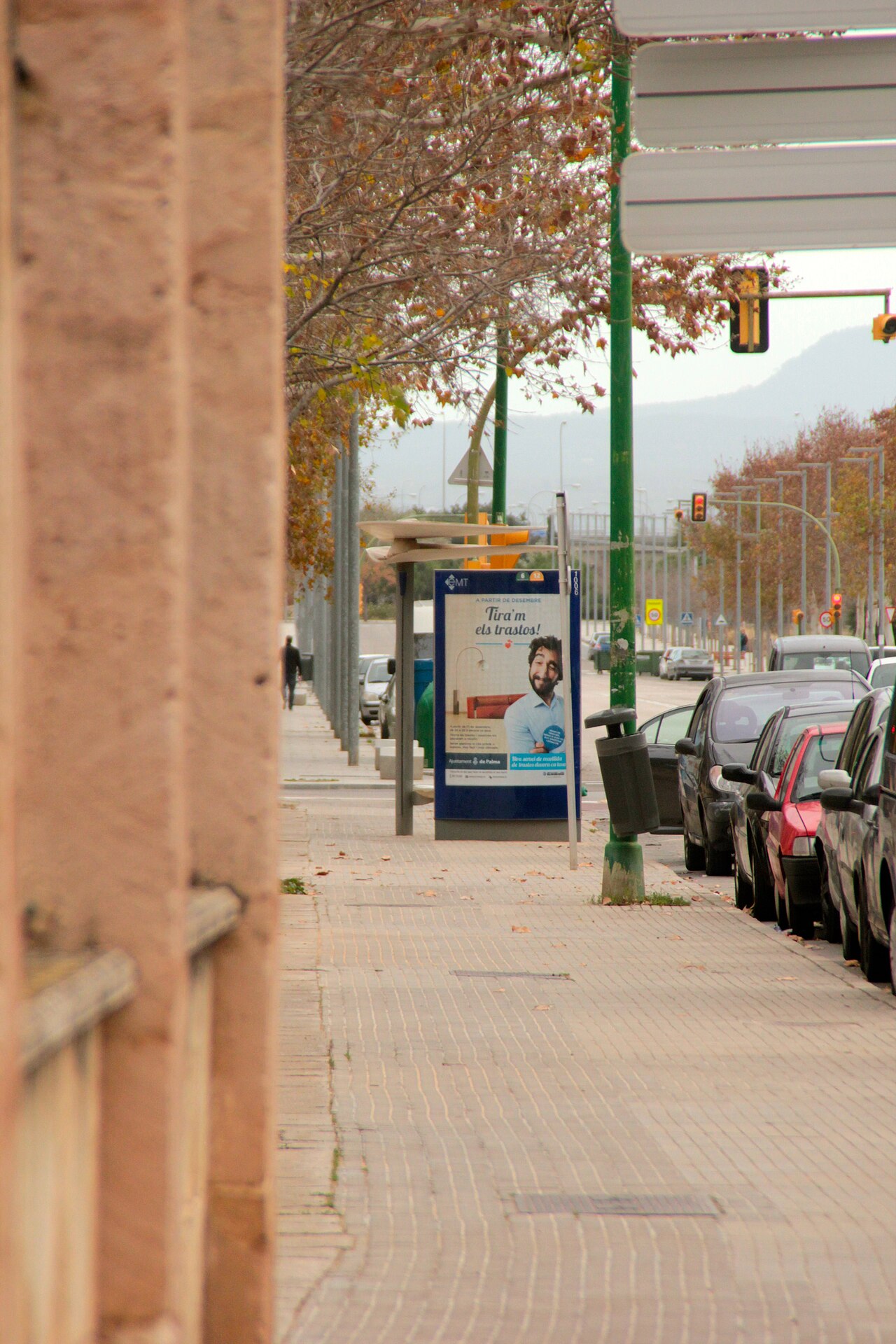
Mario Benedetti was a Uruguayan journalist, novelist, and poet, and a key figure in the Generación del 45. He wrote over 80 books, translated into twenty languages, yet remained largely unknown to English-speaking audiences. In the Spanish-speaking world, he is regarded as one of Latin America's most significant writers of the late twentieth century. When he was two, the family moved to Tacuarembó, then to Montevideo after his father was cheated in a business deal and went bankrupt. They lived in difficult economic conditions. Benedetti completed six years of primary school at the Deutsche Schule Montevideo, where he learned German—a skill that later made him the first translator of Franz Kafka in Uruguay. His father pulled him out when Nazi ideology entered the classroom. He then studied at Liceo Héctor Miranda for two years, but finished high school without attending an institution. He learned shorthand, which became his livelihood. At fourteen, he started working as a stenographer, then as a salesman, public officer, accountant, journalist, broadcaster, and translator. He trained as a journalist under Carlos Quijano at the weekly newspaper *Marcha*. In 1946, he married Luz López Alegre. He was part of the Generación del 45, a Uruguayan intellectual and literary movement that included Carlos Maggi, Manuel Flores Mora, Ángel Rama, Emir Rodríguez Monegal, Idea Vilariño, Carlos Real de Azúa, José Pedro Díaz, Amanda Berenguer, Ida Vitale, Líber Falco, and Juan Carlos Onetti. From 1973 to 1985, during Uruguay's civic-military dictatorship, Benedetti lived in exile. He went first to Buenos Aires, then to Lima, Peru, where he was detained, deported, and later granted amnesty. His exile was especially difficult because his wife stayed in Uruguay to care for both their mothers. In 1980, he moved to Palma, Majorca. He returned to Uruguay in March 1985 after democracy was restored, then split his time between Montevideo and Madrid. He received honorary doctorates from the Universidad de la República in Uruguay, the Universidad de Alicante in Spain, and the Universidad de Valladolid in Spain. In 1986, he was awarded the International Botev Prize. In his last decade, Benedetti suffered from asthma. To avoid cold weather, he spent winters in Madrid, but as his health declined, he stayed in Montevideo. His wife Luz López died in 2006, ending their marriage of more than sixty years. Before his death, he dictated his final poem to his personal secretary, Ariel Silva. His remains are buried in the National Pantheon at the Central Cemetery of Montevideo.
- field
- Journalist, novelist, poet
- nationality
- Uruguayan
Verified Timeline
Lore & Background
After his father was cheated in a business deal and went bankrupt, the family moved to Montevideo, where they lived in difficult economic conditions. His father removed him from the school when Nazi ideology appeared in the classroom. He studied for two years at Liceo Héctor Miranda but did not attend an educational institution for the rest of his high-school years. He learned shorthand, which became his livelihood for a long time, and began working at age 14 as a stenographer, salesman, public officer, accountant, journalist, broadcaster, and translator. In 1946 he married Luz López Alegre. His wife remained in Uruguay to care for both of their mothers. He returned to Uruguay in March 1985 after the restoration of democracy, thereafter dividing his time between Montevideo and Madrid.
Reader's Guide
Mario Benedetti's significance lies in his prolific output—more than 80 books published in twenty languages—and his central role in the Generación del 45, a Uruguayan intellectual and literary movement that shaped the country's cultural landscape. In the Spanish-speaking world, he is regarded as one of Latin America's most important writers of the latter half of the 20th century. His career spanned journalism, poetry, and fiction, and his experiences of exile during the 1973–1985 dictatorship informed much of his later work. Benedetti's legacy endures as a voice of Latin American literature and a chronicler of political and personal struggle.
Did You Know?
- Mario Benedetti was the first translator of Franz Kafka in Uruguay, having learned German at the Deutsche Schule Montevideo.
- During his exile from 1973 to 1985, he lived in Buenos Aires, Lima (where he was detained and deported), Cuba, Madrid, and Palma, Majorca.
- His remains are buried in the National Pantheon at the Central Cemetery of Montevideo.
Canonical Standing in Latin American Letters
Mario Benedetti occupies a recognized position within the broader canon of Latin American literature, appearing in a curated compilation that identifies some of the most important writers emerging from the region. This list, organized by cultural region and nationality, treats Latin American letters as a unified yet diverse field, and Benedetti's inclusion among its entries signals that his work is regarded as part of that shared literary heritage. The compilation spans dozens of nations and centuries of writing, from nineteenth-century poets to contemporary novelists, and Benedetti's name sits within that long continuum. His presence is not isolated; it is one thread in a tapestry that includes Nobel laureates, revolutionary poets, essayists, and dramatists across the hemisphere. Being named in such a survey, alongside figures from as many as twenty or more countries, places his contribution within a continental conversation rather than a purely national one, affirming that Uruguayan letters are understood as integral to the wider Spanish-language and Lusophone literary tradition of the Americas.
The Uruguayan Literary Constellation
Within the Uruguayan section of the compilation, Mario Benedetti is listed among a compact but distinguished group of national writers. His name appears in the same breath as Delmira Agustini, Eduardo Galeano, Juan Carlos Onetti, Horacio Quiroga, Julio Herrera y Reissig, José Enrique Rodó, and several others, forming a constellation of figures who collectively define what the list recognizes as Uruguay's literary contribution. The section also includes poets, novelists, and essayists spanning different generations, suggesting a tradition of sustained creative output. Benedetti's placement among these peers—some of whom are associated with Modernism, others with later experimental or political writing—indicates that his work is understood as part of a national lineage rather than an isolated achievement. The Uruguayan entry, while shorter than those for Colombia or Nicaragua, nonetheless presents a coherent set of voices, and Benedetti is woven into that fabric as one of the names a reader would encounter when surveying the country's literary identity.
The Rioplatense Cultural Region
The compilation groups Mario Benedetti under the heading of the Rioplatenses, a cultural region that also encompasses Argentina and Paraguay. This classification situates his work within the literary world of the Río de la Plata basin, a geographic and cultural space that has historically produced a distinctive strand of Spanish-language writing. By placing Uruguay in the same section as its two neighboring countries, the list implies shared aesthetic currents, cross-border influences, and a common readership that transcends national borders. Benedetti thus belongs to a regional tradition rather than a strictly isolated national one. The Rioplatense grouping also includes Paraguayan writers such as Augusto Roa Bastos and Josefina Pla, broadening the cultural frame.
Position Within the Broader Literary Map
The list in which Mario Benedetti appears is structured to present Latin American literature as a mosaic of cultural regions: Andean, Brazilian, Caribbean, Central American, Mexican, and Rioplatense. Uruguay's section, where Benedetti is named, is relatively brief compared to entries for Colombia, Nicaragua, or Cuba, yet it carries the same canonical weight. The compilation includes writers who received the Nobel Prize in Literature, such as Gabriel García Márquez and Miguel Ángel Asturias, as well as recipients of other major international prizes, and Benedetti's name shares the page with these globally recognized figures. This contextual placement suggests that the list treats all included writers as part of a single, interconnected literary achievement, regardless of the size of their national section.
Gallery

Frequently Asked Questions
Who is Mario Benedetti?
Mario Benedetti Farrugia (1920–2009) was a Uruguayan writer who worked across journalism, poetry, and fiction. He was born in Paso de los Toros and spent his final years in Montevideo, leaving behind more than eighty published books.
What is the Generación del 45 and what role did Benedetti play in it?
The Generación del 45 was a collective of Uruguayan intellectuals and artists active in the mid-twentieth century. Benedetti is widely regarded as one of its central figures, and the group's identity is closely tied to his name.
What is Mario Benedetti's most well-known novel?
La Tregua (The Truce) is the work most frequently associated with him internationally. It is the title that anchors his reputation as a novelist alongside his poetry and journalism.
Why is Benedetti less recognized in the English-speaking world?
Although his work was translated into twenty languages and he published over eighty titles, he never achieved the same level of visibility in English-language literary circles. His primary recognition and critical legacy remain firmly rooted in the Spanish-speaking world.
Why is Mario Benedetti considered important to Latin American letters?
In the Spanish-speaking world, he is routinely cited as one of the most significant writers of the second half of the twentieth century. His blend of political engagement, accessible prose, and poetic craft set him apart within the broader Latin American literary landscape.
More in Poets And Lyricists 1-24
Spotted an error? Know more?
This is a living reference — every entry is fact-audited, and reader corrections feed straight into our audit queue. Suggest an edit · See this site's audit record