Frequently Asked Questions
The most-asked questions about platformers.
What is a platformer?
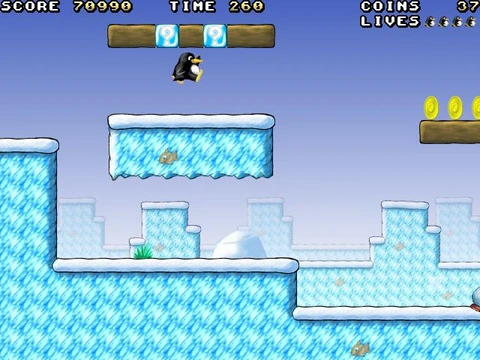
A platformer is a video game genre in which the player guides a character through hand-built levels by running, jumping, and climbing across platforms, gaps, and obstacles. The central loop usually involves moving from a start point to a goal while dodging hazards and picking up collectibles.
Who is credited with creating the platformer genre?
Nintendo's 1981 arcade title Donkey Kong is most often cited as the first true platformer, since it introduced the now-standard formula of a character scaling and leaping across horizontal platforms to reach a destination. Shigeru Miyamoto's design for that game laid out the foundational movement vocabulary the genre still relies on.
Who are the most iconic platformer characters?
Mario, Sonic the Hedgehog, and Crash Bandicoot are the three most globally recognized platformer protagonists. Other widely known figures include Tails, Ratchet, and the silent protagonist of Celeste.
Where should a newcomer begin if they want to learn the genre?
For a gentle, classic introduction, Super Mario Bros. (1985) or Super Mario 64 (1996) teach core movement and spatial thinking without overwhelming difficulty. If you prefer a modern, story-driven entry point, Celeste or Ori and the Blind Forest are both highly accessible and critically loved.
What distinguishes a 2D platformer from a 3D platformer?
A 2D platformer confines movement to a flat, typically side-scrolling plane, while a 3D platformer lets the player explore environments in full three-dimensional space. The 3D format adds depth, verticality, and free camera control on top of the same jumping-and-traversal loop.
What is a precision platformer?
A precision platformer is a subgenre that prioritizes tight, often frame-accurate jumping and movement over speed or open exploration. Celeste, I Wanna Be the Guy, and the original Super Mario Bros. are frequently cited as representative examples.
What is generally considered the first major 3D platformer?
Super Mario 64, released by Nintendo in 1996 for the Nintendo 64, is widely regarded as the landmark first 3D platformer. It introduced free camera control, open-ended level exploration, and three-dimensional traversal that shaped the subgenre for decades.
How does the metroidvania subgenre relate to platformers?
Metroidvanias layer platforming onto an interconnected, non-linear map where new traversal abilities unlock previously inaccessible areas. Titles like Hollow Knight and Ori and the Blind Forest are commonly tagged as both platformers and metroidvanias.
What core mechanics do all platformers share?
At minimum, a platformer requires a controllable character, a jump action, and a sequence of platforms or obstacles that must be traversed in order. Most also add running, enemy encounters, item collection, and a clear end-of-level objective.
Which platformers are most often ranked among the best of all time?
Super Mario 64, Celeste, Super Mario Bros., and Ori and the Blind Forest appear at the top of nearly every 'greatest platformer' list. More recent entries such as Hollow Knight and Crash Bandicoot 4: It's About Time also draw strong praise, though they blend the genre with other design pillars.