Frequently Asked Questions
The most-asked questions about platform games, further titles.
What exactly is a platform game?
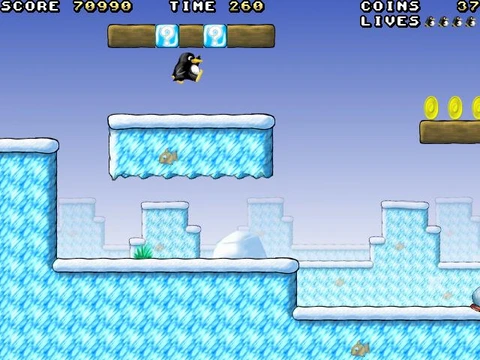
A platform game is a video game genre in which the player controls a character who navigates obstacle-filled levels, typically by jumping between platforms, avoiding hazards, and collecting items. The core loop revolves around precise movement, timing, and spatial puzzle-solving rather than open exploration or narrative choice.
What does the term 'further titles' mean in this encyclopedia?
'Further titles' refers to every platform game entry that sits outside a franchise's primary mainline sequence, including spin-offs, remakes, mobile ports, anthology compilations, and experimental side entries. The encyclopedia treats them as a distinct category because they often experiment with mechanics the flagship games do not.
Who are the most recognizable characters across platform games?
Mascots like Mario, Sonic the Hedgehog, Crash Bandicoot, and Ratchet are the most frequently searched names, each anchoring a long-running franchise. Supporting figures such as Tails, Cloud, and Coco also draw heavy fan interest for their roles in level design and story beats.
Where should a complete newcomer begin playing platform games?
Starting with a well-polished modern mainline entry—such as a recent Super Mario or Sonic title—gives the clearest introduction to core mechanics without the learning curve of older hardware. From there, branching into a further title from the same franchise lets you see how the formula stretches and adapts.
How do further titles typically differ from their mainline counterparts?
They often swap the standard run-and-jump structure for a new mechanic—puzzle-solving, top-down exploration, or a different protagonist's movement kit. Budgets and development teams are usually smaller, which encourages riskier level design and shorter playtimes.
What is a key historical fact about the platform genre?
The genre crystallized in the early 1980s when side-scrolling hardware could support continuous horizontal movement and variable-height jumps, moving the form away from static arcade screens. That technical shift is what separated platformers from earlier action or shooter titles.
What are some widely cited notable moments in platform game history?
The 1985 debut of Super Mario Bros. on the NES is routinely named the moment the genre found its definitive shape. More recently, the 2017 release of Celeste and the 2018 launch of Hollow Knight are often highlighted for redefining what a 'platformer' can be in terms of difficulty and narrative depth.
Do further titles usually share the same story continuity as the main series?
Most are treated as non-canon or soft-canon, meaning their events rarely carry over into the next mainline installment. Some franchises, however, weave a further-title plot thread into a later flagship game, blurring the line for dedicated fans.
Which further titles do fans most frequently search for in this encyclopedia?
Entries like Super Mario Sunshine, Sonic Adventure 2, and Crash Bandicoot 4's spin-off mini-games consistently rank high in reader queries. Remakes and HD collections—such as the Crash Bandicoot N. Sane Trilogy—are also heavily referenced for their updated mechanics and restored levels.
Are further titles generally considered part of the official canon?
Publishers rarely issue a blanket canon statement, so the answer shifts by franchise and by which studio is handling the next mainline release. In practice, fans treat further titles as 'what-if' scenarios unless a subsequent main game explicitly references their events or characters.