Aesculus glabra
A toxic tree whose nuts were used medicinally and for leather.
Aesculus glabra, also called Ohio buckeye, Texas buckeye, or fetid buckeye, is a tree in the soapberry family native to North America. Its range spans the Midwestern and lower Great Plains, extending into the Black Belt of Alabama and Mississippi, with a local population on Walpole Island in Ontario. It grows in calcareous habitats such as streambanks, upland mesic forests, and old-field margins.
Quick Facts
- Species
- glabra
Facts from the source article.
Description
The palmately compound leaves have five leaflets, each 8 to 16 centimeters long and wide. Spring brings panicles of red, yellow, or yellow-green flowers, each 2 to 3 centimeters long, with stamens extending beyond the petals. The round fruit capsule, 4 to 5 centimeters across, holds a single brown seed, 2 to 3 centimeters wide, marked by a whitish basal scar. These seeds contain tannic acid and are poisonous to cattle and humans, along with the young foliage, shoots, and bark.
Uses
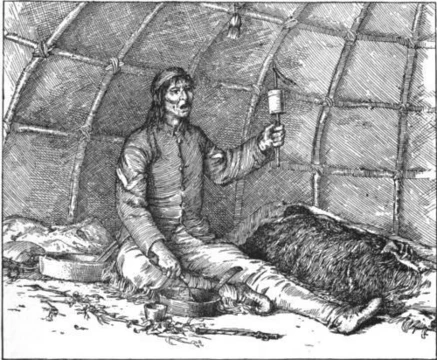
The tree's soft, light wood is not useful for timber. Though sometimes planted, its heavy fruit crop makes it a poor street tree. Extracts from Aesculus glabra show anti-cancer potential. Lenape people carried the nuts for rheumatism and made an earache remedy from ground nuts mixed with sweet oil or mutton tallow. They also used ground nuts to poison fish. Native Americans blanched the nuts to extract tannic acid for leather, and dried, darkened nuts were strung into necklaces.
Culture
The Ohio buckeye is the state tree of Ohio, and its name became a term of endearment for pioneers on the Ohio frontier. The nickname later referred to people from Ohio, and Ohio State University adopted Buckeyes as its official nickname in 1950, using it for sports teams and graduates. Buckeye candy, made from peanut butter fudge dipped in milk chocolate to resemble the nut, is popular in Ohio during Christmas and college football seasons. The nuts appear as a motif in the comic Calvin and Hobbes.
More in Plants Used in Traditional Native American Medicine
Spotted an error? Know more?
Reader corrections go straight into our review queue. Suggest an edit · How this site is sourced