Clyde McPhatter
Pioneering tenor who shaped doo-wop and R&B, first double inductee into the Rock and Roll Hall of Fame.
Last updated
Clyde Lensley McPhatter (November 15, 1932 – June 13, 1972) was an American rhythm and blues, soul, and rock and roll singer. He was one of the most widely imitated R&B singers of the 1950s and early 1960s and was a key figure in the shaping of doo-wop and R&B. His high-pitched tenor voice, deeply rooted in the gospel music he sang from childhood, became a defining sound of the era. Raised in a Baptist family in Durham, North Carolina, McPhatter began singing in his father’s church choir at age five and was a soprano soloist by ten. After his family moved to New Jersey and later New York City, he formed a gospel group, the Mount Lebanon Singers.
His professional career took off after winning Amateur Night at the Apollo Theater and being recruited by Billy Ward for the Dominoes. As lead tenor, McPhatter’s fervent singing was largely responsible for the group’s success, though he earned little money and often clashed with Ward. He left in 1953, coaching Jackie Wilson as his replacement. Atlantic Records founders then signed McPhatter on the condition he form his own group, leading to the creation of the Drifters.
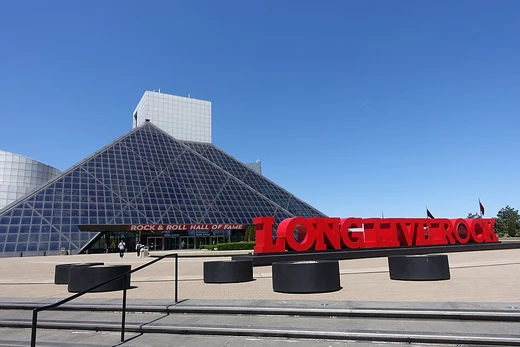
With them, he recorded hits like “Money Honey” and “Such a Night.” He later pursued a solo career. Despite his influence, McPhatter struggled with alcoholism and depression, and died at 39, broke and despondent over a mismanaged career. He left over 22 years of recordings and became the first artist inducted twice into the Rock and Roll Hall of Fame—first as a solo artist, then with the Drifters. Subsequent double inductees are said to belong to the “Clyde McPhatter Club.”
Lore & Background
McPhatter's high-pitched tenor voice was steeped in the gospel music he sang much of his early life. He was the lead tenor of the Mount Lebanon Singers, a gospel group he formed as a teenager.
He was later the lead tenor of Billy Ward and his Dominoes and was largely responsible for the initial success of the group. After his tenure with the Dominoes, McPhatter formed his own group, the Drifters, and later worked as a solo performer. He was 39 when he died, had been alcoholic and depressed for years, and was, according to Jay Warner's On This Day in Music History, 'broke and despondent over a mismanaged career that made him a legend but hardly a success'.
Gospel Roots and the Making of a Voice
Clyde Lensley McPhatter entered the world on November 15 in the Hayti neighborhood of Durham, North Carolina, though the exact year remains a point of contention among historians, with some sources pointing to 1931 while his grave marker reads 1932. From the age of five, Clyde stood in his father's church choir alongside his three brothers and three sisters, and by ten he had already earned the role of soprano-voiced soloist.
In 1945 the family relocated to Teaneck, New Jersey, where Clyde attended Chelsior High School and worked part-time at a grocery store, eventually earning a promotion to shift manager. The family's next move brought them to New York City, where the teenage Clyde channeled his church-trained vocal instincts into a new gospel ensemble he called the Mount Lebanon Singers. That early immersion in gospel performance would become the bedrock of his high-pitched tenor, a sound that would later reshape popular music entirely.
The Dominoes and a Revolutionary Sound
In 1950, after claiming victory at the prestigious Amateur Night contest at Harlem's Apollo Theater, McPhatter returned to his shift-manager job at the grocery store. His path to stardom came when Billy Ward, leader of the Dominoes, heard him singing in the choir at the Holiness Baptist Church in New York City and recruited him into the group. McPhatter was present for the recording of "Sixty Minute Man" for Federal Records under producer Ralph Bass, and his fervent, high-pitched tenor quickly elevated the Dominoes above rivals like the Clovers, the Ravens, and the Five Keys.
Music writer Bill Millar later described how McPhatter took the Ink Spots' straightforward major-chord harmonies, saturated them with call-and-response patterns, and delivered each line as though he were back in the pulpit, creating a revolutionary style that influenced Ben E. King, Smokey Robinson, Sammy Turner, and Marv Johnson. Despite the group's success, McPhatter earned only a hundred dollars a week, with deductions for food, taxes, and lodging. He was sometimes misidentified as "Clyde Ward, Billy's little brother." In May 1953 he departed, coaching a replacement before a young Jackie Wilson stepped into the lead tenor chair.
The Drifters and the Atlantic Years
After McPhatter's absence from a Dominoes appearance at Birdland caught the attention of Atlantic Records founders Ahmet Ertegun and Jerry Wexler, the label moved quickly to sign him. The condition was clear: he had to assemble his own group. McPhatter promptly put together a new ensemble and named it the Drifters, recording tracks in June 1953 that included a composition of his own, "Lucille." Atlantic executives, however, felt the sound was not what they envisioned, prompting McPhatter to rebuild the lineup, drawing heavily from the Mount Lebanon Singers roster.
The revised group produced a string of hits—"Money Honey," "Such a Night," "Honey Love," "White Christmas," and "What'cha Gonna Do"—with early singles credited as "Clyde McPhatter and the Drifters" before the label shifted to "The Drifters featuring Clyde McPhatter." In late 1954 McPhatter was drafted into the U.S. Army and assigned to Special Services stateside, a posting that let him keep recording. Once his service ended, he departed the Drifters to pursue a solo career. The group carried on through numerous personnel changes, and its most celebrated recordings would surface well after McPhatter's departure.
A Legend's Bittersweet Farewell
Clyde McPhatter's story ended on June 13, 1972, when he died at the age of thirty-nine. For years he had struggled with alcoholism and depression, and by the end he was, in the words of music historian Jay Warner, "broke and despondent over a mismanaged career that made him a legend but hardly a success." The contrast between his cultural footprint and his personal circumstances is stark.
Over a span of more than twenty-two years of recordings, McPhatter had become one of the most widely imitated R&B vocalists of the 1950s and early 1960s and a central architect of both doo-wop and rhythm and blues. His influence was so profound that he became the first artist ever inducted into the Rock and Roll Hall of Fame twice—once as a solo performer and once as a member of the Drifters. The honor was so singular that subsequent artists who earned double or triple inductions are informally said to have joined the "Clyde McPhatter Club," a designation that cements his singular place in the history of popular music even as his own final years were marked by hardship and obscurity.
Reader's Guide
McPhatter left a legacy of over 22 years of recordings. He was the first artist to be inducted twice into the Rock and Roll Hall of Fame, first as a solo artist and later as a member of the Drifters.
Subsequent double and triple inductees into the Rock and Roll Hall of Fame are said to be members of the 'Clyde McPhatter Club'. In 1950, after winning the coveted Amateur Night at Harlem's Apollo Theater contest, McPhatter returned to his job as a store manager. He was discovered singing in the choir in the Holiness Baptist Church of New York City by Billy Ward of Billy Ward and his Dominoes and was recruited into the group.
Did You Know?
- McPhatter's birth year is disputed; some sources cite 1932, author Colin Escott cites 1931, and his grave marker cites 1932.
- McPhatter sold his share of the Drifters to manager George Treadwell, a decision he later regretted.
- His biggest solo hit, 'A Lover's Question', peaked at number six in 1958.
- McPhatter's 1956 recording 'Treasure of Love' was his first number-one hit on the R&B charts as a solo artist and sold over two million copies in the United States.
Frequently Asked Questions
What groups was Clyde McPhatter associated with?
He first became famous as the lead tenor of Billy Ward and His Dominoes in the early-to-mid 1950s. After departing that group, he went on to form the Drifters, continuing as their frontman and defining their signature sound.
Is Clyde McPhatter in the Rock and Roll Hall of Fame?
Yes—he received a solo-artist induction in 1987. The Drifters were separately inducted as a group the following year, in 1988.
More in Pioneers Of Rock & Roll
Related in Pioneers Of Rock & Roll
Links follow this subject's own source article.
Test yourself
Three questions drawn from this entry’s sources. Pick an answer to check it.
Answers checked against the source article
Sources
Compiled from Wikipedia and the sources listed below. Text from Wikipedia is available under CC BY-SA 4.0; this entry is adapted from it.
- Wikipedia: Clyde McPhatter (CC BY-SA 4.0).
Spotted an error? Know more?
Reader corrections go straight into our review queue. Suggest an edit · How this site is sourced