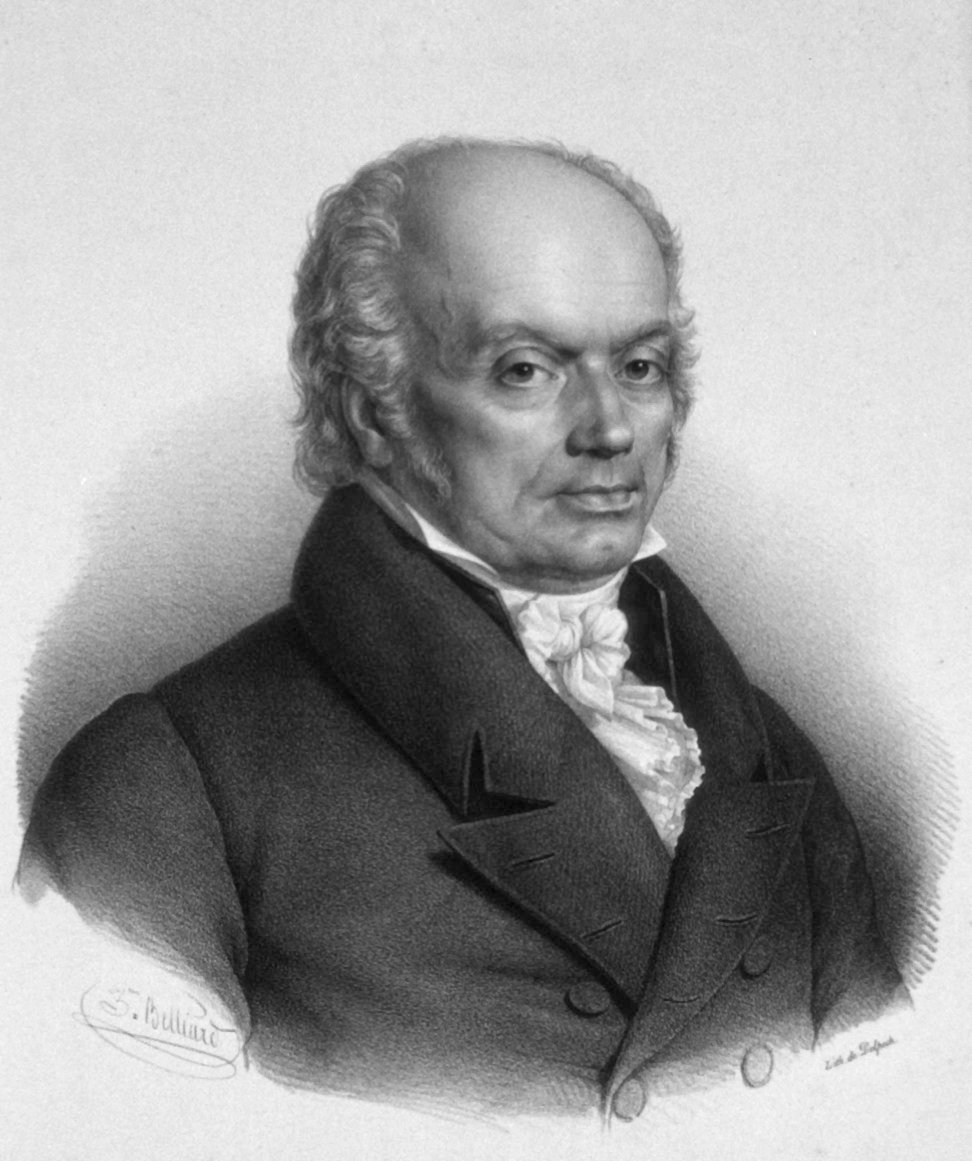
Franz Joseph Gall
Last updated

Wikimedia Commons · CC BY 4.0
Gall's study of phrenology helped establish psychology and contributed to the emergence of naturalistic approaches to studying man.[1] During his lifetime, Gall's work in neuropsychology sparked debate, and in modern times it is commonly regarded as pseudoscientific.[1]
Key facts and history
Gall's birthplace was Tiefenbronn, where his father was a wealthy wool merchant of the Roman Catholic faith, and the Gall family had been the most prominent in that locale for more than a hundred years.[2] During childhood, Gall was intrigued by the contrasts he observed between himself, his siblings, and his schoolmates, and his initial curiosity about the brain arose when he linked a fellow student's unusual cranial shape to that student's strong verbal skills.[3] He subsequently earned his medical degree in Vienna, Austria, and established a thriving private medical practice.[4] Johann Spurzheim first heard Gall speak publicly in 1800, was subsequently employed as his aide, and by 1804 had become Gall's full-time collaborator in research.[5]
Spurzheim parted ways with Gall in 1813 and was the one who coined the term "phrenology" for Gall's system of ideas.[5] Gall passed away in Paris on August 22, 1828; he was married but had no children.[6]
What the research sources say
A 2018 study by Parker Jones, Alfaro-Almagro, and Jbabdi describes phrenology as currently viewed by the scientific community as a major error.[7][8] That same investigation notes that the notion of deducing personality from skull shape has been refuted many times, yet Gall's reasoning was compelling and fascinating to his contemporaries.[7][8]
References
- Wikipedia, "Franz Joseph Gall" (CC BY-SA 4.0), which cites: Livianos et al 2007 (original not read by us) en.wikipedia.org
- Wikipedia, "Franz Joseph Gall" (CC BY-SA 4.0), which cites: "Franz Joseph Gall Encyclopedia.com" (original not read by us) en.wikipedia.org
- Wikipedia, "Franz Joseph Gall" (CC BY-SA 4.0), which cites: Eling 1994; Principal of Neural Science by Kandel et al. p. 7 (original not read by us) en.wikipedia.org
- Wikipedia, "Franz Joseph Gall" (CC BY-SA 4.0), which cites: Van Whye 2002; Gall 1835; Tomlinson 2005; Davies 1955 (original not read by us) en.wikipedia.org
- Wikipedia, "Franz Joseph Gall" (CC BY-SA 4.0), which cites: Tomlinson 2005 (original not read by us) en.wikipedia.org
- Wikipedia, "Franz Joseph Gall" (CC BY-SA 4.0), which cites: Strange teachings about heads (Bundesministerium fur Inneres). (original not read by us) en.wikipedia.org
- Wikipedia, "Franz Joseph Gall" (CC BY-SA 4.0), which cites: Parker Jones, O., Alfaro-Almagro, F., & Jbabdi, S. (2018). An empirical, 21st century evaluation of phrenology. Cortex. Volume 106. pp. 26–35. doi: doi:10.1016/ (we also read that source) en.wikipedia.org
- Ōiwi Parker Jones, "An empirical, 21st century evaluation of phrenology", Cortex (2018), doi:10.1016/j.cortex.2018.04.011. OpenAlex metadata CC0; paper not read. doi.org
Each numbered sentence above was checked against the source it cites before publication. Sentences citing Wikipedia adapt text from the English Wikipedia article Franz Joseph Gall (contributors), used under CC BY-SA 4.0; this entry is available under the same licence. Other sources were used for facts only.
Also in the Codexery
More in Pioneers Of Alternative Medicine And Pseudoscience
Sources
Compiled from Wikipedia and the sources listed below. Text from Wikipedia is available under CC BY-SA 4.0; this entry is adapted from it.
- Wikipedia: Franz Joseph Gall (CC BY-SA 4.0).
- Word definitions: the Codexery glossary, each quoted from its Wikipedia article.
Spotted an error? Know more?
Reader corrections go straight into our review queue. Suggest an edit · How this site is sourced