Peter Medawar
Biologist who discovered acquired immunological tolerance, enabling organ transplants.
Last updated

via Wikipedia: Peter Medawar · see source
Sir Peter Brian Medawar (28 February 1915 – 2 October 1987) was a Brazilian-born biologist and writer of Lebanese-British descent. Through a succession of research and teaching posts, including at Oxford, the University of Birmingham, University College London, and the Royal Institution, and senior U.K. biomedical leadership positions at the Medical Research Council and the Royal Postgraduate Medical School, he contributed seminal discoveries in immunology. He shared the 1960 Nobel Prize in Physiology or Medicine with Mac Burnet for the discovery of acquired immunological tolerance, a principle fundamental to tissue and organ transplantation. Medawar is also remembered for his wit in person and in his popular writings.
Background
Medawar was the youngest child of a Lebanese father and a British mother, and a Brazilian and British citizen by birth. He prepared for university at Marlborough College, about which he had ill feelings generally, but was positive regarding his biology teacher, Ashley Gordon Lowndes. He then studied zoology under John Young at Magdalen College, Oxford, and later held named professorial positions in zoology at the University of Birmingham and University College London. Until partially disabled by a cerebral infarction, he was Director of the National Institute for Medical Research.
With his trainees Leslie Brent and Rupert E. Billingham, Medawar demonstrated the principle of acquired immunological tolerance, which had been theoretically predicted by Mac Burnet. This understanding became the foundation of tissue and organ transplantation. He and Burnet shared the 1960 Nobel Prize for the discovery of acquired immunological tolerance. Medawar's works on graft rejection have been fundamental to transplant medicine.
Medawar's early life included a disputed birthplace: stated as Rio de Janeiro, Brazil, and elsewhere as Petrópolis. He left Brazil for England at the end of World War I in 1918, though other accounts say he moved at age 13 or 14. He renounced his Brazilian citizenship after being denied exemption from conscription. At Marlborough, he experienced bullying and described himself as 'uniformly unhappy from beginning to end,' but credited Lowndes with firing his enthusiasm for science.
Roots Between Two Worlds
Peter Medawar was born on 28 February 1915 in Rio de Janeiro, the youngest child of a British mother and a Lebanese Maronite father from Jounieh, north of Beirut. His father had been dispatched to South America as a sales agent for a British dental-supplies company, a trade Medawar later summarised as selling "false teeth in South America." By birth he held both Brazilian and British citizenship, the latter secured through timely registration at the British Consulate. The family eventually returned to England, where Medawar attended Marlborough College in Wiltshire. His memories of that school are deeply ambivalent.
He recalled classmates who questioned what a "Lebanese" was, a culture that prized sport over scholarship, and an atmosphere he found "resentful and disgusted" in its tribal manners. Yet one teacher, biology instructor Ashley Gordon Lowndes, left an indelible mark. Lowndes was, in Medawar's words, "almost incapable of expressing himself," yet his sheer passion for the subject "fired me with enthusiasm." That single relationship, more than any textbook, launched Medawar's scientific vocation.
The Tolerance Breakthrough
The discovery that would define Medawar's scientific legacy emerged from a collaboration at Oxford and then Birmingham with his doctoral student Leslie Brent and postdoctoral fellow Rupert E. Billingham. Together, the three demonstrated the principle of acquired immunological tolerance—the remarkable phenomenon in which an organism's immune system can be rendered unresponsive to specific foreign molecules. This was not merely an empirical finding; it confirmed a theoretical prediction first articulated by the Australian immunologist Mac Burnet.
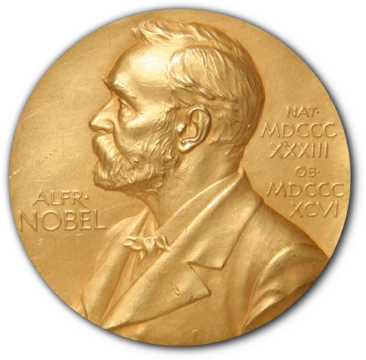
The practical implications were staggering. By understanding how the body could be taught to accept foreign tissue rather than attack it, Medawar and his colleagues laid the conceptual groundwork that would make modern tissue and organ transplantation medically viable. In 1960, Medawar and Burnet were jointly awarded the Nobel Prize in Physiology or Medicine, the citation reading "for discovery of acquired immunological tolerance." The work transformed an entire field and earned Medawar the enduring title "father of transplantation."
A Career Across Institutions
Medawar's professional life spanned a remarkable arc of research, teaching, and biomedical administration. After completing his zoology training under John Young at Magdalen College, Oxford, where he held a scholarship and fellowship, he moved into named professorial chairs in zoology at the University of Birmingham and later at University College London. His research posts took him through Oxford and eventually to the Royal Institution in London.
Beyond the laboratory and lecture hall, Medawar assumed senior leadership roles in British biomedical governance, holding positions connected to the MRC and RPMC. His most consequential institutional post was as Director of the National Institute for Medical Research at Mill Hill, a role he held until a cerebral infarction partially disabled him. Throughout these varied positions, his output in immunology remained the constant thread, producing findings that reshaped how medicine understood the body's defence mechanisms and, by extension, how those mechanisms could be therapeutically redirected for the benefit of patients.
Wit as a Scientific Instrument
Beyond his laboratory achievements, Medawar left a distinctive mark as a writer and a public intellectual. His popular books brought immunological concepts to general readers with a clarity and humour that set them apart from the drier expositions of the era. His colleagues and admirers recognised this gift in superlative terms.
Richard Dawkins called him "the wittiest of all scientific writers," while the evolutionary biologist Stephen Jay Gould went further, describing Medawar as "the cleverest man I have ever known." In person, his sharp tongue and dry humour were as well known as his publications. This literary and social presence complemented his scientific reputation: a man who could dismantle a complex immune mechanism in a journal article and then unpack it over dinner with equal precision and charm. He died on 2 October 1987, but the combination of groundbreaking research, institutional leadership, and sparkling prose ensured that his memory endures not merely as a footnote in transplant medicine but as a figure of genuine cultural breadth.
Did You Know?
- He renounced his Brazilian citizenship after President Eurico Gaspar Dutra denied his exemption from conscription.
- Medawar likened Marlborough College to training schools for the Nazi SS, 'founded upon the twin pillars of sex and sadism.'
- He could not afford to supplicate for his PhD in 1941 because he spent the money on an urgent appendicectomy.
Frequently Asked Questions
What is Peter Medawar most famous for?
He is best known for discovering acquired immunological tolerance, the principle that the body can be trained to accept transplanted tissue instead of attacking it as a threat. This insight became the scientific bedrock of modern organ transplantation.
What Nobel Prize did Peter Medawar win?
He shared the 1960 Nobel Prize in Physiology or Medicine with Macfarlane Burnet for identifying the mechanism of acquired immunological tolerance. The award recognized work that fundamentally changed how scientists understood immune recognition.
Why is Peter Medawar called the 'father of transplantation'?
His research demonstrated that the immune system could be made to tolerate foreign organs, which is the core challenge that had to be solved before transplants could succeed. Without that conceptual breakthrough, the field of transplant surgery would not have had a viable scientific framework.
More in Pioneers In Medicine And Physiology
Test yourself
Three questions drawn from this entry’s sources. Pick an answer to check it.
Answers checked against the source article
Sources
Compiled from Wikipedia and the sources listed below. Text from Wikipedia is available under CC BY-SA 4.0; this entry is adapted from it.
- Wikipedia: Peter Medawar (CC BY-SA 4.0).
- Word definitions: the , each quoted from its Wikipedia article.
Spotted an error? Know more?
Reader corrections go straight into our review queue. Suggest an edit · How this site is sourced