
Aswang (2011 film)
A shapeshifting monster stalks the night.

Nuno Media · CC BY 3.0
Aswang is a 2011 Filipino action horror film that draws on the country's folklore of a shapeshifting monster with traits of vampires, ghouls, witches, or other creatures. Directed and co-written by Jerrold Tarog, it stars Lovi Poe, Paulo Avelino, Albie Casiño, Jillian Ward, Marc Abaya, and Niña Jose. This film is a remake of Peque Gallaga's 1992 movie of the same name.
The story follows siblings Gabriel and Ahnia, who flee from three hitmen after their family is killed. Trying to reach relatives, they get lost and end up in a town plagued by attacks from unknown beings. They are rescued by Hasmin, a local from a nearby plantation, who takes them to her blind foster mother, Guada. Guada explains that the creatures are Abuwaks, a type of aswang that looks human but can burrow underground and turn into raven-like birds. The town's corrupt mayor has a deal with the Abuwaks: they pay him to keep the town poor and ignorant.
The hitmen—Gido, Queenie, and Daniel—arrive to finish their job. Daniel is reluctant because his family is held hostage by their boss, Eddie. He meets Hasmin, and they cross paths. Hasmin hides the children in the plantation, but it turns out to be the Abuwaks' nest, and she is their Bangkilan, a higher-ranking aswang who can turn humans into aswangs. Despite this, she is kind to humans and rejects her heritage.
The hitmen track the children to the plantation. Queenie finds them but is captured and tortured by the Abuwaks. Hasmin is ordered to eat Queenie alive but instead breaks her neck. Gido and Daniel fight off other Abuwaks and retreat. Eddie sends backup, arriving the next day. Hasmin finds the children, but they are caught. Moises, the Abuwak leader, plans to eat them the next day, the same day Hasmin is to marry him.
Hasmin asks Daniel for help. She transforms into an Abuwak to cause panic, letting Daniel escape and Gido kill two creatures. The townspeople flee, threatening the Abuwaks' survival. Gido and his backup attack the plantation, allowing Daniel to rescue the children and disrupt the wedding. During their escape, Daniel is mortally wounded, and Ahnia is recaptured. Hasmin, the only one who can turn humans into aswangs, reluctantly transforms Daniel to save him. Together, they defeat Moises and escape.
Gido and his team kill most Abuwaks but are overwhelmed; Gido kills himself with a grenade. Outside the plantation, Eddie corners Daniel, Hasmin, and the children, revealing he has ordered Daniel's family killed. Daniel and Hasmin transform into Abuwaks and kill Eddie and his men. Gabriel and Ahnia stay with Guada, while Daniel and Hasmin head to Daniel's hometown.
The film opened on 110 screens, earning ₱22.9 million in its first weekend. It dropped to 70 screens in its second week, earning ₱29 million, and finished its run with ₱31 million. Critics generally praised the cinematography, narrative, and Lovi Poe's performance. Earl Villanueva of PEP called it proof of Filipino horror's strength, citing rich folklore. Ria Limjap of Spot.ph described it as intelligent and compelling. Phillip Cu-Unjieng of Philippine Star called it a heady, atmospheric foray into aswang folklore.
- Director
- Jerrold Tarog
Lore & Background
The film features a type of aswang called 'Abwak'. It can transform from human to a raven-like creature that could fly and move underground as it stalks its victim.
Reader's Guide
The film received generally positive reviews from critics, praising its cinematography and narrative, particularly Lovi Poe's performance.
Did You Know?
- The film is a remake of Peque Gallaga's 1992 film of the same name.
- The film opened at 110 screens on its opening weekend.
A Taxonomic Universe of Nightmares
The aswang is not a single monster but rather a collective label encompassing an entire family of malevolent supernatural beings in Filipino tradition. Scholar Maximo Ramos proposed organizing these creatures into five distinct categories that draw clear parallels with Western mythological archetypes: the vampire, the self-segmenting viscera sucker, the weredog, the witch, and the ghoul. Each category carries its own behavioral signature. The vampire aswang, for instance, feeds on blood through a long proboscis-like tongue rather than fangs, and it never dwells in tombs. The manananggal, the viscera sucker, detaches its upper torso from the waist at night, sprouts wings, and hunts specifically for fetuses in pregnant women. The weredog, so named because the Philippines lacks indigenous wolves, shifts into dogs, cats, or pigs around midnight to devour travelers. Together, these categories reveal a remarkably detailed and internally consistent supernatural taxonomy that has persisted across centuries of oral and written tradition.
Colonial Encounters and Early Documentation
Spanish colonizers arriving in the Philippines during the sixteenth century quickly identified the aswang as the single most terrifying figure in the local mythological landscape. Fr. He described the silagan, a creature that would rip a victim's liver out through the anus, and recorded a case in Calavan where a Spanish notary was killed this way. He also detailed the manananggal, which appeared headless and entrail-less at night, and the osuang, a sorcerer-like figure observed flying and consuming human flesh among the Visayas. A century and a half later, Ferdinand Blumentritt expanded the record, noting the asuang as a nocturnal shapeshifter that assumed the forms of dogs, cats, or birds, and that it targeted abandoned children and solitary walkers with a horribly dilated, silk-like tongue. These colonial texts, though filtered through a foreign lens, confirm that the aswang was already a deeply embedded and widely recognized presence across the archipelago long before European contact.
Linguistic Roots and Archipelagic Reach
The word aswang traces back to the reconstructed Greater Central Philippine proto-form *aswang, carrying meanings that span vampire, evil spirit, and witch. Its linguistic descendants are remarkably widespread. In Cebuano, Aklanon, Bikol, and Kapampangan, the form remains aswang; in Tagalog it appears as aswang, asuwang, or uswang. The Maranao language preserves ansoang, meaning demon witch, while Mansaka retains asoang for demon and Sangir keeps ansuang, which shifts toward the meaning of giant. Perhaps most significantly, scholars believe this same root gave rise to the Eastern Indonesian concepts of suangi, keswange, or iwangi, all referring to evil spirits, witches, or ghosts. This etymological trail demonstrates that the aswang is not merely a Philippine curiosity but a node in a much broader Austronesian web of supernatural belief, connecting the islands of the Philippines to the Dutch colonial territories of Indonesia and suggesting a shared mythological heritage stretching back to a common ancestral culture.
The Infiltration Motif and Protective Folklore
A defining and deeply unsettling feature of aswang lore is the creature's capacity to embed itself within ordinary human communities. The vampire aswang and the manananggal both achieve this through marriage, slowly draining a spouse of blood or using the household as a nighttime staging ground before venturing out to raid neighboring villages. The weredog, by contrast, arrives as a sorcerer-traveler rather than a family member, yet still slips into the social fabric before transforming at midnight. Their prey is not random: pregnant women on lonely roads, abandoned children, and solitary walkers are the preferred targets. This pattern of domestic concealment followed by nocturnal predation has led some interpreters to read aswang behavior as a deliberate inversion of core Filipino values of community, hospitality, and family loyalty. Folk protective measures reflect this anxiety. Keeping long hair tied back is said to ward off the weredog, and the night bird Tiktik, whose song signals an aswang's approach, serves as both omen and warning in rural communities from Capiz to Mindanao.
Gallery
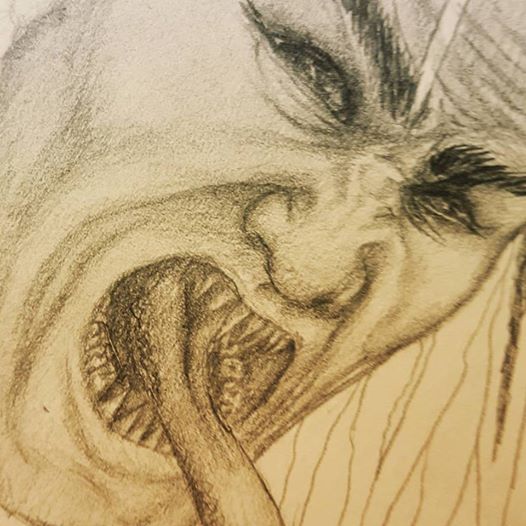
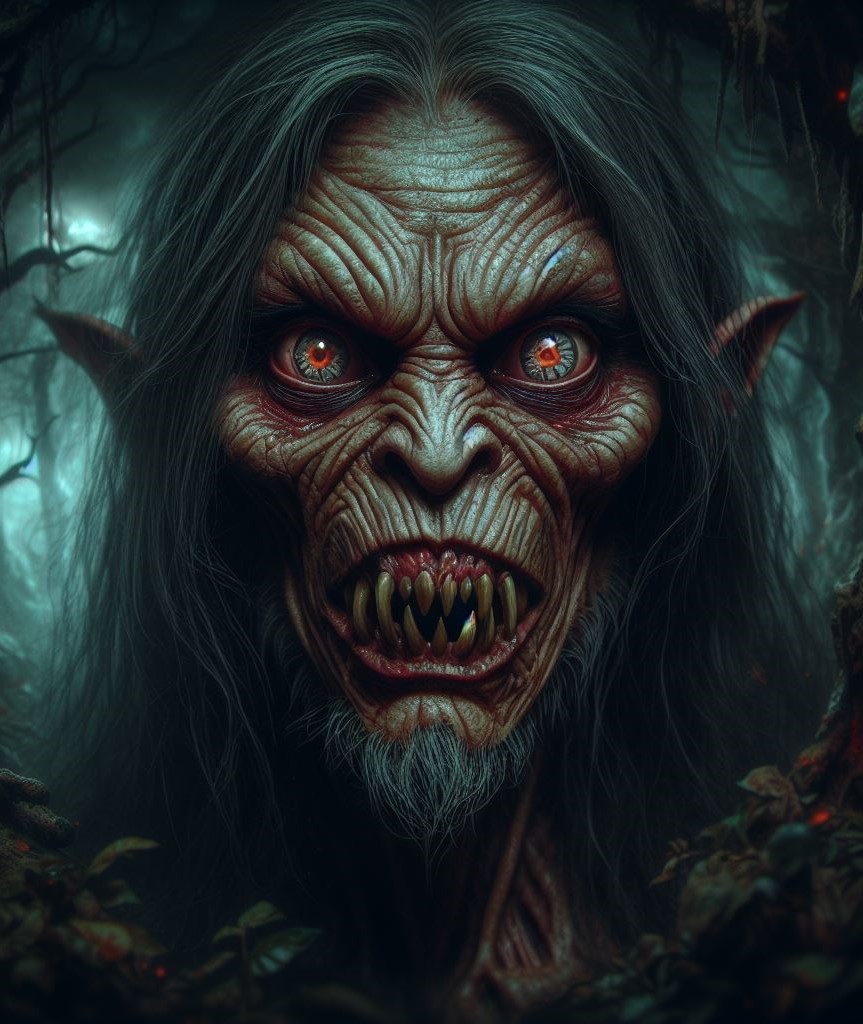



Frequently Asked Questions
Who directed Aswang (2011) and who is in the cast?
Jerrold Tarog helmed the film, which features Lovi Poe in the lead role alongside Paulo Avelino, Niña Jose, Albie Casiño, Jillian Ward, and Marc Abaya.
What kind of creature is the aswang in the 2011 film?
The aswang is rooted in Filipino folklore as a shapeshifting predator, and in this movie it is portrayed as a flesh-eating, transformative monster that stalks its victims in a rural setting.
What is the central conflict in Aswang (2011)?
The story follows a young woman who uncovers the horrifying truth that her own mother is an aswang, forcing her to navigate a deadly family secret in a small Philippine community.
How does the story of Aswang (2011) conclude?
The film ends with the protagonist confronting the aswang threat that has been endangering her community, bringing a violent resolution to the mother-daughter horror at the heart of the plot.
Why is Aswang (2011) considered important in Philippine horror?
It modernized a classic Filipino myth into an action-horror format and became a notable box-office draw, grossing around ₱31 million during its theatrical run, which helped cement the aswang as a staple of local genre cinema.
More in Philippine horror films 1-24
Spotted an error? Know more?
Reader corrections go straight into our review queue. Suggest an edit · How this site is sourced