Imus
De jure capital of Cavite and site of the first Philippine flag unfurling.

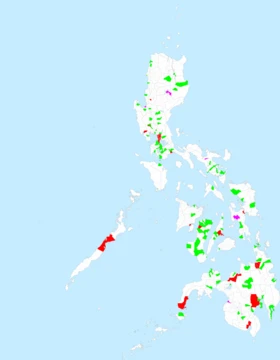
Imus, officially the City of Imus (Filipino: Lungsod ng Imus), is a component city and the de jure capital of Cavite province in the Philippines. Its name comes from the Tagalog word *imos* or *imus*, meaning "cape" or "headland." As of the 2024 census, its population is 481,949.
The city sits about 20 kilometers south of Metro Manila. It became the de jure provincial capital on June 11, 1977, when President Ferdinand Marcos issued a decree moving the seat of government from Trece Martires. However, most provincial offices still operate out of Trece Martires. Imus was officially converted into a city following a referendum on June 30, 2012.
Imus was originally part of Cavite el Viejo (now Kawit). For over 150 years, residents had to travel 4.5 kilometers of dirt road to attend church or conduct business there. The Augustinian Recollects established a parish in what is now Bayang Luma after the British occupation of Manila in 1762. That church was destroyed by a typhoon in September 1779, so the friars moved it to barrio Toclong, and finally to sitio de Balangon, now the city plaza. With the Recollect parish, Imuseños gained religious independence from the Jesuit-run parish of Cavite el Viejo. In 1774, Recollect Fr. Pedro San Buenaventura petitioned to separate Imus from Cavite el Viejo’s political jurisdiction. The petition was granted, and Imus became an independent municipality on October 3, 1795. The 1818 Spanish census recorded 2,033 native families and 125 Spanish-Filipino families.
Imus was the site of two major Katipunero victories during the Philippine Revolution against Spain. The Battle of Imus was fought on September 3, 1896, and the Battle of Alapan on May 28, 1898. On that day, the first Philippine flag was flown, making Imus the "Flag Capital of the Philippines." Both events are celebrated annually. The Imus Historical Museum honors this history with reenactments of revolutionary scenes. On May 28, 1998, a Battle of Alapan marker was placed at Alapan Elementary School and inaugurated by President Fidel V. Ramos. A new marker and the Imus National Heritage Park were inaugurated at Barangay Alapan 2-A on May 28, 2014, to improve public access.
On October 15, 1903, the Philippine Commission merged the towns of Bacoor and Perez-Dasmariñas with Imus under Act No. 947. Bacoor was separated in 1906, and Perez-Dasmariñas in 1917.
On May 28, 2008, National Flag Day, the city launched the first Wagayway Festival (Flag-Waving Festival), commemorating the first unfurling of the Philippine flag at the Battle of Alapan. The five-day event included a historical reenactment covering the flag’s sewing in Hong Kong, the battle, and the later defeat by American troops. Participants included students, city employees, and barangay officials. Then-mayor Emmanuel Maliksi said the celebration’s core was love and respect for the flag. Former Prime Minister Cesar Virata, a grandnephew of General Emilio Aguinaldo, attended.
A bill creating Imus as a lone legislative district—the Third District of Cavite—was filed by Representative Joseph Abaya with co-authors Congressman Pidi Barzaga and Crispin Remulla, and supported by Senators Panfilo Lacson, Dick Gordon, and Bong Revilla. Republic Act 9727 was approved by the President on October 22, 2009.
- land_area
- 64.70 km² (24.98 sq mi)
- cityhood_referendum
- June 30, 2012
- province
- Cavite, Philippines
- known_for
- Flag Capital of the Philippines; site of Battle of Imus and Battle of Alapan
Lore & Background
The Imus Historical Museum honors this history with reenactments. Imus was converted into a component city following a referendum on June 30, 2012.
Reader's Guide
This event is commemorated annually with the Wagayway Festival, launched in 2008, featuring historical reenactments. It is subdivided into 97 barangays, grouped into two legislative districts. Imus's legacy as the 'Flag Capital of the Philippines' is central to its identity, celebrated through the Wagayway Festival and the Imus National Heritage Park, inaugurated in 2014.
Did You Know?
- The city's name comes from Tagalog 'imos' or 'imus,' meaning 'cape' or 'headland.'
Revolutionary Heritage and the Birth of a Nation's Symbol
Imus holds a singular place in Philippine history as the location where the country's first flag was unfurled in battle. Both battles remain central to the city's identity, celebrated annually by its residents. The Imus Historical Museum preserves this legacy through staged reenactments of key revolutionary scenes, ensuring that the sacrifices made on local soil continue to resonate with each new generation.
From a Distant Parish to an Independent Town
The name Imus derives from the Tagalog word for a cape or headland, a geographic descriptor that once defined the community's identity. The practical cost was severe: Imuseños had to cover 4.5 kilometers of rough dirt road to attend Mass or handle official business.
Political Ascension: From Provincial Capital to Component City
Imus sits just 20 kilometers south of Metro Manila, a proximity that shaped its political trajectory. Despite this decree, the majority of provincial offices remain in Trece Martires to this day, leaving the capital status somewhat nominal in practice. The path to full cityhood proved longer. Dragon, filed alongside similar measures for Bacoor and Dasmariñas, failed to pass. It was not until August 3, 2010, that Congressman Erineo Maliksi's bill was enacted as Republic Act No. A plebiscite on June 30, 2012, ratified the conversion, and Imus officially became a component city.
Living Memory: Festivals, Monuments, and the Wagayway
Imus does not merely archive its revolutionary past; it performs it. On May 28, 2008, the city launched the First Wagayway Festival, a five-day flag-waving celebration marking the anniversary of the Battle of Alapan. The centerpiece was a sweeping historical reenactment that traced the arc from the sewing of the Philippine flag by Filipino exiles in Hong Kong, through the Alapan battle itself, to the subsequent defeat by American forces that silenced the dream of independence. Students, city employees, and barangay officials all took part in the staging. Then-Mayor Emmanuel Maliksi opened the festival, emphasizing that its core message was love and respect for the flag as a symbol of freedom. Among the distinguished guests was former Prime Minister Cesar Virata, a grandnephew of General Aguinaldo. Physical commemorations have also evolved: a Battle of Alapan marker was erected in 1998 within the compound of Alapan Elementary School and inaugurated by President Fidel V. Ramos. In 2014, a new marker and the Imus National Heritage Park were opened at Barangay Alapan 2-A to make the site more accessible to the public.
Frequently Asked Questions
Who is Imus?
Imus is a component city in Cavite, Philippines, and serves as the de jure capital of that province. It is best known as the 'Flag Capital of the Philippines' because of its role in the Revolution against Spain.
What is Imus's signature achievement?
During the Battle of Alapan, the first Philippine flag was unfurled on Imus soil, a moment that cemented the city's nickname as the Flag Capital of the Philippines.
What battles are tied to Imus's story?
Imus was the stage for two major Katipunero victories in the Philippine Revolution: the Battle of Imus and the Battle of Alapan, both fought against Spanish colonial forces.
More in Philippine Cities 1-18
Spotted an error? Know more?
This is a living reference — every entry is fact-audited, and reader corrections feed straight into our audit queue. Suggest an edit · See this site's audit record