.38 Special
A versatile revolver cartridge introduced in 1898.
The .38 Special is a rimmed, centerfire cartridge designed by Smith & Wesson. It was the standard service cartridge for most United States police departments from the 1920s to the 1990s and was also used by U.S. military personnel in several major conflicts. Known for its accuracy and manageable recoil, it remains one of the most popular revolver cartridges worldwide.
Quick Facts
- Origin
- United States
- Designer
- Smith & Wesson
- Designed
- 1898
- Produced
- 1898–present
- Variants
- .38 Special +P
- Parent
- .38 Long Colt
- Case type
- Rimmed, straight
- Bullet
- .357
Facts from the source article.
Overview
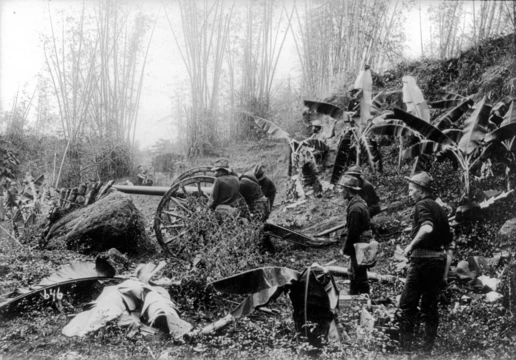
The .38 Special was designed and entered production in 1898 as an improvement over the .38 Long Colt, which had inadequate stopping power against Filipino Muslim warriors during the Philippine–American War. Originally loaded with black powder, smokeless powder loadings appeared within a year. This naming originated from the .38 Short Colt, designed for converted .36-caliber cap-and-ball Navy revolvers with untapered cylindrical chambers requiring heeled bullets.
History
The .38 Special cartridge was introduced in 1898, created to deliver higher velocity and better penetration than the .38 Long Colt. The earlier round had failed to stop Moro insurgents in the Philippines, whose shields it could not pierce, prompting the U.S. government to contract Smith & Wesson for a new revolver round. In the late 1920s, Western Cartridge Company developed a standard-velocity load called the .38 Super Police, using a 200-grain round-nosed lead Lubaloy bullet. Remington-Peters made a similar loading. This heavier bullet tended to keyhole on impact, increasing shock effect. Britain tested the same 200-grain bullet in the .38 S&W cartridge, adopting it as the 38/200 for military service. Colt then announced its Official Police revolver could handle these high-speed loads.
Performance
Some specialty +P loads can attain even higher energies, especially from longer barrels, but these are not recommended for older revolvers or those not +P rated. Although few US police departments now issue the .38 Special revolver as a standard-duty weapon, it remains popular for off-duty or undercover use, as well as for civilian home defense and concealed carry.
More in Philippine–American War
Spotted an error? Know more?
Reader corrections go straight into our review queue. Suggest an edit · How this site is sourced