Antarctic
Polar region surrounding the South Pole, governed by international treaty.
Last updated
The Antarctic is the region surrounding Earth’s South Pole, inside the Antarctic Circle, and sits directly opposite the Arctic at the North Pole. It includes the continent of Antarctica, the Kerguelen Plateau, and various island territories that lie on the Antarctic Plate or south of the Antarctic Convergence.
Geography
This convergence is a natural border, a shifting zone about 20 to 30 miles wide where the cold Southern Ocean meets warmer northern waters. The entire region covers roughly 20 percent of the Southern Hemisphere, with the continent itself making up 5.5 percent of that area—about 14 million square kilometers. All land and ice shelves south of 60°S latitude fall under the Antarctic Treaty System.
Biogeographically, the Antarctic is one of eight major land-based ecological realms. Climate change here is critical because melting of the Antarctic ice sheet could significantly raise global sea levels. This melting also disrupts the Southern Ocean’s overturning circulation, affecting local climate and marine life. No permanent country exists in Antarctica.
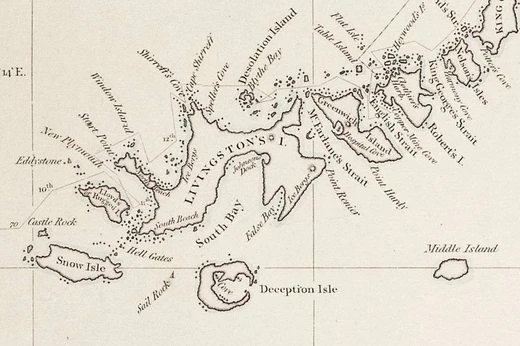
Under the Antarctic Treaty, the region is defined as everything south of 60°S, including Antarctica and the Balleny Islands, Peter I Island, Scott Island, the South Orkney Islands, and the South Shetland Islands. The Antarctic Convergence itself is not part of this treaty area, but its shifting boundary is approximated for conservation purposes by the Convention for the Conservation of Antarctic Marine Living Resources, which uses fixed points along latitudes and longitudes. This convention is managed by an international commission in Hobart, Australia, using annual fishing quotas, licenses, inspectors on vessels, and satellite surveillance.
Islands between 60°S and the Antarctic Convergence, along with their 200-nautical-mile exclusive economic zones, are under the national jurisdiction of the countries that own them: South Georgia and the South Sandwich Islands (UK), Bouvet Island (Norway), and Heard and McDonald Islands (Australia). The Kerguelen Islands (France, also an EU overseas territory) lie within the Convergence area. Islands north of the Convergence—such as Tierra del Fuego, the Falklands, Campbell Island, Macquarie Island, and others—are outside the Antarctic region.
Antarctica
On the continent, less than 1 percent of the land is ice-free. Animals found there at least part of the year include seals, penguins, South Georgia pipits, albatrosses, Antarctic petrels, whales, fish like Antarctic icefish and toothfish, squid including the colossal squid, and Antarctic krill. Only two flowering plants grow: Antarctic hair grass and Antarctic pearlwort. Mosses, liverworts, lichens, and macrofungi are also present.
Sub-Antarctic Islands
On the sub-Antarctic islands, terrestrial biodiversity is low. Studies suggest the harsh climate limits species richness, though correlations exist with island area, temperature, remoteness, and food chain stability. Herbivorous insects are scarce because few plants grow, and native bird numbers depend on insects as a major food source. These islands include Isla de los Estados (Argentina) and Isla Grande de Tierra del Fuego (Chile).
Conservation
The Antarctic contains the world’s largest protected area, the South Georgia and the South Sandwich Islands Marine Protection Area, covering 1.07 million square kilometers, created in 2012. This is larger than Greenland National Park. (The Ross Sea Marine Protection Area, established in 2016, is bigger at 1.55 million square kilometers, but its protection expires in 35 years.) Since 2017, all ships over 500 tonnes in Antarctic waters must follow the Polar Code, adopted by the International Maritime Organization.
The first recorded sighting of Antarctica was by Spaniard Gabriel de Castilla in 1603, who reported distant snow-capped mountains. The first Antarctic land discovered was South Georgia, visited by English merchant Anthony de la Roché in 1675.
The first confirmed sighting of the continent itself is generally credited to the Russian expedition of Fabian Gottlieb von Bellingshausen and Mikhail Lazarev in 1820. The first person born in the Antarctic was Australian James Kerguelen Robinson, born on a sealing ship near Kerguelen Island in 1859. The first person born and raised on an Antarctic island was Solveig Gunbjørg Jacobsen, born in Grytviken, South Georgia, in 1913.
Quick Facts
- Area
- 14 million km² (continent surface)
- Region coverage
- 20 percent of the Southern Hemisphere
- Largest protected area
- 1.07 million km² (South Georgia and the South Sandwich Islands Marine Protection Area)
- Administering treaty
- Antarctic Treaty System
Facts from the source article.
Lore & Background
The Antarctic region encompasses the continent of Antarctica, the Kerguelen Plateau, and various island territories situated on the Antarctic Plate or south of the Antarctic Convergence. This convergence is a dynamic zone, approximately 32 to 48 km wide, where cold Southern Ocean waters meet warmer northern waters, and its latitudinal position shifts with the seasons. The region covers about 20 percent of the Southern Hemisphere, with the Antarctic continent itself comprising 5.5 percent of that area, or roughly 14 million km².
All land and ice shelves south of the 60°S latitude are governed under the Antarctic Treaty System, which includes archipelagos such as the Balleny Islands, Peter I Island, Scott Island, the South Orkney Islands, and the South Shetland Islands. However, the Treaty area does not include the Antarctic Convergence itself. Islands located between the 60°S parallel and the Convergence, such as South Georgia and the South Sandwich Islands, Bouvet Island, and Heard and McDonald Islands, fall under the national jurisdiction of their possessing countries. The Kerguelen Islands lie within the Convergence area, while locations like the Falkland Islands, Tierra del Fuego, and Macquarie Island remain north of it.
Biogeographically, the Antarctic is one of Earth’s eight terrestrial biogeographic realms. The region is critical to global climate, as melting of the Antarctic ice sheet can contribute significantly to sea level rise and disrupt the Southern Ocean’s overturning circulation, affecting local climate and marine ecosystems. There is no permanent human settlement or country in Antarctica.
More in Phantom Places & Discovery
Sources
Compiled from Wikipedia and the sources listed below. Text from Wikipedia is available under CC BY-SA 4.0; this entry is adapted from it.
- Wikipedia: Antarctic (CC BY-SA 4.0).
Spotted an error? Know more?
Reader corrections go straight into our review queue. Suggest an edit · How this site is sourced