
Amir Hamzah
Indonesian poet and National Hero of Indonesia.

via Wikipedia: Amir Hamzah · see source
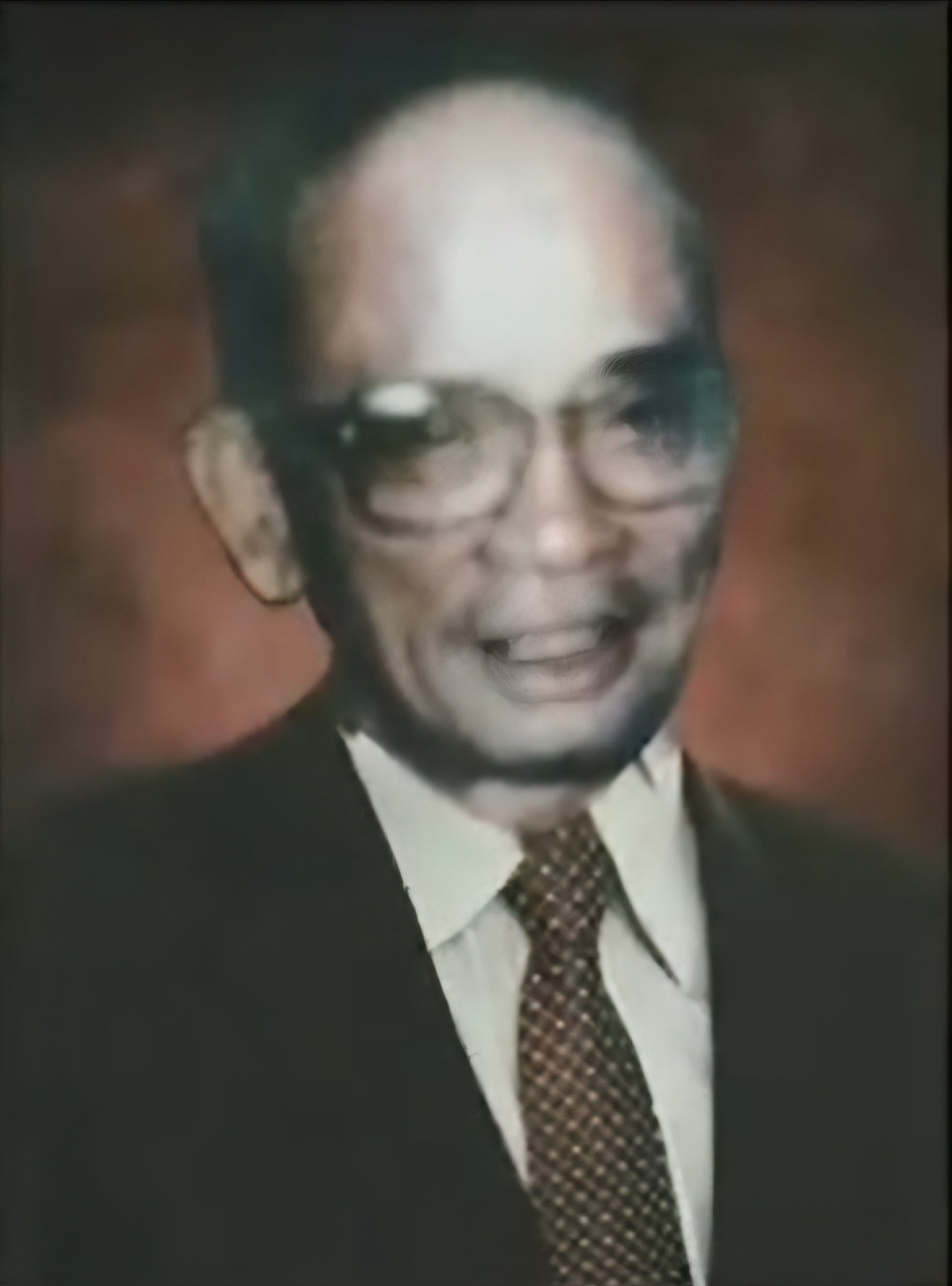
Tengku Amir Hamzah, an Indonesian poet and National Hero, was born into Malay nobility in the Sultanate of Langkat, North Sumatra, in February 1911. He died on 20 March 1946. His education took place in both Sumatra and Java. During his senior high school years in Surakarta around 1930, he got involved in the nationalist movement and developed a romantic relationship with a Javanese classmate, Ilik Sundari. The two stayed close even after Amir moved on to study law in Batavia (now Jakarta). They parted ways in 1937, when Amir was called back to Sumatra to wed the sultan’s daughter and take up court responsibilities. Although he was unhappy in the marriage, he carried out his duties. Following Indonesia’s declaration of independence in 1945, he acted as the government’s representative in Langkat. The next year, he was killed during a social revolution led by PESINDO (Pemuda Sosialis Indonesia) and was buried in a mass grave.
Amir started writing poetry as a teenager. His works are not dated, but experts believe the earliest ones were composed when he first traveled to Java. His influences came from his own Malay culture and Islam, as well as Christianity and Eastern literature. He produced 50 poems, 18 pieces of lyrical prose, and many other works, including translations. In 1932, he helped found the literary magazine *Poedjangga Baroe*. After returning to Sumatra, he stopped writing. Most of his poems appeared in two collections, *Nyanyi Sunyi* (1937) and *Buah Rindu* (1941), first in *Poedjangga Baroe* and later as standalone books.
Amir’s poetry deals with love and religion, often reflecting a deep inner conflict. His diction mixes Malay and Javanese words and expands on traditional structures, shaped by a need for rhythm, metre, and symbolism tied to specific terms. His earlier works express longing and both erotic and idealized love, while his later poems carry a stronger religious meaning. Of his two collections, *Nyanyi Sunyi* is considered the more developed. He has been called the “King of the Poedjangga Baroe-era Poets” and the only Indonesian poet of international standing before the National Revolution.
**Early life** Amir was born as Tengkoe Amir Hamzah Pangeran Indra Poetera in Tanjung Pura, Langkat, North Sumatra. He was the youngest son of Vice Sultan Tengku Muhammad Adil and his third wife, Tengku Mahjiwa. Through his father, he was related to Sultan Machmud of Langkat. Sources disagree on his exact birth date. The Indonesian government officially recognizes 28 February 1911, a date Amir himself used. However, his older brother Abdullah Hod claimed the poet was born on 11 February 1911. Amir later adopted his grandfather’s name, Teungku Hamzah, as a second name, becoming known as Amir Hamzah. Despite being noble, he often mixed with commoners.
From a young age, he studied Islamic principles—Qur’an reading, fiqh, and tawhid—at the Azizi Mosque in Tanjung Pura. He remained a devout Muslim throughout his life. Sources disagree on when he began formal schooling. Some, including the Indonesian government’s Language Centre, say he started in 1916. Biographer M. Lah Husny puts the start at 1918. At the Dutch-language elementary school he first attended, he began writing and earned good marks. Biographer Nh. Dini notes that classmates nicknamed him “abang” (older brother) because he was much taller.
He graduated from the Langkat school in 1924 or 1925 and moved to Medan for middle school (Meer Uitgebreid Lager Onderwijs, or MULO). After finishing about two years later, he entered a formal relationship with his maternal cousin, Aja (also Aje) Bun. Husny wrote that their parents arranged a marriage, while Dini described it as a vow of faithfulness. Since his parents allowed him to continue his studies in Java, Amir moved to the colonial capital, Batavia.
**Time in Java** Amir traveled alone on the ship *Plancus*, a three-day trip to Java. In Batavia, he enrolled at a Christian MULO for his final year of junior high. Anthony H. Johns of Australian National University notes that he picked up some Christian concepts and values there. He also got involved with the social organization Jong Sumatera. During this time, he wrote his first poems. Husny attributes several to heartbreak after learning that Aja Bun had married another man without his knowledge (they never spoke again). Dini suggests the poem “Tinggallah” was written shortly after he boarded the *Plancus*, while he was missing his parents.
After a short return to Sumatra, Amir went to a Boedi Oetomo-run Algemene Middelbare School (AMS, senior high school) in Surakarta, Central Java. There he studied Eastern literature and languages, including Javanese, Sanskrit, and Arabic. Preferring quiet over dormitory life, he boarded at a private home in Surakarta. He met future writers like Armijn Pane and Achdiat Karta Mihardja. They found him friendly and diligent—his notes were complete, his bedroom spotless, with sheets folded so neatly that Mihardja later said a “lost fly could have easily slid over them.” But he was also romantic, often thinking wistfully under lamplight and keeping to himself.
In Surakarta, Amir joined the nationalist movement. He met with fellow Sumatrans to discuss the social problems of the Malay archipelago’s people under Dutch colonial rule. Although most educated youth at the time...
- born
- February 1911 (date disputed: 11 or 28 February 1911)
- died
- 20 March 1946
- nationality
- Indonesian
- known_for
- Poetry collections Nyanyi Sunyi (1937) and Buah Rindu (1941); co-founder of lite
Verified Timeline
Lore & Background
Amir Hamzah was born as Tengkoe Amir Hamzah Pangeran Indra Poetera in Tanjung Pura, Langkat, North Sumatra, the youngest son of Vice Sultan Tengku Muhammad Adil and his third wife Tengku Mahjiwa. Through his father, he was related to the Sultan of Langkat, Machmud. Sources disagree over his date of birth: the date officially recognised by the Indonesian government is 28 February 1911, a date Amir used throughout his life, but his elder brother Abdullah Hod states the poet was born on 11 February 1911. Amir later took the name of his grandfather, Teungku Hamzah, as a second name. Though a child of nobility, he would often associate with non-nobles. He was schooled in Islamic principles such as Qu'ran reading, fiqh, and tawhid, and studied at the Azizi Mosque in Tanjung Pura from a young age. He remained a devout Muslim throughout his life. In 1924 or 1925, Amir graduated from elementary school in Langkat and moved to Medan to study at the Meer Uitgebreid Lager Onderwijs (MULO; middle school) there. After completing his studies some two years later, he entered a formal relationship with his cousin from his mother's side, Aja (also Aje) Bun. As his parents permitted him to finish his studies in Java, Amir moved to the colonial capital at Batavia (now Jakarta) to complete his studies. Alone aboard the Plancus, he made the three-day boat trip to Java. Upon arriving at Batavia, he enrolled at a Christian MULO there, where he completed his last year of junior high school. Also in Batavia, Amir became involved with the social organisation Jong Sumatera. During this period Amir wrote his first poems. After a brief return to Sumatra, Amir continued to a Boedi Oetomo-operated Algemene Middelbare School (AMS; senior high school) in Surakarta, Central Java, where he studied eastern literature and languages, including Javanese, Sanskrit, and Arabic. Preferring solitude to the bustle of the dormitories, Amir boarded at a privately owned home of a Surakartan resident. Later he met several future writers, including Armijn Pane and Achdiat Karta Mihardja; they soon found him to be a friendly and diligent student with complete notes and a spotless bedroom (sheets folded so well, Mihardja later recalled, that a 'lost fly could have easily slid over them'), but also a romantic, prone to thinking wistfully beneath the lamplight and isolating himself from his classmates. In Surakarta Amir joined the nationalist movement. He would meet with fellow Sumatrans and discuss the social plight of the Malay archipelago's populace under Dutch colonial rule. Though most educated youth at the time preferred speaking Dutch, he insisted on speaking Malay. In 1930 Amir became head of the Surakartan branch of the Indonesia Muda (Young Indonesians), delivering a speech at the 1930 Youth Congress and serving as an editor of the organisation's magazine Garuda Merapi. At school he also met Ilik Sundari, a Javanese woman nearly his age with whom he fell in love. Sundari, the daughter of Raden Mas Kusumodihardjo, was one of the few female students at the school, and her home was near one of those in which Amir boarded. According to Dini, the two grew closer, Amir teaching Sundari Arabic and Sundari teaching him Javanese. They were soon meeting every day, conversing on a variety of topics. Amir's mother died in 1931, and his father the year after, meaning that his education could no longer be funded. After his AMS studies concluded, he wanted to continue to study at a law school in Batavia. As such, he wrote to his brother, Jakfar, who arranged for the remainder of his studies to be paid for by the Sultan. In 1932 Amir was able to return to Batavia and begin his legal studies, taking up a part-time job as a teacher. At first, his relationship with Sundari was continued through letters, though she soon continued her studies in Lembang, a city much closer than Surakarta; this allowed the two to meet furtively – when Sundari's parents had discovered their relationship, Amir and Sundari had been forbidden from meeting. This year Amir's first two poems, 'Sunyi' ('Silent') and 'Mabuk...' ('Nauseous...'), were published in the March edition of the magazine Timboel. His other eight works published in 1932 included a syair based on the Hikayat Hang Tuah, three other poems, two pieces of lyrical prose, and two short stories; the poems were again published in Timboel, while the prose was included in the magazine Pandji Poestaka. Around September 1932 Armijn Pane, upon the urgings of Sutan Takdir Alisjahbana, editor of 'Memadjoekan Sastera' ('Advancing Literature', the literary section of Pandji Poestaka), invited Amir to help them establish an independent literary magazine. Amir accepted, and was tasked with writing letters to solicit submissions; a total of fifty letters were sent to noted writers, including forty sent to contributors to 'Memadjoekan Sastera'. After several months of preparations, the initial edition was published in July 1933, under the title Poedjangga Baroe. The new magazine was left under the editorial control of Armijn and Alisjahbana, while Amir published almost all of his subsequent writings there. In mid-1933 Amir was recalled to Langkat, where the Sultan informed him of two conditions which he had to fulfil to continue his studies: be a diligent student and abandon the independence movement. Despite the Sultan's disapproval, Amir became more heavily involved in the nationalist movement, bringing him under increasing Dutch scrutiny. He continued to publish in Poedjangga Baroe, including a series of five articles on Eastern literatures from June to December 1934 and a translation of the Bhagavad Gita from 1933 to 1935. His legal studies, however, were delayed, and by 1937 he had still not graduated. The Dutch, concerned about Amir's nationalistic tendencies, convinced the Sultan to send him back to Langkat, an order which the fledgling poet was unable to refuse. In 1937, Amir, together with two of the Sultan's vassals tasked with escorting him, boarded the Opten Noort from Tanjung Priok and returned to Sumatra. Upon arriving in Langkat, he was informed that he was to be married to the Sultan's eldest daughter, Tengku Puteri Kamiliah, a woman he had barely met. Before the wedding Amir returned to Batavia to face his final exam – and have one last meeting with Sundari. Several weeks later he returned to Langkat, where he and Kamiliah were married in an extravagant ceremony. His cousin, Tengku Burhan, later stated that Amir's indifference throughout the seven-day event was due to his unhappiness. Though unhappy with his marriage, he fulfilled his courtly duties. After Indonesia proclaimed its independence in 1945, he served as the government's representative in Langkat. The following year he was killed in a social revolution led by the PESINDO (Pemuda Sosialis Indonesia), and buried in a mass grave.
Reader's Guide
Amir Hamzah began writing poetry while still a teenager: though his works are undated, the earliest are thought to have been written when he first travelled to Java. Drawing influences from his own Malay culture and Islam, as well as from Christianity and Eastern literature, Amir wrote 50 poems, 18 pieces of lyrical prose, and numerous other works, including several translations. In 1932 he co-founded the literary magazine Poedjangga Baroe. After his return to Sumatra, he stopped writing. Most of his poems were published in two collections, Nyanyi Sunyi (1937) and Buah Rindu (1941), first in Poedjangga Baroe then as stand-alone books. Poems by Amir deal with the themes of love and religion and his poetry often reflects a deep inner conflict. His diction, using both Malay and Javanese words and expanding on traditional structures, was influenced by the need for rhythm and metre, as well as symbolism related to particular terms. His earlier works deal with a sense of longing and both erotic and idealised love, whereas his later works have a deeper religious meaning. Of his two collections, Nyanyi Sunyi is considered the most developed. Amir has been called the 'King of the Poedjangga Baroe-era Poets' and the only international-class Indonesian poet from before the Indonesian National Revolution.
Did You Know?
- Amir Hamzah's first two published poems, 'Sunyi' ('Silent') and 'Mabuk...' ('Nauseous...'), appeared in the March 1932 edition of the magazine Timboel.
- He translated the Bhagavad Gita, serialized in Poedjangga Baroe from 1933 to 1935.
- Amir insisted on speaking Malay even though most educated youth at the time preferred Dutch.
- He was killed in a social revolution led by PESINDO (Pemuda Sosialis Indonesia) and buried in a mass grave.
- His cousin Tengku Burhan stated that Amir showed indifference throughout his seven-day wedding ceremony to the sultan's daughter.
Gallery


Frequently Asked Questions
Who is Amir Hamzah?
Tengku Amir Hamzah (1911–1946) was an Indonesian poet born into a Malay aristocratic family in the Sultanate of Langkat, North Sumatra. He is honored as a National Hero of Indonesia and is best known for his lyrical poetry and his role in the country's literary and nationalist movements.
What are Amir Hamzah's most famous works?
His two landmark poetry collections are Nyanyi Sunyi (1937) and Buah Rindu (1941). He is also recognized as a co-founder of a major Indonesian literary movement that shaped modern poetry in the archipelago.
What happened in Amir Hamzah's famous love story?
While studying in Surakarta around 1930, he fell in love with a Javanese schoolmate named Ilik Sundari and the two stayed close even after he moved to Batavia for law school. Their relationship ended in 1937 when he was recalled to Sumatra to marry the sultan's daughter.
How did Amir Hamzah die?
Amir Hamzah passed away on 20 March 1946, at the age of thirty-four or thirty-five depending on which disputed birth date (11 or 28 February 1911) one accepts. His death came during a turbulent period in Indonesian history just before formal independence.
Why is Amir Hamzah considered important in Indonesian culture?
He is celebrated as a National Hero for combining poetic art with active participation in the nationalist movement during his school years. His verse is regarded as a cornerstone of modern Indonesian literature, and his life story—bridging Sumatran aristocracy, Javanese education, and political awakening—continues to inspire readers.
More in Persian And Central Asian Poets 1-24
Spotted an error? Know more?
This is a living reference — every entry is fact-audited, and reader corrections feed straight into our audit queue. Suggest an edit · See this site's audit record