Audrey Hepburn
British actress, fashion icon, and UNICEF Goodwill Ambassador.

FakirNL · CC BY-SA 4.0
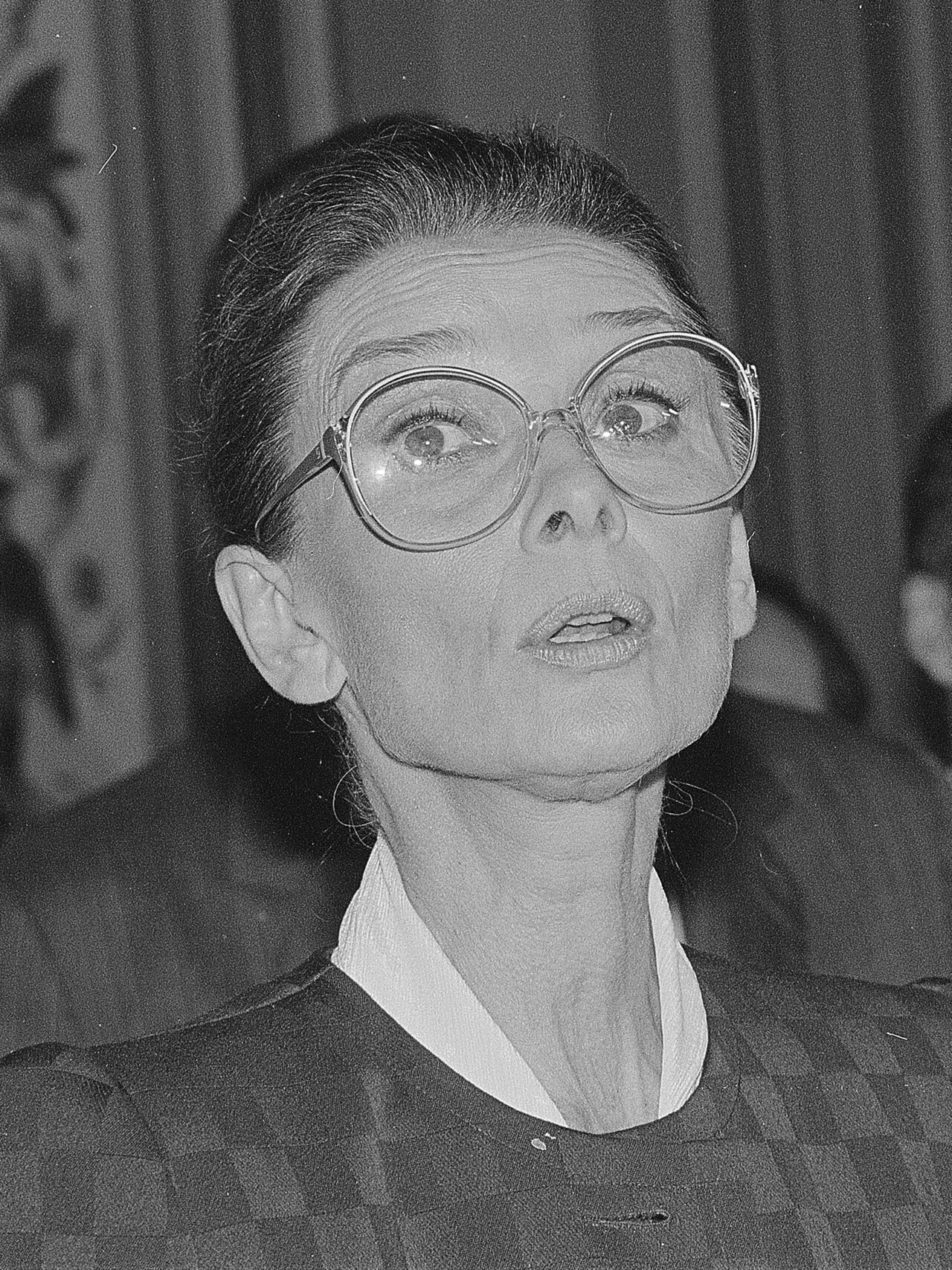
Audrey Kathleen Hepburn (born Audrey Kathleen Ruston; 4 May 1929 – 20 January 1993) was a British actress and humanitarian. The American Film Institute named her the third-greatest female screen legend from the Classical Hollywood era. She is one of the few performers to have won a competitive Oscar, Emmy, Grammy, and Tony, and she sits in the International Best Dressed Hall of Fame.
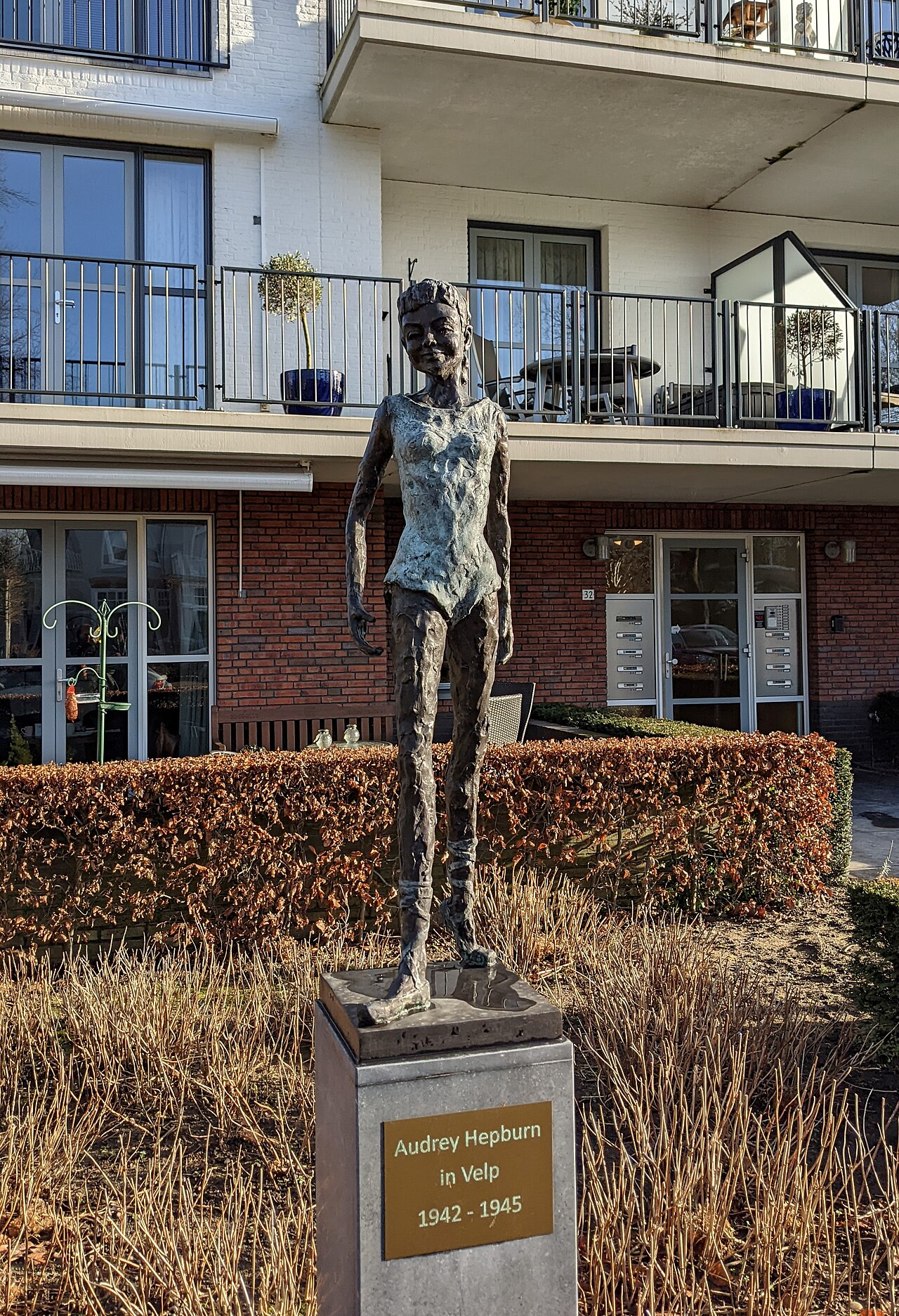
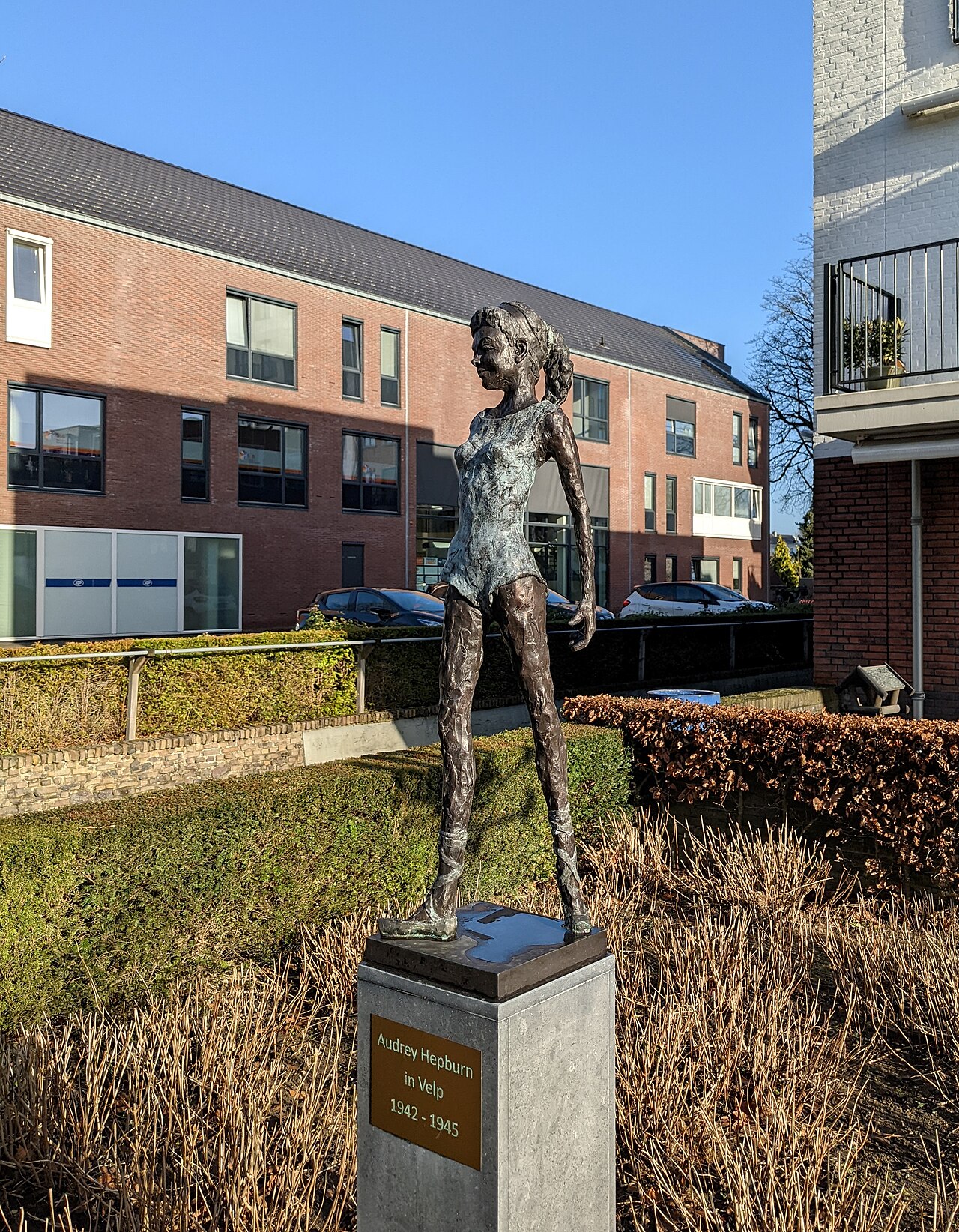
She was born into an aristocratic family in Ixelles, Brussels, and spent parts of her childhood in Belgium, the United Kingdom, and the Netherlands. From 1936 to 1939 she attended boarding school in Kent. When the Second World War broke out, she returned to the Netherlands. During the war she studied ballet at the Arnhem Conservatory, and by 1944 she was performing ballet to raise money for the resistance. From 1945 to 1948 she studied with Sonia Gaskell in Amsterdam, then with Marie Rambert in London.
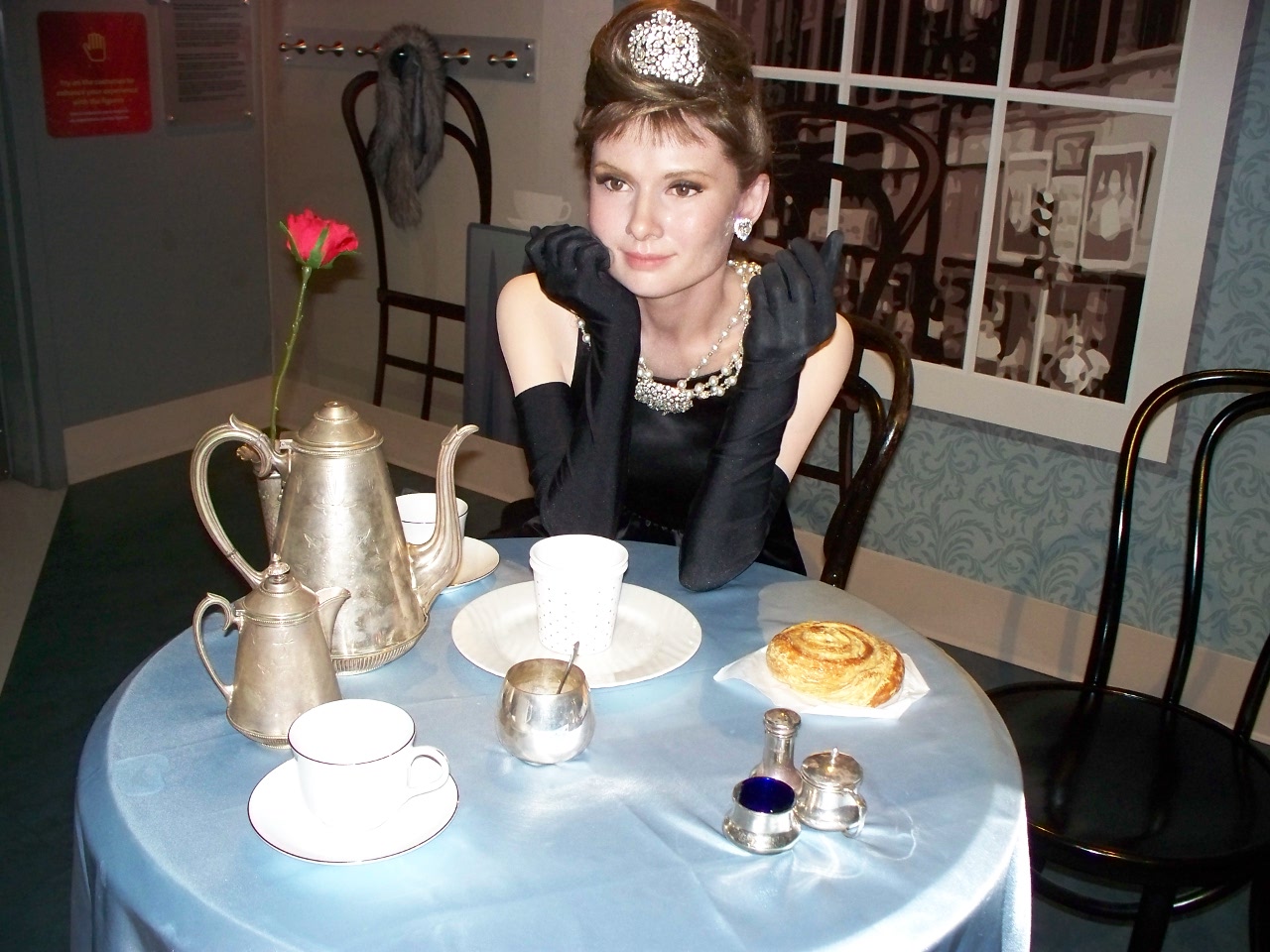
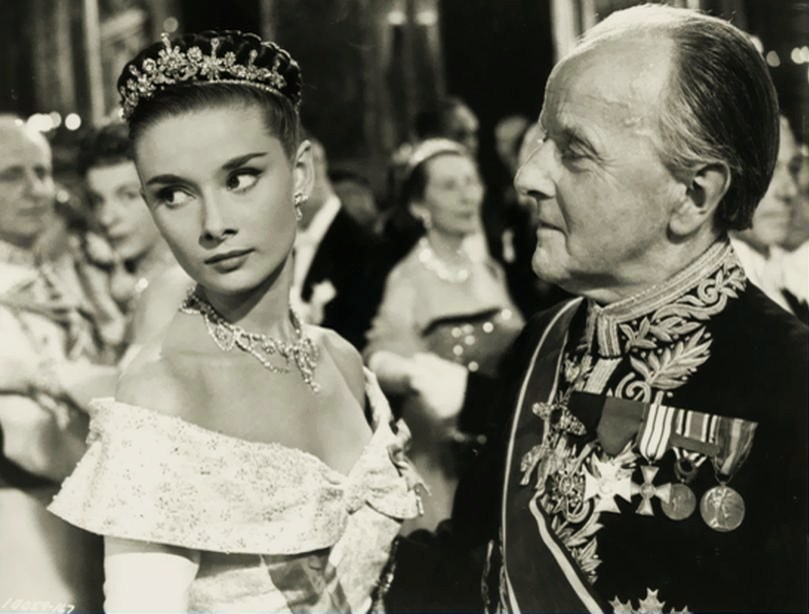
Hepburn started out as a chorus girl in West End musicals and made small film appearances. She became a star in the romantic comedy *Roman Holiday* (1953), opposite Gregory Peck. For that performance she became the first actress to win an Academy Award, a Golden Globe, and a BAFTA for the same role. That same year she won a Tony for Best Leading Actress in a Play for *Ondine*. She went on to star in many successful films, including *Sabrina* (1954) with Humphrey Bogart and William Holden; the musical *Funny Face* (1957), in which she sang her own parts; the drama *The Nun’s Story* (1959); *Breakfast at Tiffany’s* (1961); the thriller-romance *Charade* (1963) with Cary Grant; and the musical *My Fair Lady* (1964).
In 1967 she starred in the thriller *Wait Until Dark*, earning Oscar, Golden Globe, and BAFTA nominations. After that she appeared only occasionally in films, one being *Robin and Marian* (1976) with Sean Connery. Her last recorded performances were in Steven Spielberg’s *Always* (1989) and the 1990 documentary series *Gardens of the World with Audrey Hepburn*, for which she won a Primetime Emmy for Outstanding Individual Achievement – Informational Programming. She won three BAFTAs for Best British Actress in a Leading Role and BAFTA’s Lifetime Achievement Award. She also won two Golden Globes and the Cecil B. DeMille Award, plus a Screen Actors Guild Life Achievement Award and a Special Tony Award. In 1994 her spoken-word recording *Audrey Hepburn’s Enchanted Tales* earned her a posthumous Grammy for Best Spoken Word Album for Children.
Later in life she devoted much of her time to charity. She contributed to UNICEF from 1954 onward. Between 1988 and 1992 she worked in some of the poorest communities in Africa, South America, and Asia. In December 1992 she received the US Presidential Medal of Freedom for her work as a UNICEF Goodwill Ambassador. One month later, she died of appendix cancer at her home in Tolochenaz, Switzerland.
**Early life**
**1929–1938: Family and early childhood** Audrey Kathleen Ruston (later Hepburn-Ruston) was born at 48 Rue Keyenveld in Ixelles, Brussels, Belgium. Her family called her Adriaantje. She was raised Protestant and remained one her whole life.
Her mother, Baroness Ella van Heemstra (1900–1984), was a Dutch noblewoman. She was the daughter of Baron Aarnoud van Heemstra (1871–1957), who had been mayor of Arnhem from 1910 to 1920 and governor of Dutch Guiana from 1921 to 1928, and Baroness Elbrig Willemine Henriette van Asbeck (1873–1939), a granddaughter of Count Dirk van Hogendorp (1797–1845). At 19, Ella married Jonkheer Hendrik Gustaaf Adolf Quarles van Ufford, an oil executive based in Batavia, Dutch East Indies, where they lived. They had two sons—Jonkheer Arnoud Robert Alexander “Alex” Quarles van Ufford (1920–1979) and Jonkheer Ian Edgar Bruce Quarles van Ufford (1924–2010)—before divorcing in 1925.
Her father, Joseph Victor Anthony Ruston (1889–1980), was a British subject born in Auschitz, Kingdom of Bohemia, Austro-Hungarian Empire. He was the son of Victor John George Ruston (of British and German-Austrian background) and Anna Juliana Franziska Karolina Wels (of German-Austrian origin, born in Kovarce, Kingdom of Hungary). He served as an Honorary British Consul in Semarang, Dutch East Indies, from 1923 to 1924. Before marrying Ella, he had been married to Cornelia Bisschop, a Dutch heiress. He later changed his surname to the double-barrelled Hepburn-Ruston, perhaps at Ella’s insistence, because he mistakenly believed he was descended from James Hepburn, 4th Earl of Bothwell.
Ella and Joseph married in Batavia in 1926. Joseph was then working for a trading company. Soon after, they moved to Europe, where he worked for a loan company—reportedly MacLaine, Watson, and Company in London. After a year in London they moved to Brussels, where he was assigned to open a branch office. After three years travelling between Brussels, Arnhem, The Hague, and London, the family settled in the suburban Brussels municipality of Linkebeek in 1932. Hepburn’s early childhood was sheltered and privileged. Because of Joseph’s job, the family moved among three countries, adding to her multinational background.
In the mid-1930s, Ella and Joseph recruited and collected donations for the British Union of Fascists (BUF). Ella met Adolf Hitler and wrote favourable articles about him for the BUF. Joseph left the family abruptly in 1935 after a “scene” in Brussels. He then moved to London, where he became more deeply involved with the BUF.
- field
- Actress, model, humanitarian
- nationality
- British
Verified Timeline
Quick Facts
- Birth Name
- Audrey Kathleen Ruston
- Birth Date
- 1929-05-04
- Birth Place
- Ixelles, Brussels, Belgium
- Death Date
- 1993-01-20
- Death Place
- Tolochenaz, Vaud, Switzerland
- Resting Place
- Tolochenaz Cemetery
- Occupation
- Actress · humanitarian
- Years Active
- 1948–1992
- Notable Works
- Full list
- Spouse
- Mel Ferrer · 1954 · 1968 · end=div / Andrea Dotti · 1969 · 1982 · end=div
- Partner
- Robert Wolders (1980–1993; her death)
- Children
- 2, including Sean Hepburn Ferrer
Facts from the source article.
Lore & Background
Born into an aristocratic family in Ixelles, Brussels, Hepburn spent parts of her childhood in Belgium, the United Kingdom and the Netherlands. Hepburn returned to the Netherlands at the outbreak of the Second World War. She studied ballet at the Arnhem Conservatory during the war. Hepburn began performing as a chorus girl in West End musicals and later made minor appearances in several films.
Reader's Guide
Audrey Hepburn's significance lies in her dual legacy as a defining figure of Classical Hollywood cinema and a dedicated humanitarian. She became a fashion icon, inducted into the International Best Dressed Hall of Fame, and her work in films like Breakfast at Tiffany's and My Fair Lady remains culturally influential. Beyond entertainment, Hepburn's later years were marked by extensive UNICEF field missions in impoverished regions, for which she received the US Presidential Medal of Freedom. Her rare achievement of winning competitive Academy, Emmy, Grammy, and Tony Awards underscores her versatility. Hepburn's life story—from a privileged but disrupted childhood during World War II to global stardom and humanitarian service—continues to inspire. Her posthumous Grammy Award for a spoken-word album further highlights her enduring impact across media.
Did You Know?
- She used the name Edda van Heemstra during the German occupation of the Netherlands because an English-sounding name was considered dangerous.
A Fleeting Screen Appearance
In 1951, the British comedy play One Wild Oat was adapted into a film, produced at the Riverside Studios in Hammersmith. Among the cast of this screen version was Audrey Hepburn, who appeared in a brief cameo role. The film starred Robertson Hare and Stanley Holloway, with the latter taking on a part that had previously been performed by Alfred Drayton in the original stage production. Hepburn's involvement in this project placed her within a world of British farce and light comedy that had been a fixture of the West End since the play's December 1948 opening. Though her screen time was minimal, the cameo represents a documented point of intersection between Hepburn and the theatrical tradition of Vernon Sylvaine's writing, a body of work that had already spawned multiple film adaptations of its farces. The production connected her to a lineage of British comedy performers, including the veteran entertainer Jack Buchanan, who had directed the original Garrick Theatre staging.
The Stage Origins
The 1951 film in which Hepburn made her cameo was not an original screenplay but an adaptation of a stage production that had been running on the London West End since December 1948. One Wild Oat, written by British playwright Vernon Sylvaine, opened at the Garrick Theatre under the direction of Jack Buchanan, a veteran entertainer whose name lent considerable prestige to the production. The play's premise was deceptively simple: two feuding neighbors, one a barrister and the other a bookmaker, must set aside their rivalry to keep their respective secret pasts from resurfacing. This comedic conceit proved durable, sustaining a run of 508 performances that stretched from the winter of 1948 all the way through to February 1950. The original cast featured Robertson Hare and Alfred Drayton, a pairing that audiences would have recognized from several earlier Sylvaine farces and their corresponding film versions.
Casting Shifts and Longevity
The longevity of One Wild Oat's West End run was not without disruption. In 1949, the death of Alfred Drayton necessitated a change in the principal cast. His role was first assumed by Arthur Riscoe and subsequently by Hartley Power, each stepping into a part that had been central to the play's comedic dynamic since its December 1948 opening. Despite these personnel changes, the production maintained its momentum, ultimately reaching 508 performances before closing in February 1950. The fact that the play survived the loss of a key performer and continued for another year speaks to the strength of Sylvaine's writing and the audience's appetite for the farce. When the 1951 film adaptation was mounted at the Riverside Studios, the casting reflected further evolution: Stanley Holloway took the lead alongside Robertson Hare, who had been part of the original stage company. This continuity between stage and screen castings underscores how deeply the production was rooted in a specific theatrical tradition.
From Garrick to Riverside
The journey of One Wild Oat from the Garrick Theatre to the Riverside Studios in Hammersmith illustrates a common pathway in mid-century British entertainment: a successful stage farce finding new life on the screen. The original production, directed by Jack Buchanan, had established the play as a reliable draw for West End audiences over its 508-performance run. The 1951 film adaptation carried forward the core comedic structure—two neighbors, a barrister and a bookmaker, conspiring to bury their pasts—while introducing new faces to the material. Stanley Holloway joined Robertson Hare in the leading roles, and Audrey Hepburn was attached for a brief cameo, adding a touch of emerging star power to an otherwise familiar cast. The Riverside Studios, a well-known London film production facility, provided the physical setting for this transition from live performance to celluloid. For Hepburn, the cameo represented a small but notable thread connecting her to the world of British stage comedy and the particular tradition of Sylvaine farces that had already generated multiple screen adaptations.
Gallery
Frequently Asked Questions
What did Audrey Hepburn do after her acting career?
She devoted her later years to humanitarian work as a UNICEF Goodwill Ambassador, focusing on children in need around the world. This advocacy became the defining chapter of her public life.
What major awards and honors did Audrey Hepburn receive?
She is one of the very few entertainers to have won competitive Academy, Emmy, Grammy, and Tony Awards. She was also inducted into the International Best Dressed Hall of Fame.
More in Performers And Entertainers 1-19
Spotted an error? Know more?
This is a living reference — every entry is fact-audited, and reader corrections feed straight into our audit queue. Suggest an edit · See this site's audit record