Stewart Lee
English comedian known for repetition, internal reference, and deadpan delivery.
Last updated
Stewart Graham Lee, born 5 April 1968, is an English comedian known for a deadpan, repetitive, and self-referencing style. He started performing in 1989 and later formed the duo Lee and Herring with Richard Herring. Lee co-wrote and co-directed the West End musical Jerry Springer: The Opera in 2001, which was critically praised but drew protests from Christian right groups.
In 2011, he won British Comedy Awards for Best Male Television Comic and Best Comedy Entertainment Programme for Stewart Lee's Comedy Vehicle. He has also written music reviews for The Sunday Times. The Times called him "the comedian's comedian" in 2009 and named him "face of the decade." In 2012, a poll ranked him ninth among the 100 most influential people in UK comedy, and in 2018, The Times declared him the best current English-language comedian.
Early life and education
Stewart Graham Lee was born on 5 April 1968 in Wellington, Shropshire. He was adopted as a child and grew up in Solihull, West Midlands. His adoptive parents separated when he was four, and he was raised by his mother. Lee was privately educated at Solihull School on a scholarship, and received what he calls a "waifs and strays bursary" because he was adopted.
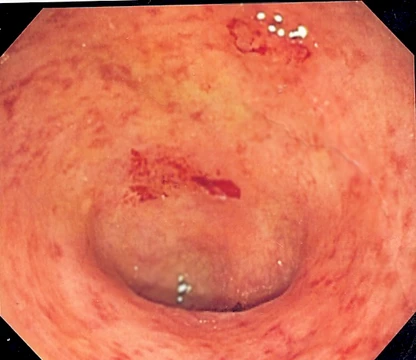
He participated in the school's mountain-walking club, which went on regular excursions to Snowdonia; the original members of the grindcore band Napalm Death also took part. As a teenager, Lee suffered from ulcerative colitis, which he has said caused significant weight loss and made him look "cadaverously thin". He has described how at the age of 16, he was "doing a lot of reading, going to gigs, buying records and listening to the John Peel show".
He later read English at the University of Oxford, where he was an undergraduate student at St Edmund Hall, Oxford, graduating with an Upper second class degree.
Career
While a student at Oxford in the 1980s, Lee wrote and performed comedy in a revue group called The Seven Raymonds with Richard Herring, Emma Kennedy and Tim Richardson, but did not perform in the well-known Oxford Revue, though he did write for and direct the 1989 production. Having moved to London and begun performing stand-up comedy after university, he rose to greater prominence in 1990, winning the prestigious Hackney Empire New Act of the Year competition.
With Herring, Lee wrote material for BBC Radio 4's On the Hour (1991), which was anchored by Chris Morris and was notable for the first appearance of Steve Coogan's celebrated character, Alan Partridge, for which Lee and Herring wrote early material. Owing to creative differences with the rest of the cast, Lee and Herring did not remain with the group when On The Hour moved to television as The Day Today. In 1992 and 1993, he and Herring wrote and performed Lionel Nimrod's Inexplicable World for BBC Radio 4, before moving to BBC Radio 1, for one series of Fist of Fun (1993), followed by three series of Lee and Herring.
In 1995 and 1996, two series of a television version of Fist of Fun were broadcast by BBC2, followed in 1998-99 by two series of This Morning with Richard Not Judy. Throughout the late nineties he continued performing solo stand-up (even whilst in the double act Lee and Herring) and collaborated with, amongst others, Julian Barratt and Noel Fielding of The Mighty Boosh. Indeed, though Barratt and Fielding had worked together in the past, the first seeds of the Boosh were sown while working as part of Lee's Edinburgh show King Dong vs Moby Dick in which Barratt and Fielding played a giant penis and a whale, respectively.
2000–2004: quitting stand-up
Lee returned the favour by going on to direct their 1999 Edinburgh show, Arctic Boosh, which remains the template for their live work. In 2001, Lee published his first novel, The Perfect Fool. In the same year, he performed Pea Green Boat, a stand-up show which revolved around the deconstruction of the Edward Lear poem "The Owl and the Pussy-Cat" and a tale of his own broken toilet. This would later be condensed to focus mainly on the poem itself, and a 15-minute version aired on Radio 4.
In 2007, Go Faster Stripe released a 25-minute edit on CD and 10" Vinyl. During late 2000 and early 2001, Lee retired from stand-up comedy.
2001 became the first year since 1987 that he did not perform at the Edinburgh Festival Fringe. While Lee found himself gradually performing less stand-up and moving away from the stage, he continued directing for television. Two pilots were made for Channel 4, Cluub Zarathustra and Head Farm, but neither was developed into a series.
The former featured all the ingredients that would later appear in Attention Scum, a BBC Two series fronted by Simon Munnery's "League Against Tedium" character, which also featured Kevin Eldon, Johnny Vegas and Roger Mann, as well as Richard Thomas and opera singer Lore Lixenberg. At the 2003 Edinburgh Festival Fringe, Lee directed Johnny Vegas's first DVD, Who's Ready For Ice Cream?. In 2004, he returned to stand-up comedy with the show Standup Comedian.
2005–2008: Jerry Springer: The Opera
Lee is a regular music critic for The Guardian. In 2003, he said that his favourite bands include The Fall, Giant Sand and Calexico and that he listens to "a lot of jazz, 60s and folk music". In January 2005, Jerry Springer: The Opera, a satirical musical/opera written by Lee and Richard Thomas and based upon The Jerry Springer Show, was broadcast on BBC Two, following a highly successful West End run for several years, and as a prelude to the show's UK Tour.
Christian Voice led a number of protest groups who claimed that the show was blasphemous and highly offensive. In particular, they were angered by the portrayal of Jesus. Disputes arose, with supporters claiming that most of the protesters had neither seen the show nor knew of its content. Others supported the right to freedom of speech.
Several Christian groups protested at some of the venues used during the UK Tour. The show was broadcast with a record number of complaints prior to its transmission. In total, the BBC received 55,000 complaints. A private court case brought by Christian Voice against Lee and others involved with the production for blasphemy was rejected by a magistrates' court.
At around the time of the Jerry Springer: The Opera broadcast, Lee, Thomas and translator Hermann Bräuer developed Stand Up, a German-language opera set in a fictional London comedy club and performed in Hannover, after an adaptation of Jerry Springer proved impossible for legal reasons. In 2006, finding himself "really broke" he appeared as a guest on three comedy panel shows. The first was Never Mind The Buzzcocks, where Simon Amstell made frequent mock-offended references to the controversy over Jerry Springer: The Opera.
This was followed by appearances on Have I Got News For You and 8 Out of 10 Cats, before Lee decided to quit them altogether. A profile in the Financial Times in 2011 stated Lee did not want to alienate his audience in exchange for quick money by such appearances, as working as a stand-up had been the only thing that had generated reliable income for him. Stewart Lee's Comedy Vehicle, a comedy series featuring standup and sketches, began a six-episode run on 16 March 2009.
2009–2010: Comedy Vehicle
The executive producer was Armando Iannucci and the script editor was Chris Morris. The first episode received positive reviews from The Independent and the Daily Mirror. Lee wrote a negative review of the show in Time Out in which he described himself as "fat" and his performance as "positively Neanderthal, suggesting a jungle-dwelling pygmy, struggling to coax notes out of a clarinet that has fallen from a passing aircraft". The Guardian described it as "the kind of TV that makes you feel like you're not the only one wondering how we came to be surrounded by so much unquestioned mediocrity".
One of the show's few negative reviews came in the Sunday Mercury, "His whole tone is one of complete, smug condescension". Lee used the line to advertise his next stand-up tour; he frequently uses negative reviews on his posters to put off potential audience members who are unlikely to like his comedy style. The first episode was watched by approximately one million viewers. The series was the BBC's second most downloaded broadcast during its run.
2011–2019: The Alternative Comedy Experience
In May 2010, the series was nominated for a BAFTA TV Award for best comedy programme. The series won a BAFTA for best comedy programme in 2012. The show was cancelled after four seasons on BBC Two. Although Lee had been supported by less established acts on his comedy tours before (including Josie Long and Tony Law), 2011 marked a shift in his career towards doing a lot to promote other creative comedy talent.
Style and material
Lee's influences include Ted Chippington, Arnold Brown, Norman Lovett, Jerry Sadowitz, Simon Munnery, Kevin McAleer, and Johnny Vegas. His comedy is often topical, observational, self-deprecating, and absurd, covering topics such as religion, political correctness, and artistic integrity. He employs meta-humour, openly describing the structure and intent of his set onstage. In a 2006 Guardian article, Lee wrote that developing the German-language opera Stand Up made him realize much British humour depends on English linguistic structures, and he adopted a technique he called "pull back and reveal."
His delivery alternates between personae of an outspoken left-wing hero and a depressed failure or champagne socialist. He often ironically criticizes the audience for not understanding his jokes or for being a "liberal intelligentsia." His routines sometimes culminate in feigned depressive episodes. A routine about Top Gear presenter Richard Hammond, in which Lee joked about wishing Hammond had been decapitated after his 2006 accident, caused controversy; Lee defended it as a joke similar to those on Top Gear.
More in People with Ulcerative Colitis
Sources
Compiled from Wikipedia and the sources listed below. Text from Wikipedia is available under CC BY-SA 4.0; this entry is adapted from it.
- Wikipedia: Stewart Lee (CC BY-SA 4.0).
Spotted an error? Know more?
Reader corrections go straight into our review queue. Suggest an edit · How this site is sourced