Noelia Castillo
Spanish woman whose euthanasia case became a landmark legal battle.
Last updated
Noelia Castillo Ramos (14 November 2000 – 26 March 2026) was a Spanish woman who died after receiving euthanasia. Her request for euthanasia became a landmark case in Spain on the application of the Organic Law Regulating Euthanasia in the country. At age 25, she was one of the youngest people to receive medical assistance in dying after demonstrating chronic and irreversible pain. Her case garnered significant public attention due to a two-year legal battle, in which the High Court of Justice of Catalonia (TSJC) had to intervene to validate her right against appeals filed by her father and the Christian Lawyers Association, who questioned her legal capacity.
Background
At age thirteen, Castillo’s family lost their home, and she went to live with her father. The separation of her parents took a toll on her mental health, and she said she was taken to bars by her father and kept out until late. She was later diagnosed with obsessive-compulsive disorder and borderline personality disorder. From July 2015 until February 2019, she was in state care, leaving on her own once she turned eighteen.
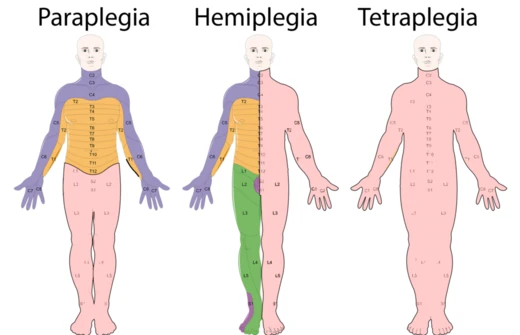
In an interview, Castillo described three unreported sexual assaults: one by a former partner, another by two men at a nightclub, and a third by three men at a different nightclub. On October 4, 2022, days after the second assault, she jumped from a building in a suicide attempt. She survived but suffered permanent paraplegia, ongoing physical pain, nerve damage, and severe emotional distress.
Campaign
Noelia Castillo made a formal request for euthanasia in April 2024, citing Spain’s existing laws on the matter. The Guarantee and Evaluation Commission of Catalonia unanimously approved her procedure that July, scheduling it for the following month. The process stalled, however, due to opposition from her father, who, backed by the Christian Lawyers Association, filed multiple legal appeals to block it. Every court that reviewed the case rejected his requests and upheld Castillo’s right to die.
Her father argued that a personality disorder left her unable to make sound judgments, and that the state should protect her. Despite the legal green light, the procedure was delayed by 601 days because of the drawn-out legal fight. In March 2025, a Barcelona court ruled that Castillo was not incapable of deciding on euthanasia, dismissing her father’s appeal. The High Court of Justice of Catalonia upheld the decision in September 2025 but allowed a further appeal to the Supreme Court of Spain.
On 29 January 2026, the Supreme Court rejected the father’s appeal, and the Constitutional Court dismissed his subsequent challenge for failing to specify how his human rights were violated. The European Court of Human Rights in Strasbourg rejected his final appeal on 10 March 2026. In her last interview, aired on Antena 3’s Y ahora Sonsoles on 25 March 2026, Castillo stated that her choice to die was a personal one and that she was not urging others to seek euthanasia.
Death
The next day, 26 March 2026, at age 25, she underwent euthanasia at a healthcare centre in Sant Pere de Ribes, in the Province of Barcelona. Her mother asked to be present, but Castillo chose to die alone. She became the third youngest person to receive euthanasia in Spain; of the 1,123 people who had undergone the procedure, two were younger, aged 22 and 23.
Reactions
James Rhodes, a British concert pianist and writer based in Spain who has spoken publicly about surviving child sexual abuse, stepped in with an offer to fund Castillo’s mental and physical care. The case sparked debate in Spain’s Congress of Deputies over Castillo’s euthanasia. Lawmakers from the Spanish Socialist Workers’ Party, Republican Left of Catalonia, Galician Nationalist Bloc, EH Bildu, and Sumar voiced support, while the People’s Party and Vox opposed it.
Catholic leaders weighed in strongly. Luis Argüello, archbishop of Valladolid and head of the Spanish Episcopal Conference, condemned the procedure. José Mazuelos Pérez, Bishop of the Canary Islands, called it “another step towards a culture of death, throwing in the towel on the humanisation of medicine.” The bishops on the Subcommission for the Family and the Defence of Life described the situation as “an accumulation of personal suffering and institutional shortcomings that calls the whole of society into question.”
Misinformation
Noelia Castillo's case involved claims from her father's legal team that a relative told them she was gang-raped by unaccompanied child migrants at a care facility. Vox leader Santiago Abascal spread this allegation. Fact-checkers have labeled it false: Castillo was 21 when she attempted suicide days after a group assault, and she had left care more than three years earlier. In a televised interview, she did not identify her attackers and stated the incidents occurred at a nightclub.
Reports that her euthanasia was approved because of depression were incorrect; it was granted due to chronic, irreversible pain resulting from her suicide attempt. Her father's lawyers also argued that her euthanasia could not be halted because her organs were already pledged for donation, and that doctors had financial motives tied to organ donation. However, euthanasia and organ donation decisions are separate, consent can be withdrawn at any point, and doctors receive no extra compensation if a euthanasia patient donates organs.
More in People with Tetraplegia
Sources
Compiled from Wikipedia and the sources listed below. Text from Wikipedia is available under CC BY-SA 4.0; this entry is adapted from it.
- Wikipedia: Noelia Castillo euthanasia case (CC BY-SA 4.0).
Spotted an error? Know more?
Reader corrections go straight into our review queue. Suggest an edit · How this site is sourced