Frequently Asked Questions
The most-asked questions about pc gaming brands and manufacturers.
What does a 'PC gaming brand' or 'PC gaming manufacturer' actually refer to?
It is the umbrella term for companies that design and sell hardware—graphics cards, motherboards, processors, peripherals, or complete prebuilt systems—aimed specifically at PC gamers. These firms are distinct from game publishers or console makers because their product is the physical machine and its parts rather than the software that runs on it.
Who are the biggest names in PC gaming hardware?
NVIDIA and AMD dominate the GPU and CPU silicon market, while ASUS, MSI, and Gigabyte are the most visible board and card partner brands. On the prebuilt and enthusiast side, Alienware (Dell), Corsair, and Maingear are frequently cited, and Logitech and Razer lead the peripheral space.
How does a PC gaming manufacturer differ from a console company like Sony or Microsoft?
PC gaming brands produce modular, upgradeable components that users can freely mix and match, whereas console makers sell a single sealed hardware platform. This openness means the PC side has many more competing brands, a far wider price range, and a shorter product-replacement cycle.
What product categories does a typical PC gaming brand cover?
Most span graphics cards, motherboards, memory, storage, cooling, cases, power supplies, and input devices such as keyboards and mice. Some, like ASUS or MSI, touch nearly every category, while others such as Logitech concentrate almost entirely on peripherals.
Where should a newcomer start when trying to understand the PC gaming hardware landscape?
Begin by learning the two GPU makers (NVIDIA and AMD) and the two CPU makers (Intel and AMD), since every build revolves around those core choices. From there, explore compatible motherboard and case brands, then look at peripheral makers for your input devices.
What is a widely cited turning point in PC gaming hardware history?
NVIDIA's release of the GeForce 256 in 1999 is often credited with creating the modern 'graphics card' as a distinct, branded product category rather than a generic video board. That launch set the performance-race template that still drives the GPU market today.
How do brands like ASUS, MSI, and Gigabyte differentiate from one another?
They compete on build quality, cooling design, overclocking headroom, warranty terms, and aesthetic styling such as RGB lighting. Because all three use the same underlying NVIDIA or AMD silicon, the differences lie in the engineering, BIOS options, and manufacturing quality wrapped around that chip.
What is the relationship between chipmakers and partner brands?
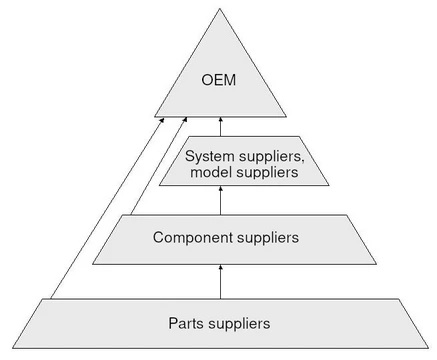
Chipmakers like NVIDIA, AMD, or Intel design the core silicon, then partner brands purchase those chips and build their own boards, cards, and systems around them. The partner brand handles manufacturing, quality control, warranty support, and marketing, while the chipmaker supplies the underlying technology.
Are there PC gaming brands that focus exclusively on prebuilt systems?
Yes—companies such as Alienware (under Dell), Corsair, and Maingear sell complete, factory-assembled gaming PCs rather than individual components. These brands manage the entire build, thermal tuning, and support, appealing to buyers who prefer a single point of contact.
What is one key market fact about PC gaming hardware that newcomers often overlook?
The market is highly cyclical, with GPU and CPU generations typically refreshed every one to two years, so a 'current' build can become last generation quite quickly. This rapid turnover gives PC hardware a much shorter perceived product lifespan than console hardware, which stays fixed for six to eight years.