Frequently Asked Questions
The most-asked questions about pathology.
What exactly is pathology?
Pathology is the medical discipline devoted to understanding disease—its causes, mechanisms, structural changes, and consequences. It sits at the intersection of basic biology and clinical medicine, serving as the backbone of diagnosis.
Who are the key historical figures in the field?
Rudolf Virchow is widely regarded as the father of modern pathology for his cell theory of disease, while Giovanni Battista Morgagni laid the groundwork for anatomical pathology in the 1700s. Thomas Willis and other 17th-century anatomists also shaped how we link organ-level changes to clinical symptoms.
Where should a newcomer begin studying pathology?
Start with general pathology—topics like inflammation, necrosis, and neoplasia—before moving into organ-by-organ systemic pathology. A solid grounding in histology and biochemistry will make the disease processes far more intuitive.
What are the major branches of pathology?
The field divides into anatomic pathology (examining tissues and whole organs), clinical pathology (laboratory analysis of blood, body fluids, and molecular markers), and forensic pathology (autopsy-based investigation of death). Most training programs rotate residents through both anatomic and clinical tracks.
Why is the biopsy such a central concept?
A biopsy is a small tissue sample removed for microscopic examination, and it remains the gold standard for confirming or ruling out cancer and many other conditions. Without it, a large share of diagnoses would rest on clinical suspicion rather than direct tissue evidence.
How does pathology differ from anatomy?
Anatomy maps the normal structure of the body, whereas pathology focuses on what goes wrong—how cells, tissues, and organs change when disease strikes. In practice, anatomy provides the reference point you need to recognize the abnormal.
What is a pathology report and why do clinicians depend on it?
It is the written interpretation a pathologist produces after examining a specimen, stating the diagnosis along with any relevant grading or staging. Surgeons, oncologists, and other physicians often base their entire treatment plan on that single document.
What tools does a typical pathologist work with daily?
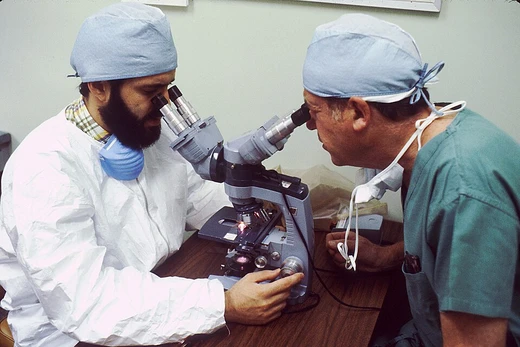
Beyond the light microscope and classic hematoxylin-and-eosin staining, modern pathologists rely on immunohistochemistry, flow cytometry, and molecular or genomic assays. Digital pathology and AI-assisted image analysis are increasingly entering routine practice.
What are some landmark moments that changed the field?
Virchow's 19th-century assertion that disease originates at the cellular level was a major paradigm shift away from older humoral theories. The development of immunohistochemistry in the 1970s and the rise of molecular diagnostics in the 2000s each opened entirely new diagnostic categories.
Why do people call pathology the 'final word' in medicine?
Because when a surgeon removes a mass or a clinician is uncertain, the pathologist's microscopic and molecular reading is often the definitive diagnosis. It is the step that converts a clinical suspicion into a confirmed, actionable answer.