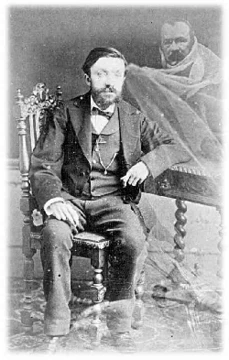
Automatic writing
A claimed psychic ability to write without conscious control.
Automatic writing, also known as psychography, is a claimed psychic ability in which a person produces written words without conscious intent. Practitioners typically hold a writing instrument and believe that spirits or other entities manipulate their hand to form text. The practice has been incorporated into religious and spiritual traditions, including Chinese folk religion and Enochian magic, and is associated with Spiritualism and the occult.
Quick Facts
- Notable practitioners
- W. B. Yeats, Arthur Conan Doyle
- Related traditions
- Fuji (Chinese folk religion), Enochian magic
- Early documented use
- Song dynasty (China)
- Scientific explanation
- Ideomotor phenomenon
Facts from the source article.
History
Spirit writing, later called fuji, has a long tradition in China, where mediums received messages from deities and spirits since the Song dynasty. In the 19th century, such messages led to the foundation of several Chinese salvationist religions. The spread of Chinese cultural techniques introduced spirit writing to Japanese Zen Ōbaku monks, who were said to communicate with an ancient Taoist sage credited with creating the kung fu system. 13th-century Spanish Kabbalists engaged in automatic writing, possibly producing the Zohar. Joseph Karo's angelic mentor supposedly dictated laws of Kiddush levana via automatic writing. Another early Western example is the 16th-century Enochian language, allegedly dictated to John Dee and Edward Kelley by Enochian angels. Dee also claimed the instruction included information about the elixir of life in the ruins of Glastonbury Abbey. Some scholars understand Joseph Smith's process writing the Book of Mormon as a case of automatic writing. Parapsychologist William Fletcher Barrett described automatic messages as occurring by passively holding a pencil, using a planchette, or a ouija board. Paranormal investigator Harry Price exposed supposed automatic writing at Borley Rectory as the wall-scrawling of a housewife. The Brattleboro hoax involved T. P. James claiming to channel the rest of Charles Dickens' unfinished novel The Mystery of Edwin Drood.
Practitioners
Hyppolyte Taine reported automatic writing as a spiritual practice in 1878. Fernando Pessoa claimed to have experienced it, feeling his right arm lifted without his will. Georgie Hyde-Lees, wife of William Butler Yeats, also claimed she could write automatically. Sri Aurobindo and The Mother regularly practiced automatic writing. Josefa Tolrà wrote poems and transcribed messages she ascribed to something guiding her hand. After his 1917 marriage to Georgie Hyde-Lees, W. B. Yeats was heavily influenced by her automatic script. Arthur Conan Doyle wrote that automatic writing occurs either by the writer's subconscious or by external spirits. Doyle and his wife led a séance with Harry Houdini, producing purported messages from Houdini's mother, which Houdini discounted as fraudulent.
Scientific analysis and skepticism
Scientists and skeptics consider automatic writing the result of the ideomotor effect. Skeptical investigator Joe Nickell described it as produced in a dissociated state, a form of motor automatism. Neurologist Terence Hines called it a milder form of dissociative state. In 1900, Swiss psychologist Theodore Flournoy studied the French medium Helene Smith and concluded the phenomenon was an effect of autosuggestion from autohypnotization, leading to a secondary self. Paranormal researcher Ben Radford wrote that there is no way to verify if writing comes from outside the body, and the source must be taken on faith. He noted that without validation, anyone can claim to communicate with any spirit, and that automatic writing should logically hinder spirit communication due to difficulties with spelling and grammar. In an 1890 paper, Morton Prince claimed automatic writing is not a purely unconscious reflex but the product of conscious individuality, with the hand controlled by a separate hypnotic personality during trances. Physician Charles Arthur Mercier, in the British Medical Journal in 1894, criticized spiritualist interpretations, concluding there is no need for spirits and that invoking them indicates an unscientific mind.
Pop culture and media
Automatic writing appears in a 1961 Perry Mason episode, the 1980 film The Changeling, and the 1999 movie The Sixth Sense. In Indiana Jones and the Kingdom of the Crystal Skull, it serves as a supernatural communication tool for the character Harold Oxley. Van Morrison’s Astral Weeks was partly shaped by dreams and automatic writing. Jan Švankmajer says he wrote the screenplay for Insect through automatic writing. William S. Burroughs called Naked Lunch automatic writing that went terribly wrong, feeling a hostile entity took over his subconscious. David Byrne, influenced by Brian Eno, has expressed curiosity about the practice.
More in Parapsychology
Spotted an error? Know more?
Reader corrections go straight into our review queue. Suggest an edit · How this site is sourced