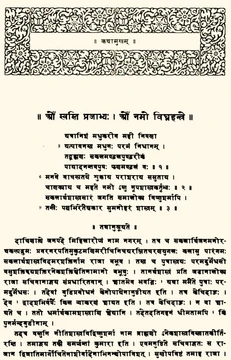
Brihatkatha
A lost ancient Indian epic in the Paiśācī language.
The Bṛhatkathā (Sanskrit, "the Great Narrative") is an ancient Indian epic attributed to Guṇāḍhya, composed in the poorly-understood language Paiśācī. The original work is lost, but several later adaptations in Sanskrit and vernaculars preserve its influence. Its loss is considered one of the greatest losses of Indian literature.
Quick Facts
- Author
- Guṇāḍhya
- Language
- Paisaci (पैशाची)
- Form
- epic
Facts from the source article.
Did You Know?
- Guṇāḍhya could have flourished during the reign of a Satavahana king of Pratishthana (modern-day Paithan, Maharashtra).
- An alternative account in the Nepala Mahatmya of the Skanda Purana states Guṇāḍhya was born in Mathura and was a court poet of king Madana of Ujjain.
- The stories of the Bṛhatkathā had a divine origin, which origin is recounted by Somadeva.
Early references
The earliest known mention of the Brihatkatha is in Subandhu's Vasavadatta, dating from around 600 to 700 CE. The work is also cited by Bana in his Harshacharita and Kadambari. Dandin's Kavyadarsha describes it as a marvelous composition in the vernacular of the bhutas, likely Paisaci, though this reference appears indirect. Later allusions appear in the Dasakumaracharita, Dasarupa, Nalacampu, and Aryasaptasati. A Cambodian inscription from roughly 875 CE names Gunadhya and his dislike of Prakrit. The Kannada work Kavirajamarga, from around 850 CE, notes a lost Sanskrit version by Durvinita.
Reconstructed content
Derivative works differ greatly, but some content can be inferred. Mṛgāvatī, pregnant with Udayana, is covered or immersed in red due to a dohada. A monstrous bird mistakes her for raw meat, carries her away, and drops her; she is cared for in a hermitage, where she raises her son. Udayana obtains a wonderful lute, elephant-taming skills, and confidants, and eventually returns with his mother to Kauśāmbī. Captured by Pradyota of Ujjayinī, he teaches the lute to Vāsavadattā, and they fall in love, escaping to Kauśāmbī to marry. Ministers later make Udayana believe Vāsavadattā is dead, arranging a marriage to Padmāvatī. Reunited, the couple remains childless until a boon from Kubera grants Vāsavadattā pregnancy with Naravāhanadatta, fated to become emperor of the Vidyādharas.
Relevance
The earliest reference to Vikramāditya is traced in the lost Bṛhatkathā, which describes his generosity and valour. Guṇāḍhya wrote in Paiśācī, the language of common people of Northwest India's border regions. Daṇḍin asserts the Bṛhatkathā's fundamental importance and states it was written in prose, not poetry. The work was a storehouse of tales about heroes, kings, gods, demigods, and animals. Kshemendra's Bṛhatkathāmañjarī is considered a faithful summary of the original in eighteen Lambakas. The earliest version may have been the Bṛhatkathāślokasaṃgraha of Budhasvamin, which is incomplete. Guṇāḍhya is perhaps the only author of a well-known text who speaks in the first person, telling his story from his own point of view.
More in Panchatantra
Spotted an error? Know more?
Reader corrections go straight into our review queue. Suggest an edit · How this site is sourced