Frequently Asked Questions
The most-asked questions about pakistani folklore.
What is Pakistani folklore in broad terms?
Pakistani folklore is the collective body of oral stories, myths, legends, and folk songs passed down through generations across the country's many ethnic communities. It weaves together indigenous beliefs with Persian, Central Asian, and South Asian literary influences into a shared narrative heritage.
Who are the most well-known characters in Pakistani folklore?
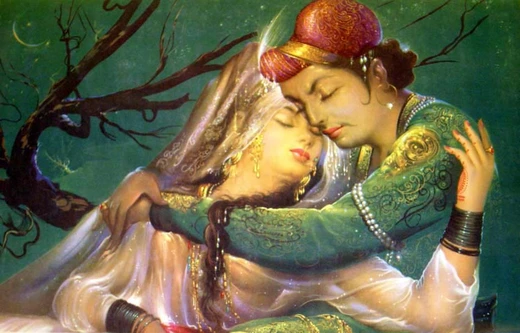
The four great Punjabi tragic lovers—Heer and Ranjha, Sassi and Punnun, Marvi and Shaukat, and Sohni and Mahival—are the most widely recognized figures. Village-level tales also feature tricksters, local saints, jinn, and peri, while tribal traditions center on warrior heroes and ancestral genealogies.
Where should a newcomer start exploring Pakistani folklore?
The four Punjabi love epics are the most accessible entry point because they have been collected, translated, and adapted more extensively than any other group of stories. From there, branching into Sindhi, Baloch, and Pashtun collections reveals the full regional diversity of the tradition.
What distinguishes Pakistani folklore from neighboring or classical traditions?
It is shaped by the overlap of Punjabi, Sindhi, Baloch, Pashtun, and other ethnic storytelling cultures, each with its own motifs and structures. A strong Sufi mystical undercurrent and a focus on rural, agrarian life set it apart from more courtly Persian or Sanskritic literary traditions.
What role do bards and folk singers play in keeping these stories alive?
Bards, dhamiala singers, and village storytellers have historically been the primary transmitters, performing narratives live with instruments like the dhol, rabab, or sitar. Their improvisatory style means no two tellings are identical, preserving a fluid, evolving oral texture.
Do supernatural and mythical elements feature in Pakistani folk tales?
Yes—jinn, shape-shifting animals, sacred springs, and enchanted trees appear throughout the corpus. Many stories also revolve around local saints whose miracles blur the boundary between the human and the supernatural.
Which regions of Pakistan have the richest folklore traditions?
Sindh and Punjab are the most densely documented, owing to centuries of Sufi poetry and a long tradition of village-level storytelling. The tribal areas of Khyber Pakhtunkhwa and Balochistan contribute warrior epics and genealogical legends that remain less widely known beyond those communities.
What themes recur most often across Pakistani folk narratives?
Forbidden love across caste or tribal lines, the triumph of the humble over the powerful, and the moral cost of greed or pride are near-universal. Stories of exile and return, and the tension between village duty and personal desire, also appear repeatedly.
How is Pakistani folklore being preserved in the modern era?
University folklore departments, academic collections, and digital archives have recorded many narratives that were previously only oral. Grassroots cultural societies, independent filmmakers, and social-media creators also adapt and share these stories, though the depth of village-level oral variation is gradually declining.
Is Pakistani folklore still actively performed and told today?
In rural settings, storytelling at weddings, harvest festivals, and seasonal gatherings remains a living practice. Urban audiences increasingly encounter the material through contemporary music, film, and online adaptations, keeping the core stories in circulation even as the traditional oral context shifts.