Hell
A gothic inferno where one man's chainsaw is the only prayer that works.
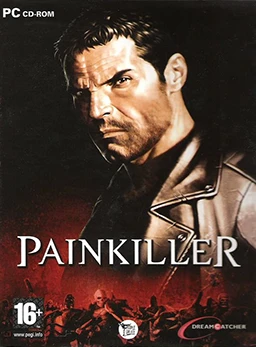
Hell is the primary setting and combat arena of the Painkiller first-person shooter franchise. Across the 2004 original, the 2012 reboot, and the 2016 spin-off Hell & Damnation, the player assumes the role of Daniel Dax, a former soldier dispatched into the infernal realm to confront legions of demons and, in the original's plot, to retrieve the Sacred Sword from the demon lord who wields it.
Rather than a single static map, Hell in the Painkiller games is a sprawling, multi-level environment of gothic architecture, molten rivers, and twisted organic structures. It functions as both the narrative backdrop and the gameplay stage: a hostile, ever-shifting landscape where fast-paced, close-quarters demon-slaying is the central experience.
Quick Facts
- Role
- Primary combat setting and narrative backdrop
- Protagonist
- Daniel Dax
- First appears
- Painkiller (2004)
- Inhabitants
- Demons and fiendish creatures
- Atmosphere
- Gothic
- infernal
- fast-paced
- Recurring in
- Painkiller (2004)
- Painkiller (2012)
- Painkiller: Hell & Damnation (2016)
Lore & Background
In the Painkiller canon, Hell is not merely a place of punishment but a living, hostile realm ruled by a demonic hierarchy. The Sacred Order, a secretive human institution, recognizes that the Sacred Sword—a weapon of immense divine power—has been seized by the demon lord and taken into Hell. Rather than risk a full-scale war, the Order selects Daniel Dax, a decorated but broken soldier, and sends him alone into the infernal depths to recover the blade.
Hell itself is depicted as a vast, architecturally baroque nightmare: cathedral-like spires of black stone, rivers of liquid fire, fleshy organic growths fused with iron, and skies choked with ash and ember-light. The environment shifts in tone from more structured, corridor-like zones to open arenas teeming with swarming demons. It is a realm that actively resists the intruder—traps, environmental hazards, and waves of enemies make every advance costly.
In the later entries, particularly Hell & Damnation, Hell is revisited with a darker, more psychological edge. The line between the external demon realm and Dax's own fractured psyche blurs, suggesting that Hell may be as much a projection of inner torment as a literal location. The setting thus serves a dual purpose: a literal battlefield and a metaphor for the protagonist's unresolved trauma.
Reader's Guide
Visual identity and atmosphere: Hell in the Painkiller games is defined by a palette of deep blacks, molten oranges, and sickly purples. Gothic cathedral architecture is warped and fused with organic, fleshy textures. Lighting is low and directional, with ember particles and volumetric fog creating a sense of oppressive depth. The overall aesthetic is dark-fantasy meets industrial horror.
Gameplay role: Hell serves as the linear combat arena. Players progress through a series of interconnected zones—corridors, arenas, and open chambers—facing escalating waves of demons. Enemy variety ranges from fast, swarming melee types to ranged spitters and large, multi-phase bosses. Environmental hazards include lava pools, collapsing floors, and areas where the architecture itself seems to shift. The chainsaw, shotgun, rocket launcher, and various firearms form the core arsenal, encouraging aggressive, close-quarters play.
Narrative significance: Hell is the antithesis of the human world and the Sacred Order. It is where the Sacred Sword is held, where the demon lord resides, and where Dax's personal reckoning takes place. In Hell & Damnation, the setting takes on a psychological dimension, blurring the boundary between external demons and internal demons.
Hidden details: Fans have noted environmental storytelling in the form of scattered human remains, broken weapons, and faint inscriptions suggesting previous, failed incursions into Hell. The 2012 and 2016 entries include hidden collectibles and alternate weapon pickups tucked into less-traveled alcoves of the level geometry.
Did You Know?
- The iconic chainsaw weapon, central to the series' identity, was designed to give players a visceral, up-close alternative to ranged firearms and to reinforce the 'one man against an army' fantasy.
- The Sacred Sword, the MacGuffin of the original 2004 game, is tied to the Sacred Order's lore and represents a divine weapon that the demon lord has usurped, making its retrieval the central quest.
More in World & Locations
Elsewhere in Painkiller
Spotted an error? Know more?
Reader corrections go straight into our review queue. Suggest an edit · How this site is sourced