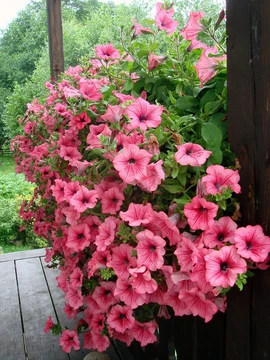
Dianthus caryophyllus
A fragrant Mediterranean flower with deep cultural and symbolic significance.

The carnation, or clove pink, is a species of *Dianthus* known botanically as *Dianthus caryophyllus*. It hails from the Mediterranean region, though its original wild range is hard to pin down because people have been cultivating it for roughly two millennia. Wild carnations are still most common around the Mediterranean. What makes them so prized is their huge range of colors, their delicate, fringed petals, and a fragrance that people often call spicy, clove-like, or a mix of cinnamon and nutmeg—hence the nickname "clove pink." That scent has made them a staple in perfumes, potpourri, and other scented goods. Culturally, carnations stand for affection, distinction, and maternal love, though the exact meaning shifts with the flower's color and the region.
The ancient Greeks mentioned carnations in their literature 2,000 years ago. The Greek botanist Theophrastus coined the name *Dianthus*, combining the Greek words for "divine" (*dios*) and "flower" (*anthos*). The common name "carnation" may come from the Latin *corona* (meaning wreath or garland, since the flower was used in Greek and Roman ceremonial crowns), or from *caro* (meaning flesh, referring to the flower's natural color), or from the Christian term *incarnatio* (incarnation). Carl Linnaeus formally described the species in the first volume of his *Species Plantarum* in 1753, giving it the name *Dianthus caryophyllus*. Though the name "carnation" originally applied only to this species, it is now often used for other *Dianthus* species and especially for garden hybrids between *D. caryophyllus* and its relatives.
This plant is a herbaceous perennial that can grow up to 80 cm (32 inches) tall. Its leaves are glaucous—greyish green to blue-green—slender, and up to 15 cm (6 inches) long. Flowers appear singly or in clusters of up to five in a cyme. Each flower is about 3–5 cm (1¼–2 inches) across, sweetly scented, and hermaphrodite with radial symmetry. The original natural color is a bright pinkish-purple, but breeders have developed cultivars in red, pink, yellow, white, and green. While cut flowers are sometimes dyed blue, no true blue carnation cultivar exists. The four to six egg-shaped, sharply pointed scale leaves around the calyx are only a quarter as long as the calyx tube.
In the wild, carnations are found in Mediterranean countries: Portugal, Spain, Italy, Croatia, Albania, Greece, and Turkey.
For cultivation, carnations need well-drained, neutral to slightly alkaline soil and full sun. Many cultivars have been developed for gardens, such as 'Gina Porto', 'Helen', 'Laced Romeo', and 'Red Rocket'. Medicinally, they have been used for upset stomach and fever. Historically, their fragrance was used in vinegar, beer, wine, sauces, and salads. Crossing *D. caryophyllus* with *D. capitatus* produces a hybrid resistant to bacterial wilt caused by *Paraburkholderia caryophylli*, but the resulting flower is less attractive, so further breeding and backcrossing are needed to improve it. Fragrance-free carnation cultivars are often worn by men as boutonnières or buttonholes.
Symbolically, carnations generally express love, fascination, and distinction, with many color-based variations. The red carnation, like the red rose, is a symbol of socialism, social democracy, democratic socialism, and the labour movement, and has often appeared in May Day demonstrations. In China, carnations are the most common flower used in weddings. In Portugal, bright red carnations were used during the 1974 overthrow of the authoritarian Estado Novo regime, giving the event its name: the Carnation Revolution. Light red carnations signify admiration; dark red ones mean deep love and affection. White carnations represent pure love and good luck, while striped (variegated) ones symbolize regret that a love cannot be shared. In the Netherlands, white carnations are linked to Prince Bernhard, who wore one during World War II; some Dutch people adopted the gesture in defiance, and after the war the white carnation became a sign of the Prince, veterans, and remembrance of the resistance. Purple carnations indicate capriciousness. In France, carnations are a traditional funeral flower, given in condolence. The carnation is the birth flower for January. Since Ottoman times, red carnations and tulips have appeared in interior wall paintings of mosques in Turkey—often said to represent Muhammad (carnations) and God (tulips)—though these designs also appear in other Ottoman traditional arts. In Azerbaijan, red carnations became a symbol of mourning after their use during the Black January events of 1990, a violent crackdown by USSR troops. In the United States, President William McKinley considered the red carnation his lucky flower and often wore one on his lapel; after his assassination in 1901, Ohio adopted the red carnation as its state flower in his honor. The formal name *Dianthus* comes from Greek for "heavenly flower" or the flower of Jove.
Carnations are often worn on special occasions, especially Mother's Day and weddings. In 1907, Anna Jarvis chose the carnation as the emblem of Mother's Day.
- Scientific name
- Dianthus caryophyllus
- Common names
- Carnation, clove pink
- Native region
- Mediterranean (Portugal, Spain, Italy, Croatia, Albania, Greece, Turkey)
- Plant type
- Herbaceous perennial
- Height
- Up to 80 cm (32 in)
- Flower diameter
- 3–5 cm (1¼–2 in)
- Original flower color
- Bright pinkish-purple
Quick Facts
- Genus
- Dianthus
- Species
- caryophyllus
Facts from the source article.
Lore & Background
Carnations were mentioned in Greek literature 2,000 years ago. The term dianthus was coined by Greek botanist Theophrastus, from the Ancient Greek words for divine ('dios') and flower ('anthos'). The name 'carnation' is believed to come from the Latin corona, meaning 'wreath, garland, chaplet, crown', as it was used in Greek and Roman ceremonial crowns, or possibly from the Latin caro (genitive carnis), 'flesh', referring to the natural color of the flower, or in Christian iconography incarnatio, 'incarnation'. Although originally applied to this species, the name carnation is also often applied to other species of Dianthus and to garden hybrids.
Reader's Guide
Dianthus caryophyllus has been cultivated for over 2,000 years, making its exact natural range uncertain. It is a herbaceous perennial with glaucous leaves and fragrant, hermaphrodite flowers that are typically bright pinkish-purple in the wild, though many color cultivars exist. The plant requires well-drained, neutral to slightly alkaline soil and full sun. Carnations have been used for medical purposes, such as for upset stomach and fever, and historically their fragrance was used in vinegar, beer, wine, sauces, and salads. Crossbreeding with D. capitatus has produced hybrids resistant to bacterial wilt, though further breeding is needed to improve flower appearance. The flower is the national flower of Spain, Monaco, and Slovenia, and the state flower of Ohio. It is also the birth flower for January and the traditional first wedding anniversary flower.
Did You Know?
- The name 'carnation' may derive from the Latin corona, meaning 'wreath' or 'crown', as it was used in Greek and Roman ceremonial crowns.
- The carnation is the national flower of Spain, Monaco, and Slovenia, and the state flower of Ohio.
Frequently Asked Questions
Who is Dianthus caryophyllus?
Dianthus caryophyllus is a herbaceous perennial flower most people know simply as the carnation or clove pink, native to the Mediterranean basin. It reaches roughly 80 cm in height and produces small, fringed blooms about 3 to 5 cm across.
What are Dianthus caryophyllus's powers or role?
The carnation's standout 'ability' is its intensely spicy, clove- and cinnamon-like fragrance, which makes it a workhorse in perfumery and potpourri. Its wide color range and long vase life also give it a starring role in cut-flower arrangements and seasonal bouquets.
How does Dianthus caryophyllus's story end?
As a true perennial, a carnation plant keeps returning season after season rather than fading after a single bloom. Its exact wild population is now hard to pin down, though, because humans have selectively bred and spread it across the globe for roughly two thousand years.
Why is Dianthus caryophyllus important?
Carnations carry layered symbolic meaning in many cultures, standing for affection, distinction, and maternal love. They are also one of the most commercially significant cut flowers in the world, anchoring the florist and wedding industries.
Where does Dianthus caryophyllus originate?
Wild carnations are most commonly encountered across the Mediterranean, spanning Portugal, Spain, Italy, Croatia, Albania, Greece, and Turkey. Centuries of cultivation have since sent countless cultivars far beyond that original coastal range.
More in Ornamental & Garden Plants 1-24
Spotted an error? Know more?
This is a living reference — every entry is fact-audited, and reader corrections feed straight into our audit queue. Suggest an edit · See this site's audit record