Jonas Kaufmann
German and Austrian tenor known for versatile repertoire.

Jonas Kaufmann, born in Munich on 10 July 1969, is a tenor who holds both German and Austrian nationality. He is widely recognized for the breadth of his repertoire, taking on a wide range of opera roles in several languages each season, as well as performing in recitals and concerts. Among his most notable parts are Don José in *Carmen*, Cavaradossi in *Tosca*, Maurizio in *Adriana Lecouvreur*, Don Alvaro in *La forza del destino*, Siegmund in *Die Walküre*, and the title roles in *Parsifal*, *Werther*, *Don Carlos*, and *Lohengrin*. In 2014, *The New York Times* called him "a box-office draw, and... the most important, versatile tenor of his generation."
Kaufmann’s father worked in insurance and his mother was a kindergarten teacher; he has one older sister. He began piano lessons at age eight and sang in his elementary school choir. After preparing for mathematics entrance exams, he started vocal training at the University of Music and Performing Arts Munich in the summer of 1989. While a student, he sang minor roles at the Bavarian State Opera, graduating in 1994 with distinctions in both opera and concert performance. The following year, American baritone Michael Rhodes helped him develop a "new way of singing," which Kaufmann later described in his book *Meinen die wirklich mich?* as "a great stroke of luck."
His professional career launched at the Staatstheater Saarbrücken in 1994, leading to debuts at the Stuttgart Opera, Hamburg State Opera, Lyric Opera of Chicago, Opéra National de Paris, and La Scala. He first appeared at the Salzburg Festival in 1999 in Busoni’s *Doktor Faust*, returning in 2003 as Belmonte in *Die Entführung aus dem Serail* and for Beethoven’s Ninth with the Berlin Philharmonic. His Don José in *Carmen* at the Royal Opera House in 2006/7 earned critical acclaim, as did his 2006 Met debut as Alfredo in *La traviata* opposite Angela Gheorghiu—a role he reprised at the Met in 2007 and 2008 and at Covent Garden in 2008. In May 2008, he played Cavaradossi in *Tosca* at Covent Garden, again to strong reviews.
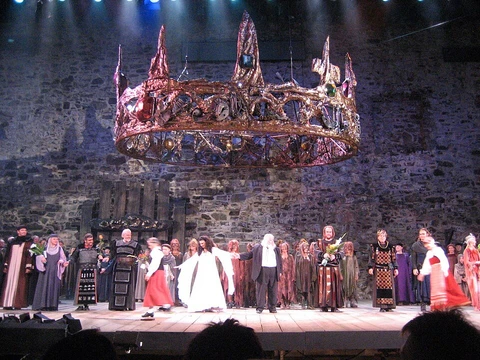
The 2008/9 season saw him in Massenet’s *Manon* in Chicago with Natalie Dessay and in the title role of a new *Lohengrin* at the Bavarian State Opera. He sang Lohengrin at the Bayreuth Festival’s opening night in 2010, staged by Hans Neuenfels and conducted by Andris Nelsons. His debut Decca recording, *Romantic Arias*, came out in January 2008, followed by a Schubert song cycle on the same label and the role of Pinkerton in *Madama Butterfly* for EMI. In January 2010, he took the title role in *Werther* at the Opéra Bastille, later released on DVD. He returned to the Met in April 2011 as Siegmund in Robert Lepage’s *Die Walküre*. After surgery to remove a chest lymph node in September 2011, he was back in December as Gounod’s Faust.
On 15 February 2013, Kaufmann made his Met debut as Parsifal, earning rave reviews. That July, the Bavarian Ministry of Arts named him a Kammersänger of the Bavarian State Opera, and in December he sang Don Alvaro in *La forza del destino* with the company. In February 2014, he performed the title role in *Werther* at the Met, then toured Schubert’s *Winterreise* with Helmut Deutsch. He debuted as Des Grieux in Puccini’s *Manon Lescaut* at the Royal Opera House in June 2014, repeating the role at the Bavarian State Opera that November. On 12 September 2015, he became the first German singer to perform "Rule, Britannia!" at the Last Night of the Proms. The documentary *Jonas Kaufmann: An Evening with Puccini*, featuring his 2015 La Scala performance, was released in US theaters on 23 February 2016.
In 2018, he made his debut as Tristan in concert performances of act two of *Tristan und Isolde*. The following year, he toured Germany with Mahler’s *Das Lied von der Erde* and performances from his *L’Opéra* CD, while operatic highlights included *Fidelio* and *Otello* at the Bavarian State Opera, *La forza del destino* at Covent Garden, *Andrea Chénier* in Sydney and Melbourne, and a new *Die tote Stadt* in Munich. In 2020, he toured his album *Mein Wien*, sang Aida at the Teatro San Carlo in Naples, Don Carlos at the Vienna State Opera, *La Bohème* at the Bavarian State Opera, and *Cavalleria Rusticana* at the Teatro San Carlo. In 2021, he gave recitals in Madrid and Vienna, appeared in new productions of *Aida* in Paris and *Parsifal* in Vienna, made his full role debut as Tristan at the Bavarian State Opera, and toured North America with pianist Helmut Deutsch. He began 2022 with a role debut as the title character in Britten’s *Peter Grimes* at the Vienna State Opera. In March 2022, Antonio Pappano organized a studio recording of *Turandot* at the Santa Cecilia auditorium, where Kaufmann sang Calaf for the first time, alongside Sondra Radvanovsky in the title role.
- born
- 10 July 1969
- field
- Opera (tenor)
- nationality
- German and Austrian
- known_for
- Versatility of repertoire; standout roles include Don José, Cavaradossi, Siegmun
Verified Timeline
Lore & Background
Kaufmann was born in Munich on 10 July 1969. His father worked for an insurance company, and his mother was a kindergarten teacher. He had one older sister. He started studying piano when he was eight, and he sang in his elementary school choir. Although he studied for mathematics entrance exams, in the summer of 1989 he began his vocal training at the University of Music and Performing Arts Munich. While he was studying, he sang some small roles at the Bavarian State Opera. He graduated from university in 1994, achieving distinctions in both opera and concert performances. In 1995, Kaufmann received help from American baritone Michael Rhodes, who taught him a "new way of singing" and how to become "more relaxed in my voice and in myself." In Kaufmann's book Meinen die wirklich mich? he said, "To find a Michael Rhodes that can really help you and bring you to success is really a great stroke of luck."
He began his professional career at the Staatstheater Saarbrücken in 1994 and was soon invited to make debuts in German theaters such as the Stuttgart Opera and Hamburg State Opera, as well as international debuts at the Lyric Opera of Chicago, Opéra National de Paris, and La Scala. He made his Salzburg Festival debut in 1999 in a new production of Busoni's Doktor Faust and returned there in 2003 as Belmonte in Mozart's Die Entführung aus dem Serail and for concerts of Beethoven's Ninth Symphony with the Berlin Philharmonic. He performed the role of Don José in Bizet's Carmen, to critical acclaim, at the Royal Opera House, Covent Garden, in 2006/7. He made his debut as Alfredo in Verdi's La traviata at the Metropolitan Opera alongside Angela Gheorghiu in 2006, also to critical acclaim. In May 2008, he played Cavaradossi in Puccini's Tosca at Covent Garden, yet again to critical acclaim. In 2008/9, he performed in Massenet's Manon in Chicago opposite Natalie Dessay and in the title role of a new production of Wagner's Lohengrin at the Bavarian State Opera. He also sang Lohengrin on the opening night of the Bayreuth Festival in 2010, in a production staged by Hans Neuenfels and conducted by Andris Nelsons. In January 2010, he took the title role in Massenet's Werther at the Opéra Bastille in Paris. On 15 February 2013, Kaufmann made his first appearance in the title role of Wagner's Parsifal at the Metropolitan Opera. His performance received rave reviews from critics. In July of that year he was named a Kammersänger of the Bavarian State Opera by the Bavarian Ministry of Arts. On 12 September 2015, Kaufmann became the first German singer to perform the British patriotic song "Rule, Britannia!" at the Last Night of The Proms. Kaufmann has been married twice. His first marriage to mezzo-soprano Margarete Joswig produced three children, and ended in divorce. His second marriage is to the opera director Christiane Lutz. The couple married in late 2018, and have a child, born in March 2019. Kaufmann has German and Austrian dual citizenship, with Austrian citizenship awarded to him in February 2021. His current main residence is in Salzburg.
Reader's Guide
Jonas Kaufmann's significance lies in his broad repertoire, spanning German, French, and Italian opera, as well as concert and recital work. His ability to perform roles from Wagner's Siegmund and Lohengrin to Puccini's Cavaradossi and Verdi's Don Alvaro made him a rare "box-office draw" according to The New York Times. His career includes debuts at major houses worldwide, recordings with Decca and EMI, and a 2015 performance of "Rule, Britannia!" at the Last Night of the Proms as the first German singer to do so. His legacy is marked by critical acclaim for roles such as Don José, Werther, and Parsifal, and by his influence as a versatile tenor of his generation.
Did You Know?
- Kaufmann started studying piano when he was eight and sang in his elementary school choir.
- In 1995, American baritone Michael Rhodes taught him a 'new way of singing,' which Kaufmann called 'a great stroke of luck.'
- He made his Salzburg Festival debut in 1999 in a new production of Busoni's Doktor Faust.
- On 12 September 2015, Kaufmann became the first German singer to perform 'Rule, Britannia!' at the Last Night of The Proms.
- Kaufmann was named a Kammersänger of the Bavarian State Opera in July 2013.
Frequently Asked Questions
Who is Jonas Kaufmann?
Jonas Kaufmann is a tenor born in 1969 who holds both German and Austrian citizenship. He performs across a wide range of operatic roles and is widely regarded as one of the leading voices of his era.
What are Jonas Kaufmann's most famous opera roles?
He is particularly celebrated for portraying Don José, Cavaradossi, Siegmund, and the title characters in Parsifal, Werther, Don Carlos, and Lohengrin. These parts showcase his ability to move between dramatic and lyrical tenor demands.
Why is Jonas Kaufmann considered so important in today's opera world?
The New York Times called him the most important and versatile tenor of his generation in 2014. His ability to draw audiences and tackle a broad span of characters across multiple languages sets him apart from peers.
What makes Jonas Kaufmann's repertoire stand out?
He regularly performs roles in several different languages within a single season, spanning recital, concert, and full stage productions. This breadth of linguistic and stylistic range is what fans and critics most often highlight about his career.
When and where was Jonas Kaufmann born?
He was born on 10 July 1969. He carries dual German and Austrian nationality, which has allowed him to build a strong presence in both countries' opera houses.
More in Opera Singers 1-24
Related in Opera Singers
Links follow this subject's own source article.
Spotted an error? Know more?
This is a living reference — every entry is fact-audited, and reader corrections feed straight into our audit queue. Suggest an edit · See this site's audit record