Frequently Asked Questions
The most-asked questions about olympic sailing classes.
What exactly are "Olympic sailing classes"?
They are the specific boat designs and crew configurations sanctioned for competition at the Summer Olympic Games, spanning solo dinghies, two-person skiffs, and mixed-gender multihulls. Each class operates under its own rulebook, equipment specifications, and international class association.
How many sailing events are typically on the Olympic program?
The program usually features seven to ten medal events across a mix of one-person, two-person, and mixed-gender boats. The exact lineup can shift from one Games to the next as World Sailing approves or retires classes.
Who decides which classes compete in the Olympics?
World Sailing, the international federation for the sport, selects the classes in consultation with the International Olympic Committee. The IOC sets the overall number of events, while World Sailing proposes which specific boat types fill those slots.
What is the "gold medal standard"?
It is the set of equipment specifications that every competitor in a given Olympic class must meet, ensuring all boats are effectively identical in construction. The standard is published by World Sailing and the relevant class association and is enforced at every regatta in the Olympic cycle.
What are some of the most recognizable Olympic sailing classes?
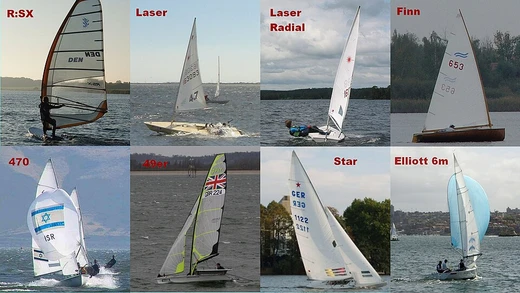
The ILCA 6 (formerly Laser) for solo men, the ILCA 7 for solo women, the 49er and 49er FX skiffs, the 470 two-person dinghy, the Finn heavyweight solo, and the Nacra 17 mixed multihull are all mainstays of the program. Fans often follow the 49er and 49er FX in particular because of their high-speed, wing-foil racing.
How often can a class be added or removed from the Olympics?
World Sailing reviews the Olympic class portfolio on a rolling basis, and changes typically take effect at the next Summer Games. A class must demonstrate a minimum global membership and competitive depth to be considered for inclusion.
What makes the 49er and 49er FX so popular with spectators?
These high-performance skiffs use asymmetric spinnakers and wing foils, producing speeds and close-quarters tactics that are thrilling to watch. Their two-person format also makes crew teamwork and real-time tactical decision-making very visible to the audience.
Who are some of the most celebrated figures in Olympic sailing history?
Sailors like Paul Goodison (multiple Laser golds), Mark Bulkeley (470), and the Australian 49er crews of Ben Saxton and John Bytner have become household names in the sport. Coaches and class-design engineers behind boats like the Nacra 17 also play a major role in shaping the competition.
Where should a newcomer start to follow Olympic sailing?
Watching a full Olympic regatta on broadcast or streaming gives the best overview of all classes in action. From there, picking one class to follow through its national association website, a local club, or a dedicated YouTube channel helps build deeper knowledge of tactics and equipment.
What was a notable recent change to the Olympic sailing lineup?
The Nacra 17 mixed multihull replaced the RS:X windsurfer starting with the Tokyo 2020 Games, marking the first time a multihull appeared in the Olympic program. The shift was intended to bring a new, high-energy format while keeping a mixed-gender event in the schedule.