Frequently Asked Questions
The most-asked questions about olympic archers, part 2.
What does Part 2 of the fan encyclopedia cover?
It picks up where Part 1 left off by focusing on the modern Olympic archery era from the 1988 Seoul Games forward, with deeper dives into athlete careers, equipment transitions, and head-to-head rivalries. The entries assume the reader already understands basic recurve scoring and the elimination bracket format.
Who are the central athletes profiled in Part 2?
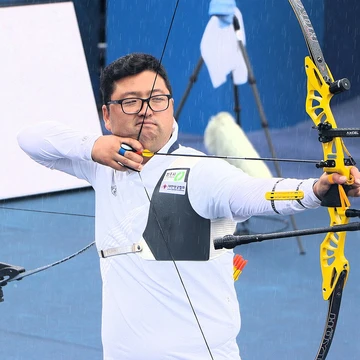
The section gives extended treatment to Kim Woo-jin, Chul Wook Kim, and Ki Bo-bae from South Korea, as well as Stephane Naveau of France and Lisa McClure of the United States. Each profile spans their Olympic appearances, training backgrounds, and post-competition roles as coaches or federation officials.
Where should a newcomer begin reading Part 2?
Start with the 'Modern Era Overview' entry, which recaps the shift from the 1972-1980 hiatus to the sport's permanent return in 1988. From there, the suggested reading path moves through the 1992 and 1996 cycles before tackling the 2004-2021 athlete deep-dives.
What time period does Part 2 span?
It covers Olympic archery from the 1988 Seoul Games through the 2020 Tokyo Games (held in 2021), roughly 33 years of competition. The 1992 Barcelona and 1996 Atlanta cycles receive the most detailed treatment because of the emergence of several long-term rivalries.
How does Part 2 handle the recurve-versus-compound distinction?
A dedicated entry explains that only the recurve bow is sanctioned for Olympic competition, while compound bows are used in World Archery's separate Para and target events. The section also notes the 1990s rule changes that standardized arrow nocking points and stabilizer lengths.
What is the most discussed rivalry in Part 2?
The recurring head-to-head between South Korea's Ki Bo-bae and the United States' Lisa McClure during the 1996 Atlanta cycle is given a full entry, including set-by-set scoring and the psychological pressure of the final. A secondary rivalry entry covers Park Ji-hee versus Khatuna Lomidze at the 2008 Beijing Games.
Which single match is highlighted as a 'notable moment'?
Part 2 devotes a spotlight entry to the 1996 women's individual final, where McClure and Bo-bae traded sets before Bo-bae closed out with a 10-arrow sequence. The entry includes commentary on how the wind conditions at the Olympic Archery Field affected both archers' grouping.
How does Part 2 differ in scope from Part 1?
Part 1 is oriented toward history, rules, and the sport's inclusion in the modern Olympics from 1900 through 1980. Part 2 shifts to individual athlete narratives, equipment regulation changes, and the competitive dynamics of the 1988-2021 window, so it reads more like a roster-driven reference than a chronological history.
What competitive formats are explained in Part 2?
Entries walk through the 128-archer ranking round, the 64-to-1 elimination bracket, and the tie-break arrow system used when two archers finish a set level. A shorter note also covers the team-of-three format and how it was restructured after 2020.
Who maintains and contributes to Part 2?
The section is edited by a small group of volunteer archery fans who cross-reference World Archery results and national federation records. New athlete entries are typically added within a few months of each Olympic cycle, and corrections are logged in a public changelog at the end of the document.