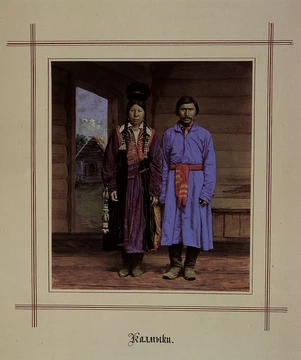
Khoshut Khanate
Mongol Oirat khanate on the Tibetan Plateau, 1642–1717.
Last updated

via Wikipedia: Khoshut Khanate · see source
The Khoshut Khanate was a Mongol Oirat state that controlled the Tibetan Plateau from 1642 until 1717. Based in what is now Qinghai, it was created by Güshi Khan after he crushed the enemies of the Gelug school of Tibetan Buddhism. The 5th Dalai Lama, with Güshi Khan's support, set up a civil government called the Ganden Phodrang. Historians have offered different views on how much the Khoshut interfered in Tibetan affairs—some say they kept a priest-patron relationship and stayed out of daily rule, while others claim Güshi appointed a minister, Sonam Rapten, to handle civil matters while the Dalai Lama focused on religion.
In 1654, Güshi Khan accepted the Qing dynasty's nominal authority when the Shunzhi Emperor gave him a seal and golden sheets. The khanate ended in 1717 when the Dzungar prince Tseren Dondup invaded Tibet, killed the last Khoshut ruler Lhazang Khan, and put the 7th Dalai Lama in place.
History
The Oirats originally lived in the Tuva area during the early 1200s. Their leader Quduqa Bäki submitted to Genghis Khan in 1208, and his family intermarried with all four branches of Genghis's line. During the Toluid Civil War, the Four Oirat tribes—Choros, Torghut, Dörbet, and Khoid—sided with Ariq Böke and never accepted Kublai's rule. After the Yuan dynasty fell, the Oirats helped the Ariq Bökid Jorightu Khan Yesüder take the Northern Yuan throne.
They controlled the Northern Yuan khans until Esen Taishi died in 1455, then migrated west because of Khalkha Mongol pressure. In 1486, a succession dispute among the Oirats let Dayan Khan attack them. In the late 1500s, they lost more territory to the Tumed. In 1620, the Choros leader Khara Khula and the Torghut leader Mergen Temene attacked Ubashi Khong Tayiji, the first Altan Khan of the Khalkha.
They were defeated, and Khara Khula lost his wife and children. The war between Ubashi Khong Tayiji and the Oirats lasted until 1623, when Ubashi was killed. In 1625, a conflict over inheritance broke out between the Khoshut Galwas chief Chöükür and his full brother Baibaghas. Baibaghas was killed.
His younger brothers Toro-Baikhu (later Güshi Khan) and Köndölön Ubashi pursued Chöükür from the Ishim River to the Tobol River, attacking and killing his followers in 1630. Toro-Baikhu was the third of five sons of Akhai Khatun and Khanai Noyan Khonggor. He was already a skilled fighter at age twelve and, with his brothers, was called "Akhai's herd of tigers" and "the five talented, brave heroic tigers." After Baibaghas died, Toro-Baikhu married his brother's widow and adopted her son Ochirtu. Once he defeated all other claimants, he styled himself "Dai Güshi" Taiji.
Relationship with Tibet
In 1632, the Gelug Yellow Hat sect in Qinghai faced repression from the Khalkha Choghtu Khong Tayiji, who supported the rival Karmapa and Bön sects. In 1634, the 5th Dalai Lama's envoys invited Güshi to help. The Oirats had backed the Gelug tradition since 1616, and Güshi used that religious connection to gather an army for an expedition to Tibet. After a brief visit to Tibet in 1635, Güshi led 10,000 Oirats into Qinghai the next year, defeating a 30,000-strong enemy army and killing Choghtu.
He then entered Central Tibet, where the 5th Dalai Lama gave him the title Bstan-'dzin Choskyi Rgyal-po ("the Dharma King Who Upholds the Religion"). In 1637, the 5th Dalai Lama granted him the title Dai Güshi Shajin Bariqchi Nomiyin Khan, making Güshi the first non-Genghisid Mongol to claim the title of khan. Güshi was also declared a reincarnation of Vajrapani, establishing a priest-patron relationship that put him on the same level as the Dalai Lama and Panchen Lama.
He summoned the Oirats to conquer Tibet fully, triggering a mass migration of 100,000 Oirat households to Kokonor, which created the Khoshut Khanate. In the winter of 1640–1641, Güshi crushed the king of Beri, Donyo Dorje, and then the ruler of Tsangpa, Karma Tenkyong, in 1642. After taking Shigatse in 1642, Güshi controlled all of Tibet for the Gelug school, and he was celebrated as a reincarnation of Padmasambhava. On 13 April 1642, the 5th Dalai Lama proclaimed Güshi the khan of Tibet.
In Beijing, he was called the "khan of the Tibetans." To secure his authority, Güshi set up a government where the Dalai Lama handled only religious matters, while a minister regent, Sonam Rapten, was directly appointed by Güshi to manage civil affairs. Güshi promoted the Gelug tradition as the state religion to strengthen his rule. In 1653, his title as king of Ü-Tsang and Kham was formally justified as granted through merit and the mandate of heaven, ensuring his successors would be protectors of the Buddhist faith.
After Güshi died in 1655, his son Tenzin Dorje (Dayan Khan) succeeded him as khan of Tibet. His sixth son Dalai Baatar controlled Kokonor, while Ochirtu held temporal power as Khan of the Oirats.
More in Oirats
Sources
Compiled from Wikipedia and the sources listed below. Text from Wikipedia is available under CC BY-SA 4.0; this entry is adapted from it.
- Wikipedia: Khoshut Khanate (CC BY-SA 4.0).
Spotted an error? Know more?
Reader corrections go straight into our review queue. Suggest an edit · How this site is sourced