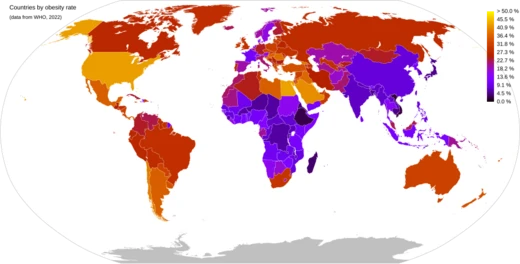
Obesity in Brazil
Obesity prevalence in Brazil more than doubled from 2006 to 2024.
Brazil faces a serious public health issue with obesity, a top contributor to chronic disease risk. As South America’s largest nation and the world’s fifth most populous, home to about 215 million people, adult obesity rates have climbed sharply since the early 2000s. This rise stems from shifting diets, less physical activity, growing urbanization, and changing socioeconomic factors. Data from the Vigitel survey shows that obesity prevalence among adults in state capitals and the Federal District more than doubled from 2006 to 2024.
Quick Facts
- Population (approx.)
- 215 million
Facts from the source article.
Did You Know?
- A modelling study estimated that nearly 30% of Brazilian adults could be living with obesity by 2030 if existing trends continue.
- Projections presented at the International Congress on Obesity in 2024 suggested that approximately 48% of Brazilian adults could have obesity by 2044.
- The 2019 PNS found an overall user satisfaction score of 5.9 out of 10 among adults attended at Basic Health Care Units or Family Health Care Units.
History
Between 2002–2003 and 2019, the share of Brazilian adults aged 20 and over who were obese more than doubled, climbing from 12.2% to 26.8%, while those considered overweight rose from 43.3% to 61.7%. This sharp increase, tied to urbanization, changing diets, and shifting economic conditions, affected all groups. Women consistently had higher obesity rates than men, reaching 29.5% versus 21.8% in 2019. The heaviest burden fell on adults aged 40 to 59, with 70.3% overweight that year, while a slight drop occurred among those 60 and older. A 2019 health survey also rated primary care quality for the first time, giving it a user satisfaction score of 5.9 out of 10—below the 6.6 threshold for high-quality service.
Epidemiology
Between 2006 and 2024, the share of Brazilian adults with obesity more than doubled, climbing from 11.8% to 25.7%, while excess weight rose from 42.6% to 62.6%. That jump represents an 118% increase over eighteen years, with no sustained drop recorded. A 2024 analysis of multiple studies put the national obesity rate at roughly 20%, with higher numbers in the South and Southeast. Women consistently outpaced men: in 2006, 12.1% of women and 11.4% of men were obese; by 2024, those figures reached 26.7% and 24.4%, respectively. The Vigitel system, which has surveyed over 833,000 adults since 2006, tracks these trends alongside rising diabetes and other chronic risks, informing researchers and policymakers across Latin America.
Associated conditions
As diabetes diagnoses in Brazil climbed from 5.5% to 12.9% between 2006 and 2024, obesity rates followed a similar upward path. Obesity is now linked to numerous chronic conditions in the country, including type 2 diabetes, hypertension, and several cancers. Medical authorities classify it as a chronic, relapsing disease needing ongoing care. The OECD considers it one of Brazil’s most significant modifiable health risks.
Public policy and prevention
Brazil has rolled out a range of public health strategies to fight obesity and encourage healthier living, including a national food and nutrition policy, dietary guidelines, a school feeding program, exercise campaigns, and updated food labels. The dietary guidelines, released in 2014, gained global praise for pushing minimally processed foods and cautioning against too many ultra-processed items. Experts are still debating other steps like taxing sugary drinks, limiting food ads aimed at kids, and improving access to obesity care. Since the early 2020s, GLP-1 receptor agonists have grown into a key part of obesity treatment in the country. In August 2020, the Brazilian Health Regulatory Agency approved liraglutide for weight management in adolescents, and in September 2023, it approved semaglutide for broader use. Clinical guidelines in Brazil now recommend these drugs for certain patients as part of evidence-based obesity care.
More in Obesity by Country
Spotted an error? Know more?
Reader corrections go straight into our review queue. Suggest an edit · How this site is sourced