Eugénie Grandet
Balzac novel about miserly Felix Grandet and his daughter Eugénie.
Last updated

via Wikipedia: Fyodor Dostoevsky · see source
Balzac considered the novel a "little masterpiece" and complained that critics used the title to belittle his other works.[1][2] Honoré de Balzac authored Eugénie Grandet, which appeared in serial form between 1833 and 1834 and as a complete book in 1834.[3]
Making and release
The first chapter appeared in the weekly review L’Europe littéraire on 19 September 1833 under the title "Eugénie Grandet: Histoire de Province".[4] The novel was written in 1833 and became one of the defining achievements of Balzac’s career.[4] While writing it, Balzac conceived his ambitious project La Comédie humaine and prepared a second edition that placed the novel in the section Scènes de la vie de province.[5] During the 1820s, Balzac was heavily in debt and obtained a substantial loan from his tailor, Jean Buisson.[6][7]
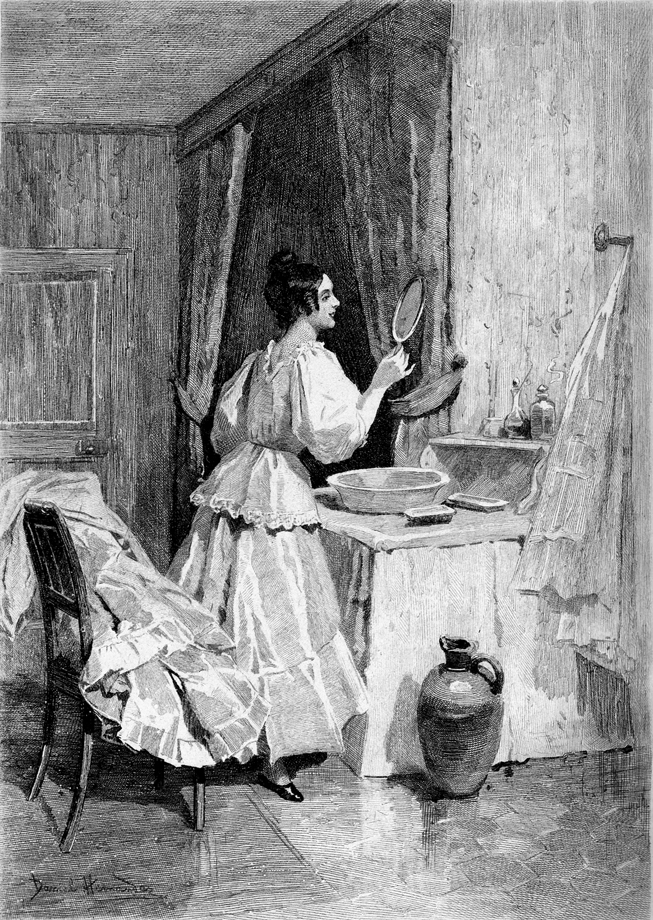
As repayment for that loan, Balzac incorporated Buisson into the novel, highlighting the quality of his tailoring—an early instance of product placement.[6][7] English versions of the novel were produced by both Clara Bell and Katherine Prescott Wormeley.[8][9][10]
What the cited sources add
Mary F. Sandars wrote in 1904 that the novel raised "such a storm of enthusiasm" that Balzac became jealous for the fame of his other works.[2] Sandars also noted that the novel is dedicated to Maria, whose identity has never been discovered, and who asked Balzac to love her for just a year.[2] Andrew Watts stated that Balzac’s portrayal of Felix Grandet as a miser was influenced by Molière’s character Harpagon from The Miser.[11][4] Watts also recorded that Balzac wrote, “Molière had created Avarice with Harpagon; with Old Grandet, I have created a miser”.[11][4]
Christopher Prendergast described Eugénie’s story as a "rite de passage from innocence to experience, ignorance to knowledge, illusion to disenchantment".[12]
References
- Wikipedia, "Eugénie Grandet" (CC BY-SA 4.0), which cites: Mary F. Sandars, "Honore de Balzac, His Life and Writings", Wikisource, 1904 (we also read that source) en.wikipedia.org
- Mary F. Sandars, "Honore de Balzac, His Life and Writings", Wikisource, 1904. facts only, no text reused. en.wikisource.org
- Wikipedia, "Eugénie Grandet" (CC BY-SA 4.0), which cites: Barthelme, Donald, "Eugenie Grandet", 17 August 1968 (original not read by us) en.wikipedia.org
- Andrew Watts, "Eugénie Grandet", The Literary Encyclopedia, 11 February 2008. facts only, no text reused. litencyc.com
- Wikipedia, "Eugénie Grandet" (CC BY-SA 4.0), which cites: see page on Maria Du Fresnay and reference in the Balzac article (original not read by us) en.wikipedia.org
- Wikipedia, "Eugénie Grandet" (CC BY-SA 4.0), which cites: Villers, "The Faces and Stakes of Brand Insertion", Vernon Press, 2022, p. 4 (we also read that source) en.wikipedia.org
- Open Library record, ISBN 9781648893933 ("The Faces and Stakes of Brand Insertion [PDF]"). CC0 (metadata); book content not read. openlibrary.org
- Wikipedia, "Eugénie Grandet" (CC BY-SA 4.0), which cites: "Eugénie Grandet - Colophon", standardebooks.org; "Books by Wormeley, Katharine Prescott", Project Gutenberg; Balzac, "Eugenie Grandet", 2011-04-07 (we also read that source) en.wikipedia.org
- "Eugénie Grandet - Colophon", standardebooks.org. facts only, no text reused. standardebooks.org
- Balzac, "Eugenie Grandet", 2011-04-07. facts only, no text reused. penguin.co.uk
- Wikipedia, "Eugénie Grandet" (CC BY-SA 4.0), which cites: Andrew Watts, "Eugénie Grandet", The Literary Encyclopedia, 11 February 2008 (we also read that source) en.wikipedia.org
- Wikipedia, "Eugénie Grandet" (CC BY-SA 4.0), which cites: Christopher Prendergast, "Eugenie Grandet", Oxford World's Classics, 1990 (original not read by us) en.wikipedia.org
Each numbered sentence above was checked against the source it cites before publication. Sentences citing Wikipedia adapt text from the English Wikipedia article Eugénie Grandet (contributors), used under CC BY-SA 4.0; this entry is available under the same licence. Other sources were used for facts only; no text or images are copied from them.
More in Novels & Major Fiction
Sources
Compiled from Wikipedia and the sources listed below. Text from Wikipedia is available under CC BY-SA 4.0; this entry is adapted from it.
- Wikipedia: Eugénie Grandet (CC BY-SA 4.0).
Spotted an error? Know more?
Reader corrections go straight into our review queue. Suggest an edit · How this site is sourced