Windsingers series
A fantasy series about grief, equality, and strange creatures.
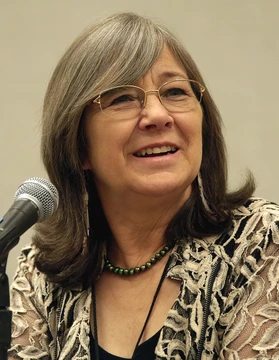
The Windsingers series is the debut fantasy sequence by American author Robin Hobb, writing as Megan Lindholm, published between 1983 and 1989. It follows the woman Ki as she recovers from the loss of her family and forms a companionship with Vandien, facing creatures such as harpies and Windsingers. The characters first appeared in a short story in the anthology Amazons!, which won a World Fantasy Award in 1980 and led to the series' development.
Quick Facts
- Books
- Harpy's Flight
- The Windsingers
- The Limbreth Gate
- Luck of the Wheels
- Author
- Robin Hobb as Megan Lindholm
- Illustrator
- Kinuko Y. Craft, Richard Hescox
- Country
- United States, United Kingdom
- Language
- English
- Genre
- Fantasy
- Publisher
- Ace Books, Corgi Books
- Published
- 1983–1989
Facts from the source article.
Background
Editor Jessica Amanda Salmonson sought to highlight female protagonists in heroic fantasy through the anthology Amazons!, which focused on women warriors independent of men. She wanted to include an example of male–female friendship and selected the story "Bones for Dulath" by Margaret Astrid Lindholm Ogden, who wrote as M. Lindholm. Salmonson asked Lindholm to use her full name, but Lindholm preferred the initial "M."; Salmonson credited her as Megan Lindholm. Amazons! won a World Fantasy Award in 1980, and Lindholm's story attracted editor Terri Windling at Ace Books, leading to the debut novel Harpy's Flight. The novel was influenced by a Fritz Leiber story in which his protagonist Fafhrd's hand is cut off. Lindholm wrote to Leiber, asking how he could be so harsh to a hero; Leiber replied that characters could not be static but had to face challenges and evolve. Lindholm felt this was a wake-up call and reworked an unfinished story, allowing life to happen to her characters, which became Harpy's Flight. At the time, Lindholm was thirty, worked as a waitress, and balanced writing with raising children while her husband, a commercial fisherman, worked offshore for seven to eight months a year.
Plot
Harpy's Flight opens with Ki scaling a mountain to reach a harpy's nest, seeking to avenge her husband and children killed by harpies. She slays a female harpy and its eggs; a male is burned but survives. Harpies can grant visions of the dead and are worshipped as gods by some humans, including the family of Ki's husband Sven. Ki tries to hide Sven's death and her actions but fails. Fleeing, she takes a job transporting jewels across a mountain, where she meets Vandien, a starving swordsman who tries to steal her horse. They become friends. Sven's family betrays them to the surviving male harpy, who attacks and wounds Vandien before being defeated. In The Windsingers, Vandien seeks to heal a scar on his face and is promised treatment if he steals a treasure from the Windsingers, beings who control weather through songs. He hides this from Ki, who accepts a job from the wizard Dresh, in conflict with the Windsingers. Dresh tricks Ki into the Windsingers' world; a battle ensues, and Ki ensures a Windsinger called Rebekeh wins. Vandien retains his scar, and Ki says she likes him regardless. In The Limbreth Gate, Ki is manipulated into walking through the Limbreth Gate into a strange world where a being called the Limbreth consumes people's humanity. Vandien breaks through but Ki refuses to leave; his companion Brujan frees her with Rebekah's help.
Themes
Ki comes to terms with her grief at the loss of her family through her companionship with Vandien. The series is positioned within the emergence of female heroes in fantasy in the 1970s and 1980s, but unlike most such characters, Ki is down-to-earth. The dynamic between Ki and Vandien, a man and woman portrayed as equals, is gentle and centers on the principle of never giving anything that is not freely given and never taking what is not freely offered. The focus of the series is on married life and the role of freedom and attachment in a mature love-relationship. Feminist themes are explored through the two characters in the preceding short story "Bones for Dulath".
Reception
Harpy's Flight was a midlist title in the United States and did not recoup its author's advance; Lindholm described its sales as mediocre. Two decades later, after the author's commercial success as Robin Hobb, French publishers became interested in her Lindholm backlist, and a translation of the series was released in 2004. Le Monde reviewed the French editions as pleasurable reads but lacking in creativity compared to Lindholm's later writings. Brian Stableford agreed that the series was not as original as her later works, calling it stereotypical commodified fantasy. Darren Harris-Fain termed Harpy's Flight conventional but a promising debut, and Charles de Lint felt the series made Lindholm a bright new talent in 1986. Lindholm's portrayal of Ki and Vandien received critical praise. Black Gate found the protagonists multifaceted with a real, palpable friendship. Sue Storm argued that their dynamic was more human-to-human than most speculative fiction of the time, describing their companionship as warm and life-affirming. de Lint remarked on Lindholm's gift for characterization. SF Site commented that Vandien was dashing and devil-may-care while Ki was common-sensical and independent, with evolving personalities, and praised side-characters Willow and Goat. The worldbuilding was described as a strength by Alexei Kondratiev; Black Gate noted Lindholm's talent for creating strange, alien worlds. SF Site added that the fourth volume had a well-portrayed nomadic society. Critic Don D'Ammassa found the setting interesting but the story unremarkable.
Frequently Asked Questions
Who published Windsingers series?
Windsingers series was published by Ace Books and Corgi Books.
Who illustrated Windsingers series?
Windsingers series was illustrated by Kinuko Y. Craft and Richard Hescox.
More in Novels by Robin Hobb
Spotted an error? Know more?
Reader corrections go straight into our review queue. Suggest an edit · How this site is sourced