
Gavrilo Princip
Bosnian Serb student whose assassination sparked World War I.

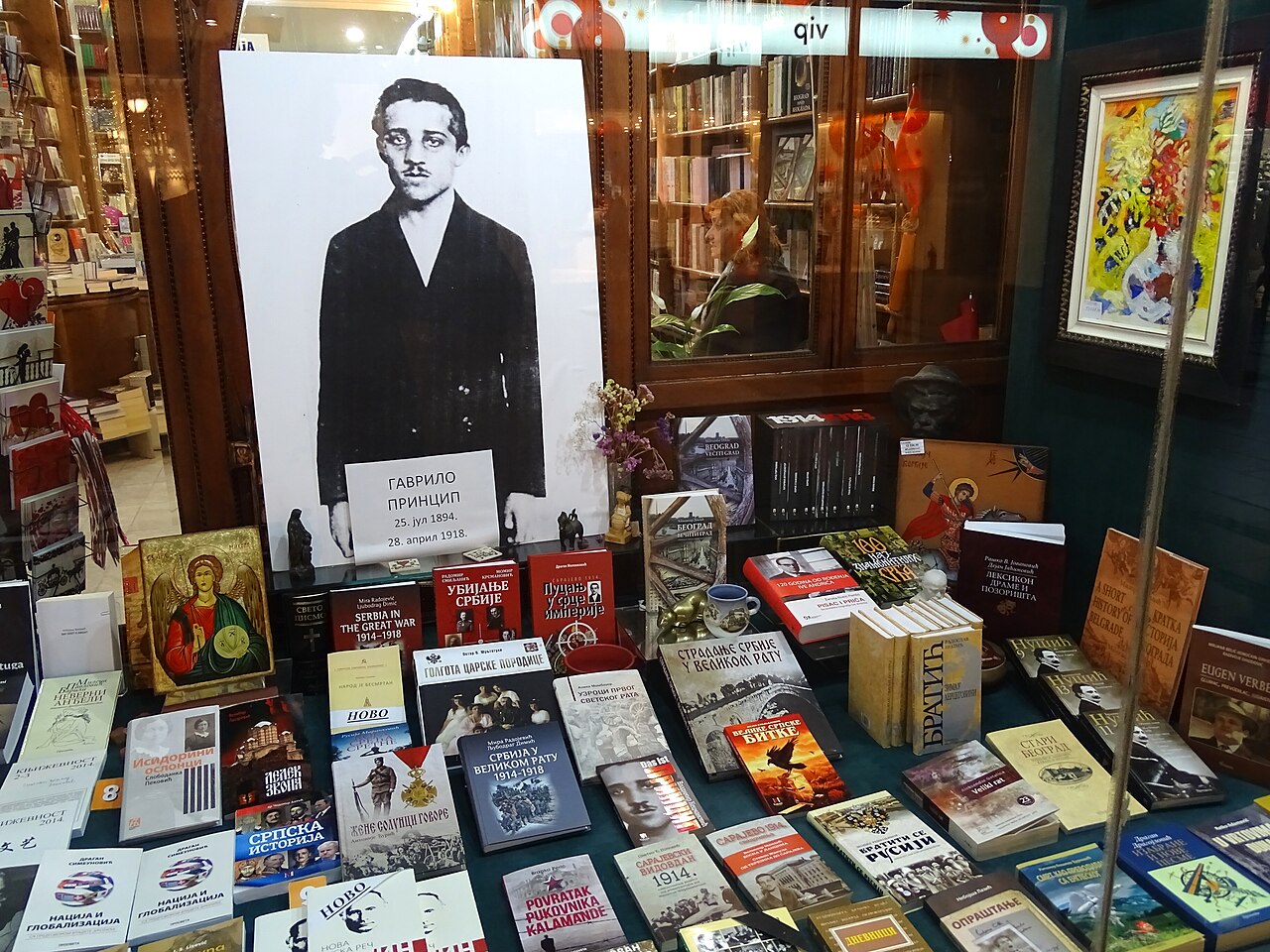
Adam Jones from Kelowna, BC, Canada · CC BY-SA 2.0
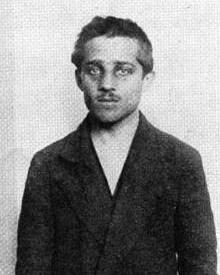
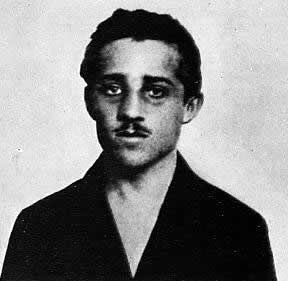
Gavrilo Princip was a Bosnian Serb student who, as a teenager, shot and killed Archduke Franz Ferdinand—the heir to the Austro-Hungarian throne—and his wife Sophie in Sarajevo on 28 June 1914. That killing triggered the July Crisis, which within a month led directly to the outbreak of World War I.
Princip was born on 25 July 1894 in the remote hamlet of Obljaj, in western Bosnia, then administered by Austria-Hungary but still formally part of the Ottoman Empire. He was the second of nine children; six died in infancy. His mother wanted to name him Špiro after her late brother, but a local Orthodox priest insisted on Gavrilo, after the Archangel Gabriel, hoping the name would help the sickly baby survive. The family were poor Serb farmers who had lived in northwestern Bosnia for centuries, originally emigrating from Montenegro in the early 1700s. They belonged to the Jovićević clan and were Serbian Orthodox Christians. His parents, Petar and Marija, farmed about four acres of land and were forced to give a third of their income to their Muslim landlord. Petar had fought in the Herzegovina Uprising against the Ottomans and later supplemented the family income by transporting mail and passengers across the mountains.
Princip started primary school at age nine, despite his father’s initial objections—he needed a shepherd for his sheep. He did well, and his headmaster gave him a collection of Serbian epic poetry for his academic success. At thirteen, he moved to Sarajevo. His older brother Jovan first planned to enroll him in the Austro-Hungarian Military Academy, but a shopkeeper warned against making him “an executioner of his own people,” so Princip instead entered the Merchants’ School. Jovan paid for his education with money earned from manual labor, like hauling logs. After three years, Princip transferred to the Sarajevo Gymnasium, where he became politically aware.
In 1911, he joined Young Bosnia, a secret local society that wanted to free Bosnia from Austrian rule and unify the South Slavs. After attending anti-Austrian demonstrations in Sarajevo, he was expelled from school and walked to Belgrade, Serbia, to continue his education. During the First Balkan War, he tried to volunteer with Serbian irregular forces fighting the Ottoman Empire but was rejected for being too small and weak.
In 1913, after Serbia’s unexpected success in that war, the Austrian military governor of Bosnia, Oskar Potiorek, declared a state of emergency, dissolved parliament, imposed martial rule, and banned Serbian cultural and educational societies. Inspired by assassination attempts against imperial officials by Slavic nationalists and anarchists, Princip persuaded two other young Bosnians to join a plot to kill the Habsburg heir during his announced visit to Sarajevo. The Black Hand, a Serbian secret society with ties to military intelligence, gave them weapons and training and helped them get back into Bosnia.
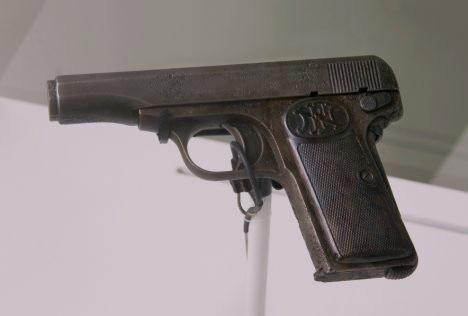
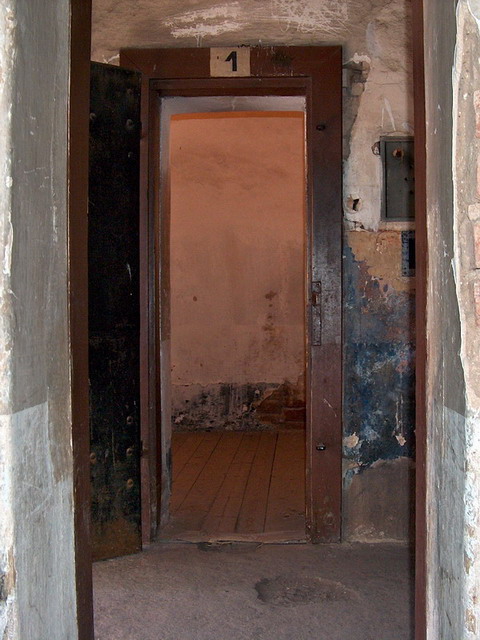
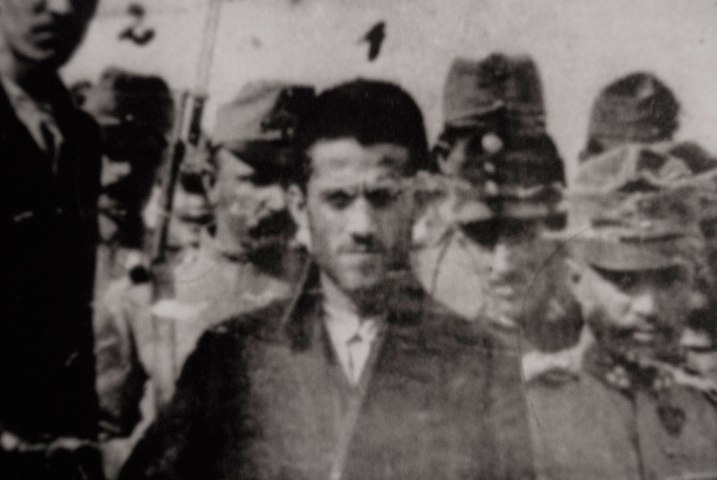
On Sunday, 28 June 1914, during the royal couple’s visit, Princip fired a pistol into their convertible car, mortally wounding both. He was arrested immediately. At his trial, he said: “I am a Yugoslav nationalist, aiming for the unification of all Yugoslavs, and I do not care what form of state, but it must be free from Austria.” Because he was only nineteen, he was spared the death penalty and sentenced to twenty years in prison. He was held at the Terezín Fortress. The Serbian government itself did not inspire the assassination, but the Austrian Foreign Office and Army used the murders as a reason for a preventive war, which led directly to World War I.
Princip died on 28 April 1918 of tuberculosis, worsened by harsh prison conditions that had already led to the amputation of his right arm. His legacy is controversial: many Serbs see him as a hero who fought colonial oppression, while Bosniaks and Croats often view him as a terrorist.
- died
- 28 April 1918, Terezín Fortress (tuberculosis)
- field
- Political activism, assassination
- nationality
- Bosnian Serb (Austro-Hungarian subject)
- known_for
- Assassination of Archduke Franz Ferdinand and his wife, triggering World War I
Quick Facts
- Native Name
- sr-Cyrl · Гаврило Принцип
- Native Name Lang
- sr-Cyrl
- Birth Date
- 1894-07-25
- Birth Place
- Obljaj, Bosnia and Herzegovina, Austria-Hungary
- Death Date
- 1918-04-28
- Death Place
- Terezín, Bohemia, Austria-Hungary
- Resting Place
- Vidovdan Heroes Chapel, Sarajevo
- Occupation
- Student
- Known For
- Assassination of Archduke Franz Ferdinand and Sophie, Duchess of Hohenberg
- Motive
- Yugoslav nationalism
- Conviction
- High treason / Murder (two counts)
- Conviction Penalty
- 20 years' imprisonment
Facts from the source article.
Lore & Background
He was the second of nine children, six of whom died in infancy. His parents, Petar and Marija, were poor farmers who lived off meagre land and were part of a class of Christian peasants known as kmetovi, often oppressed by Muslim landlords. At age 13, Princip moved to Sarajevo to study at the Merchants' School, later transferring to the gymnasium, where he became politically aware. After attending anti-Austrian demonstrations, he was expelled and walked to Belgrade, Serbia, to continue his education. During the First Balkan War, he tried to volunteer with Serbian irregular forces but was rejected for being too small and weak.
Reader's Guide
Gavrilo Princip's legacy is viewed as controversial. Many Serbs regard him as a hero who stood against colonial oppression and slavery, while Bosniaks and Croats frequently view him as a terrorist. The assassination he carried out on 28 June 1914 set off the July Crisis, leading within one month to the outbreak of World War I. At his trial, Princip stated he was a Yugoslav nationalist aiming for unification of all Yugoslavs, free from Austria. He was spared the death penalty due to his age (19) and sentenced to twenty years in prison, dying of tuberculosis on 28 April 1918. The Serbian government itself did not inspire the assassination, but the Austrian Foreign Office and Army used the murders as a reason for a preventive war that led directly to World War I.
Did You Know?
- Princip was the second of nine children, six of whom died in infancy.
- He walked from Sarajevo to Belgrade, Serbia, after being expelled from school for attending anti-Austrian demonstrations.
- During the First Balkan War, he tried to volunteer with Serbian irregular forces but was rejected for being too small and weak.
- At his trial, Princip stated he was a Yugoslav nationalist aiming for unification of all Yugoslavs, free from Austria.
- He was spared the death penalty due to his age (19) and sentenced to twenty years in prison.
Gallery
Frequently Asked Questions
Who is Gavrilo Princip?
Gavrilo Princip was a Bosnian Serb student born in 1894 in the village of Obljaj, western Bosnia. He is best known as the young man who carried out the assassination of Archduke Franz Ferdinand in 1914.
What did Gavrilo Princip do?
On 28 June 1914, Princip shot and killed Archduke Franz Ferdinand and his wife Sophie, Duchess of Hohenberg, in the streets of Sarajevo. He was acting as part of a broader political assassination plot targeting the Austro-Hungarian heir to the throne.
Why is Gavrilo Princip historically significant?
His assassination set off the July Crisis, a rapid chain of diplomatic confrontations that escalated into World War I within roughly one month. In that sense, a single act of political violence helped ignite a global conflict.
How did Gavrilo Princip die?
After his arrest and imprisonment, Princip contracted tuberculosis and died on 28 April 1918 at the Terezín Fortress. He was only twenty-three years old at the time of his death.
What was Gavrilo Princip's nationality and background?
Princip was a Bosnian Serb and a subject of the Austro-Hungarian Empire, born in the small village of Obljaj near Bosansko Grahovo. He was a student at the time of the assassination and was involved in political activism tied to Serbian nationalist causes.
More in Notorious_Criminals_And_Outlaws 1-24
Spotted an error? Know more?
This is a living reference — every entry is fact-audited, and reader corrections feed straight into our audit queue. Suggest an edit · See this site's audit record