Frequently Asked Questions
The most-asked questions about notable asteroids, part 2.
What exactly is 'Notable Asteroids, Part 2'?
It is an unofficial, fan-maintained reference volume that profiles a curated set of scientifically significant asteroids, picking up where the first volume left off. The entries focus on objects of particular interest to astronomers, space agencies, and the general public.
Who or what are the main subjects covered in this volume?
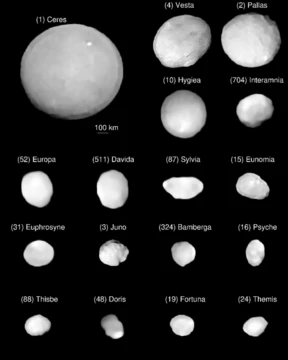
The encyclopedia centers on well-known near-Earth objects and major main-belt bodies such as Bennu, Psyche, Apophis, Ceres, and Vesta, along with several smaller but historically important asteroids. Each entry treats the asteroid as the 'character' of its own story, tracing discovery, composition, and mission history.
Where should a complete newcomer begin reading?
Start with the entry on Ceres, the largest body in the asteroid belt, since it provides the broadest context for what asteroids are and how they differ from planets. From there, the near-Earth object entries like Bennu and Apophis build naturally on that foundation.
How does Part 2 differ from the first volume?
Part 1 focused primarily on historically discovered asteroids from the 19th and early 20th centuries, while Part 2 shifts emphasis to objects targeted by modern space missions and recent close-approach events. The tone is more mission-oriented and includes updated orbital data.
What is the single most notable asteroid in this volume?
Most readers point to 16 Psyche, a metal-rich asteroid scheduled for a dedicated NASA flyby and orbit mission, as the standout entry. Its unusual composition and potential to reveal the interior structure of terrestrial planets make it a frequent subject of fan discussion.
Are all the asteroids listed here confirmed, real objects?
Yes, every body profiled has been independently verified by at least two observatories and carries a Minor Planet Center designation. The encyclopedia does not include speculative or single-observation candidates.
Who is responsible for writing and maintaining the entries?
The volume is a collaborative effort by a loose community of amateur astronomers, science communicators, and space-enthusiast writers who volunteer their time. There is no single author; contributors are credited per entry in the appendix.
What key facts should a reader take away from the collection as a whole?
The overarching theme is that asteroids are not a monolith—they range from carbonaceous rubble piles to iron-nickel cores, and they span orbital distances from Mars' inner belt to the Jupiter trojans. Understanding that diversity is the encyclopedia's central goal.
What are the most notable 'moments' or milestones referenced across the entries?
Highlights include the 2021 OSIRIS-REx sample return from Bennu, the 2029 close approach of Apophis, and the 2022 DAWN mission's final orbit of Ceres. These events anchor the narrative and give readers concrete touchpoints in the broader timeline.
How is the encyclopedia organized, and is there a recommended reading order?
Entries are grouped into three sections—Near-Earth Objects, Main-Belt Giants, and Mission Targets—roughly ordered by increasing distance from Earth. Fans generally recommend reading in that sequence so that orbital mechanics and mission context build progressively.