
The Amazing Race (Latin American TV series)
Latin America's own version of the global race.

ApprenticeFan work · Public domain
The Amazing Race is a Latin American reality competition show based on the American series of the same name. It is the second Latin American version of the franchise and the first in the Spanish language, originally airing on Discovery Channel Latin America and later on Space.
- First aired
- 20 September 2009
- Network
- Discovery Channel Latin America (seasons 1–2), Space (season 3 onward)
- Hosts
- Harris Whitbeck (seasons 1–3), Paulo Zulu (season 4), María 'Toya' Montoya (seasons 5–6), Jaime Arellano (co-host season 6)
- Prize
- US$250,000 (seasons 1–5), US$100,000 (season 6)
- Number of seasons
- 6
Lore & Background
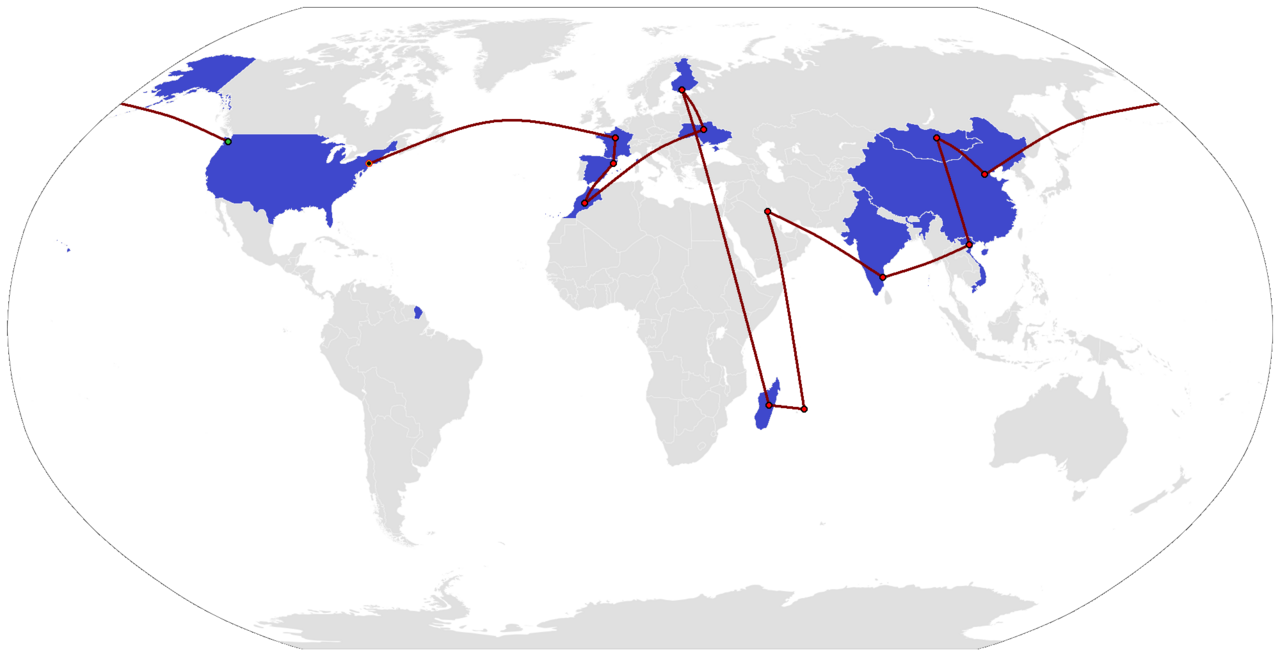
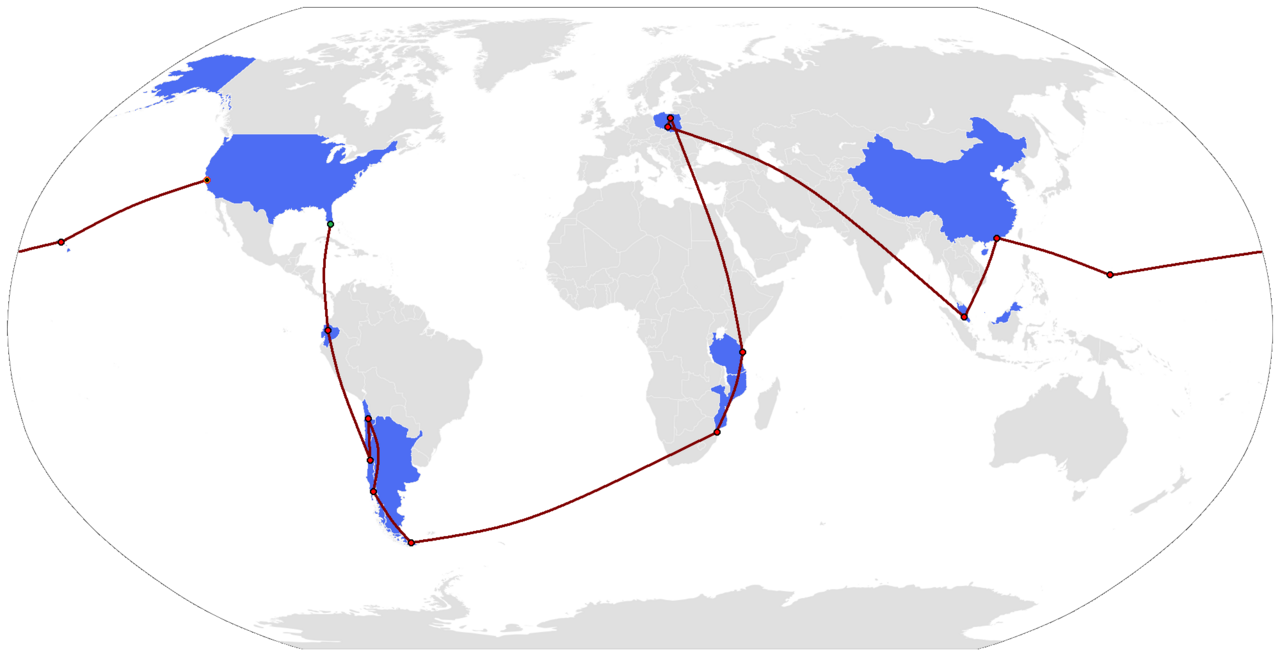
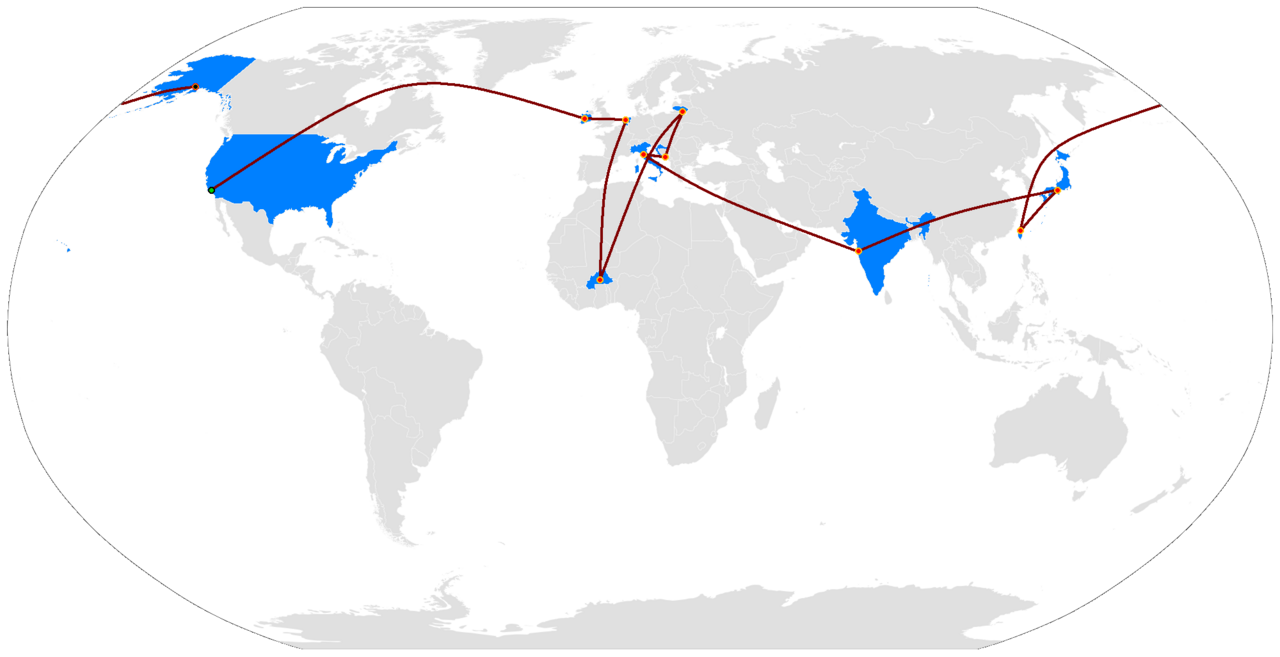
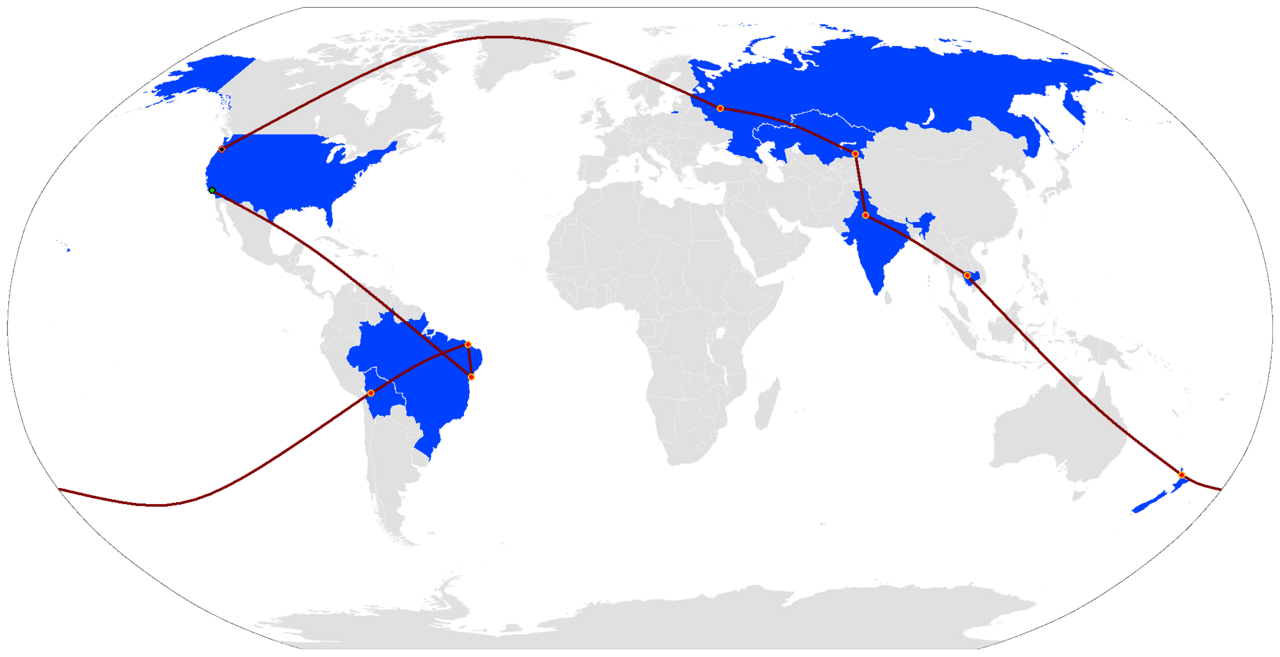
The show was announced on 15 October 2008 by Discovery Channel Latin America in association with CBS (Paramount Global). The first season was produced by Argentinian company RGB, with subsequent seasons produced by Miami-based Cinemat. For the third season, Space took over production in association with CBS (Paramount Global), dropping 'en Discovery Channel' from the title. The show features teams of two racing across Latin America, completing physical and mental challenges, and navigating by various modes of transport. Teams are progressively eliminated at the end of most legs, with the final three competing for the cash prize.
Reader's Guide
The Amazing Race (Latin American TV series) holds significance as the first Spanish-language version of the global Amazing Race franchise, expanding the brand to a new linguistic and cultural audience. It introduced several unique elements, such as the Intersection in season 2 (where teams competed against each other) and season 3 (where they teamed up), and the first female host of any Amazing Race version, María 'Toya' Montoya, a former contestant. The show also featured a special Portuguese-language edition, Edição Brasil, for season 4, hosted by Paulo Zulu. Its legacy includes adapting the American format to Latin American audiences while maintaining core rules like the Yield, U-Turn, and Express Pass, and it remains a notable entry in the franchise's international adaptations.
Did You Know?
- The show was originally titled The Amazing Race en Discovery Channel.
- The first three seasons were hosted by Guatemalan journalist Harris Whitbeck.
- María 'Toya' Montoya, host of seasons 5 and 6, was the third female main host of any version of The Amazing Race, after Fernanda Lima (Brazil, 2007–2008) and Camilla Dallerup (Denmark, 2012).
- In season 2, the Intersection required two teams to work together, similar to the American version which has also used cooperative Intersections.
Creative Vision and Narrative Structure
The animated series Primos was conceived by writer Natasha Kline and brought to life under the banner of Disney Television Animation, finding its home on Disney Channel. The show's narrative engine is built around a single imaginative device: the diary of Tater Ramírez-Humphrey, a nine-year-old who turns ten during the run, whose colorful braces and lateral lisp make her instantly memorable. Through her journal entries, the audience follows a sprawling Mexican-American family settled in the Los Angeles suburb of Hacienda Hills. The central summer conflict is deceptively simple yet rich with possibility: a dozen cousins have moved in, and Tater must identify the "it factor" that sets her apart while searching for what she calls her "final form." The structure positions Tater not as a lone hero but as the emotional anchor of a chaotic, loving collective, with each cousin bringing a distinct personality and skill set to the table. The premise balances whimsical self-discovery with the grounded reality of a large, multigenerational household navigating one long summer together.
Ensemble Cast and Character Diversity
One of the show's most striking features is the sheer breadth of its family ensemble. Beyond Tater and her two sisters Nellie and Baby Bud, the household swells with cousins spanning multiple ethnic backgrounds, including Mexican-Dominican siblings Lita, Scooter, and Lucita, and the Filipina-Mexican American LotLot. The cast deliberately weaves in a range of identities and abilities: Lita is openly bisexual and dreams of rock stardom; Big Nacho and his younger brother Nachito both struggle with dyslexia; Lucita, at just three years old, wears cochlear implants and communicates in American Sign Language; and Gordita channels her intelligence into scientific experiments. The adult generation is equally varied—Buela the exasperated grandmother, Pop Ramírez with his golden tooth, a one-armed mortician uncle, a firefighter uncle, and a handyman father who speaks with a Southern drawl. Even the animal residents, from a three-legged dog to a featherless-winged chicken, add layers of personality. The result is a portrait of a family where no single member fits a single mold, and where differences in language, ability, and temperament are treated as everyday texture rather than plot devices.
Production Timeline and Cancellation
Primos had a notably compressed lifecycle on television. The series premiered on Disney Channel on July 25, 2024, and ran through April 27, 2025, giving it roughly nine months of broadcast. The show was developed under Disney Television Animation's production umbrella, with Natasha Kline serving as creator and also lending her voice to the character Gordita. Despite the show's ambitious ensemble and the cultural specificity of its setting, the network made the decision not to renew it. In June 2025, it was officially confirmed that no second season would be produced and that all production had ceased. This meant the story of Tater's search for her "final form" and the summer adventures of the Ramírez-Humphrey clan concluded without a planned continuation. The brief run also limited the show's ability to develop longer character arcs or explore the broader world of Hacienda Hills in greater depth. For a property with such a richly populated cast and a distinctive narrative voice, the single-season window represented a significant creative constraint, leaving many of the family's dynamics and subplots underdeveloped relative to their potential.
Cultural Identity and Language as Theme
Language and cultural identity form a quiet but persistent undercurrent throughout Primos. The Ramírez-Humphrey family lives in a Los Angeles suburb, yet Spanish proficiency is uneven across the household. Tater, the protagonist, cannot speak much Spanish, a fact that visibly frustrates her grandmother Buela, who is an expert cook and clearly expects her lineage to carry the language forward. Meanwhile, Tater is learning fluent French in connection with a café being established in the neighborhood, adding another layer of linguistic complexity. The recurring street vendor Hector is described as fluent in both Spanish and French, serving as a silent cultural touchstone in the community. The cousins' backgrounds further enrich the tapestry: the Perez family is Mexican-Dominican, LotLot is Filipina-Mexican American, and the family's shared fandoms—Romancimorphs and Oui, Oui Marie—suggest a specific cultural milieu that resonates with Latino youth audiences. The show does not treat these identities as exotic or performative; instead, they are woven into daily interactions, family arguments, and the small negotiations of a multigenerational household trying to hold together across a single summer.
Gallery
Frequently Asked Questions
What is The Amazing Race (Latin American TV series)?
It is the second Latin American adaptation of the global reality race franchise and the first one produced entirely in Spanish. The show debuted on September 20, 2009, on Discovery Channel Latin America.
Which network aired The Amazing Race (Latin American TV series)?
Seasons 1 and 2 ran on Discovery Channel Latin America, and from Season 3 onward the program shifted to Space. The series concluded after its sixth season.
Who hosted The Amazing Race (Latin American TV series)?
Harris Whitbeck led the show through the first three seasons, Paulo Zulu took over for Season 4, and María 'Toya' Montoya hosted Seasons 5 and 6 alongside co-host Jaime Arellano in the final season.
What was the grand prize in The Amazing Race (Latin American TV series)?
Winning couples collected US$250,000 during Seasons 1 through 5, but the payout was cut to US$100,000 for the sixth and final season.
Why is The Amazing Race (Latin American TV series) notable in the franchise?
It was the first Spanish-language iteration of the Amazing Race format in Latin America, making it a landmark for the franchise's regional expansion. Its six-season run on Discovery Channel Latin America and Space helped establish the show's audience across the Spanish-speaking world.
More in Non-American television series based on American television series 1-24
Spotted an error? Know more?
Reader corrections go straight into our review queue. Suggest an edit · How this site is sourced