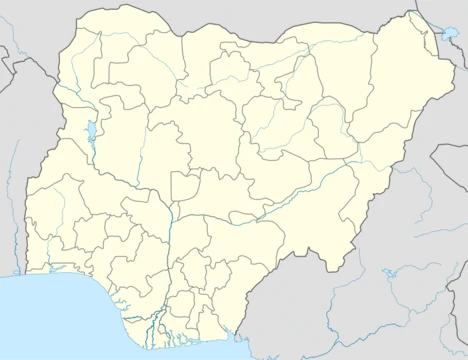
Lagos State
Nigeria's smallest state by area, largest by population.
Last updated
Lagos State is a state in southwestern Nigeria, named for the city of Lagos which is the most populous city in Africa.[1] It is the smallest state by area but is the 1st or 2nd most populous of Nigeria's 36 states.[1] The state is bounded to the south by the Bight of Benin and to the west by the Republic of Benin, bordering only Ogun State to the north and east.[1]
Last updated 2026-10-11 from the source article.
Key facts and history
The area now known as Lagos State was settled by Yoruba people during the fourteenth century, with the first settlers on the island of Eko being the Aworis.[2][3] Portuguese traders arrived in the 1760s, renaming the settlement Lagos after a port city in southern Portugal.[2][4] In 1851, the British bombarded Lagos and installed Oba Akitoye after deposing Oba Kosoko.[5] The Colony of Lagos was incorporated into the Southern Nigeria Protectorate in 1906.[6][7]
The state capital was moved from Lagos city to Ikeja in 1976.[8][9] On 6 August 1861, Oba Dosumu signed a Deed of Cession, making Lagos a British colony after a seven-day standoff with the British Navy.[6][2] The state of Lagos was formed on 27 May 1967, when General Yakubu Gowon dissolved the regions and created twelve states, combining the former Federal Capital Territory with areas previously administered by the Western Region.[1][8][10] Lagos State's geography features extensive water coverage; about one-quarter of its territory consists of lagoons, creeks, and rivers, with the Lagos and Lekki lagoons being the largest.[11]
The climate of Lagos is classified as tropical wet and dry (savanna), and the city's average annual temperature is 28.67 °C.[12]
What the cited sources add
The BlackPast account states that the area was settled by Yoruba people during the fourteenth century and that Portuguese traders began using Eko as a slave trade port in the 1760s.[2] The This Day article notes that Lagos became a British colony on 6 August 1861 after a seven-day standoff with the British Navy.[6] The Pulse Nigeria article explains that the Portuguese named Lagos after the Portuguese word for 'lakes' due to the many lagoons and rivers.[13] The This Day article details that the amalgamation of the Colony of Lagos with the Protectorate of Southern Nigeria became official on 16 February 1906.[6]
The Pulse Nigeria article states that the creation of states in Nigeria began in 1967 with General Yakubu Gowon dissolving the regions and creating twelve states.[10]
References
- Wikipedia, "Lagos State" (CC BY-SA 4.0), which cites: Onyeakagbu, "See how all the 36 Nigerian states got their names", Pulse Nigeria; "This is how the 36 states were created", Pulse Nigeria, 24 October 2017 (we also read that source) en.wikipedia.org
- "Lagos, Nigeria (ca. 1350- ) •", 2010-07-06. facts only, no text reused. blackpast.org
- Wikipedia, "Lagos State" (CC BY-SA 4.0), which cites: Sir Alan Burns, "History of Nigeria, Lagos and Benin", Taylor & Francis, 1929; Jeremy Seymour Eades, "The Yoruba Today", Cambridge University Press (Changing Culture Series), 1980, p. 15; "Lagos State, Nigeria"; "History of Lagos State" (original not read by us) en.wikipedia.org
- Wikipedia, "Lagos State" (CC BY-SA 4.0), which cites: "The transatlantic slave trade", National Museums Liverpool (original not read by us) en.wikipedia.org
- Wikipedia, "Lagos State" (CC BY-SA 4.0), which cites: "Lagos, Nigeria (ca. 1350- ) •", 2010-07-06 (we also read that source) en.wikipedia.org
- "Lagos: From British Colony to Federating State - THISDAYLIVE", This Day, 29 May 2017. facts only, no text reused. thisdaylive.com
- Wikipedia, "Lagos State" (CC BY-SA 4.0), which cites: "Lagos: From British Colony to Federating State - THISDAYLIVE", This Day, 29 May 2017 (we also read that source) en.wikipedia.org
- Wikipedia, "Lagos State" (CC BY-SA 4.0), which cites: "Lagos, Nigeria (1960 - 1970)", www.crwflags.com; "Lagos State Information", National Bureau of Statistics; "About Lagos", Lagos State Government; "Lagos State Information", National Bureau of Statistics; "Lagos State Information", National Bureau of Statistics; "Semiautonomous Definitions What does semiautonomous mean? Best 4 Definitions of Semiautonomous", www.yourdictionary.com; "Lagos State Information", National Bureau of Statistics; "Lagos State Information", National Bureau of Statistics (original not read by us) en.wikipedia.org
- Wikipedia, "Lagos State" (CC BY-SA 4.0), which cites: Okoh, "Fela Kuti and The New Afrika Shrine", Culture Trip, 3 September 2018 (original not read by us) en.wikipedia.org
- "This is how the 36 states were created", Pulse Nigeria, 24 October 2017. facts only, no text reused. pulse.ng
- Wikipedia, "Lagos State" (CC BY-SA 4.0), which cites: "Lagos Nigeria Education", nigeria-education.org (original not read by us) en.wikipedia.org
- Wikipedia, "Lagos State" (CC BY-SA 4.0), which cites: "Lagos, NG Climate Zone, Monthly Weather Averages and Historical Data", tcktcktck.org (original not read by us) en.wikipedia.org
- Onyeakagbu, "See how all the 36 Nigerian states got their names", Pulse Nigeria. facts only, no text reused. pulse.ng
Each numbered sentence above was checked against the source it cites before publication. Sentences citing Wikipedia adapt text from the English Wikipedia article Lagos State (contributors), used under CC BY-SA 4.0; this entry is available under the same licence. Other sources were used for facts only; no text or images are copied from them.
More in Nigerian States
Sources
Compiled from Wikipedia and the sources listed below. Text from Wikipedia is available under CC BY-SA 4.0; this entry is adapted from it.
- Wikipedia: Lagos State (CC BY-SA 4.0).
Spotted an error? Know more?
Reader corrections go straight into our review queue. Suggest an edit · How this site is sourced