Frequently Asked Questions
The most-asked questions about nicaraguan cuisine.
What defines Nicaraguan cuisine as a distinct culinary tradition?
Nicaraguan cuisine is built on a foundation of corn, beans, plantains, and tropical fruits, shaped by indigenous Lenca and Chorotega foodways, Spanish colonial influence, and Caribbean coastal additions. It is known for being hearty, home-style cooking where rice and beans form the backbone of nearly every meal.
What is gallo pinto and why is it so central to the culture?
Gallo pinto is rice cooked down with tomatoes, onions, cumin, and sometimes achiote, giving it a reddish hue and a savory-sweet depth. It is the default accompaniment at breakfast, lunch, and dinner, and Nicaraguans will readily tell you their take on it outshines the Costa Rican or Cuban versions.
What is a nacatamal and when is it typically served?
A nacatamal is a corn-masa parcel stuffed with marinated chicken or pork, vegetables, and spices, then wrapped in a banana leaf and steamed until the masa sets. It is the centerpiece of the Christmas Eve (Nochebuena) table and is often prepared in family batches large enough to feed an entire extended household.
How important is corn to Nicaraguan cooking overall?
Corn is the absolute cornerstone—ground into masa for tamales, nacatamales, tortillas, and the thick grain porridge called mote. It also appears in the fermented drink chicha and in the sweet treat dulce de maíz, making it present at virtually every daily meal and holiday celebration.
What is vigorón and why is it a street-food icon?
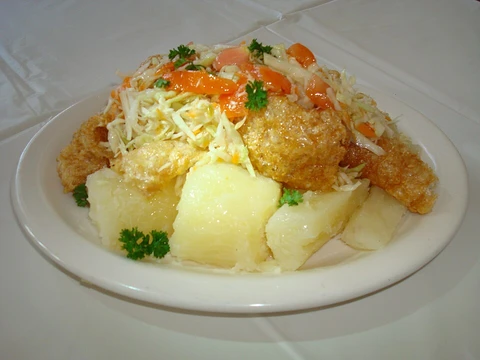
Vigorón is a plate of crispy fried pork belly (chicharrón), creamy mashed black beans, and ripe fried plantains, usually finished with a squeeze of lime and a drizzle of achiote-based sauce. It is the go-to midday grab from street vendors across Managua and smaller towns, prized for the contrast of crunchy, soft, and sweet on one plate.
What are the main regional variations in Nicaraguan food?
The Caribbean coast (Rivas, Bluefields) leans heavily on seafood, coconut-milk stews, and rice-and-beans bowls, while the Pacific side and highlands favor corn-based dishes, pork, and beef. The Lake Nicaragua region is particularly known for freshwater fish like tilapia and pejerrey, often served simply grilled with a salsa.
What does a typical Nicaraguan day of eating look like?
Breakfast often centers on gallo pinto with eggs, cheese, and strong coffee; the midday comida is the largest meal, featuring a protein, rice, beans, a salad, and a soup or stew. Late-afternoon snacking on picada items—small fried pastries, sweet breads, or fresh fruit—is a widely shared habit.
What is mote and how does it differ from other Nicaraguan soups?
Mote is a thick, porridge-like preparation made from hominy (dried corn kernels soaked and simmered down) with chicken, vegetables, and a touch of achiote. It is a cold-weather and winter staple, eaten with a spoon in a deep bowl, and is considered deeply comforting rather than a light broth.
What key spices and flavoring agents define the Nicaraguan palate?
Achiote (annatto) seeds ground into oil or paste give many dishes their signature orange-red color and earthy, slightly peppery note. Cumin, oregano, and garlic form the base of most savory preparations, while coastal kitchens add coconut milk and milder chiles like chile de agua for gentle heat.
Where should a newcomer start if they want to explore Nicaraguan cuisine?
Begin with the everyday staples—gallo pinto, a simple grilled chicken over rice and beans, and a plate of vigorón—to lock in the core flavor profile. From there, branch into a nacatamal for a festive dish, a bowl of mote for comfort food, and a Caribbean seafood stew to see the full breadth of the tradition.