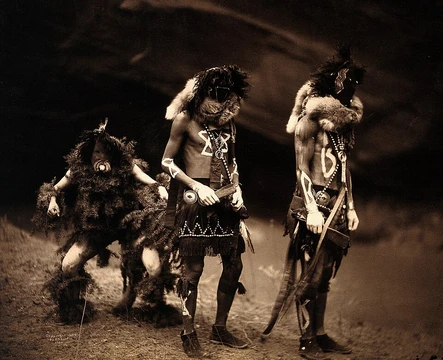
Hopi Kachina figure
Carved cottonwood root figures representing Hopi spirit beings.
Hopi kachina figures, also called kachina dolls or tithu, are carved wooden representations of katsinam, the immortal beings that bring rain and act as messengers between humans and the spirit world. They are traditionally made by Hopi people from cottonwood root and given to young girls and new brides as educational tools. These figures continue to be created for ceremonial use and are also produced as artworks for sale.
Quick Facts
- Primary material
- cottonwood root
- Hopi term for figures
- tithu or katsintithu
- Location of hopi people
- three mesas in northeastern Arizona, about 70 miles from Flagstaff
- Residence of katsinam
- Humphreys Peak, approximately 60 miles west of the Hopi Reservation
- Ceremonial period
- from winter solstice to mid-July
- Oldest known surviving figure
- 18th century
- Stylistic periods
- Early Traditional
- Late Traditional
- Early Action
- Late Action
Facts from the source article.
History and background
The Hopi people reside primarily on three mesas in northeastern Arizona, roughly 70 miles from Flagstaff. In Hopi cosmology, most katsinam dwell on Humphreys Peak, about 60 miles west of the Hopi Reservation. Each year from the winter solstice to mid-July, these spirits, manifesting as kachinas, descend to the villages to dance, sing, bring rain for the harvest, and give gifts to children. The katsinam are understood as spirits of deities, natural elements, animals, or deceased Hopi ancestors. Before each kachina ceremony, village men spend days carving figures resembling the katsinam featured in that ceremony. These figures are then given to the village daughters by the Giver Kachina during the ceremony. Afterward, the figures are hung on pueblo walls for study, helping children learn the characteristics of each kachina. Except for major ceremonial figures, most kachina figures originated in the late 19th century. The oldest known surviving figure dates to the 18th century and was a flat object with an indistinct shape suggesting a head and minimal body paint. Kachina figures are generally divided into four stylistic periods: Early Traditional, Late Traditional, Early Action, and Late Action.
Features
There are four generally accepted forms of kachina figures, each representing a different stage of postnatal development. Putsqatihu are flat figures made for infants, with enough characteristics to identify the kachina. Putstihu taywa’yla have flat bodies and three-dimensional faces, intended for toddlers. Muringputihu have cylindrical bodies and fully carved heads, made specifically for infant girls. Tithu are the traditional full-bodied figures given to Hopi girls aged two and up at ceremonies, representing the final postnatal stage. A modern variation, the miniature kachina figure, is mostly created by Hopi women, produced only for trade, and not always considered a true kachina figure. Kachina figures have two types of eyes: painted eyes (round, rectangular, pot-hooks, or half-moons) and pop eyes (carved from wood and attached). Mouths are either painted (rectangular, triangular, or crescent-shaped) or carved (horizontal with a wide or narrow beard, a turned-up or turned-down beak, a tube, or a short snout). Heads may feature bird wings, ears (typically large and red), cornhusk flowers, hair, feathers, horns (pseudo-horns or real animal horn), or beards of feathers or red-dyed horsehair. Noses are rarely realistic except when carved into the wood. Common male regalia includes a white kilt, brocaded sash, belt, fox skin, and no shirt; a white shirt and kilt; a kilt and ceremonial robe; a white man’s suit; velvet shirt, white trousers, red leggings; or a fox skin hanging from the belt. Common female regalia includes a ceremonial robe worn as a dress and a shawl; a manta; an eagle feather skirt; or a black woolen dress, red belt, and white shawl with red and blue bands.
Clowns
Clowns participate in Hopi celebrations and sacred rituals, serving dual functions. Their most prominent role is amusing the audience during outdoor celebrations and Kachina dances, performing as jesters or circus clowns while kachina dancers take breaks. Because of spectator acceptance of their humor, clown carvings have become a favorite figure for sale to tourists and collectors, with carvers finding a strong market for dolls depicting whimsical clown actions. Their second, more subtle role is in sacred Kachina rituals, which are relatively private and often kept secret by the Hopi, thus receiving less public exposure. The Koshare (or Tewa clown) and the Koyemsi (Mud-head) are two of the most popular clown doll types.
More in Native American Religion
Spotted an error? Know more?
Reader corrections go straight into our review queue. Suggest an edit · How this site is sourced