Cúc Phương National Park
Vietnam's first national park and a biodiversity stronghold.
Sitting in Ninh Bình Province within the Red River Delta, Cúc Phương holds the distinction of being Vietnam’s inaugural national park and its largest nature reserve. It stands as a crucial hub for the country’s biodiversity.
Quick Facts
- Established
- 1962
- Location
- Ninh Bình Province, Red River Delta, Vietnam
- Area
- Largest nature reserve in Vietnam
- Elevation range
- 150 m to 656 m / 2,152 ft
- Average temperature
- 21°C
- Average annual rainfall
- 2,100 mm / 6 ft 11 in
Facts from the source article.
History
Cúc Phương was designated a forest reserve in 1960, and President Ho Chi Minh consecrated it as a national park in 1962. Human presence in the area dates back 7,000–12,000 years, with artifacts such as stone axes and bone spears found in caves. In 1789, the Quen Voi section was a battle site during the civil war between Nguyễn Huệ and Thăng Long. Conflicts over poaching and land use led to the relocation of 500 Muong ethnic minority people from the park in 1987.
Landscape and climate
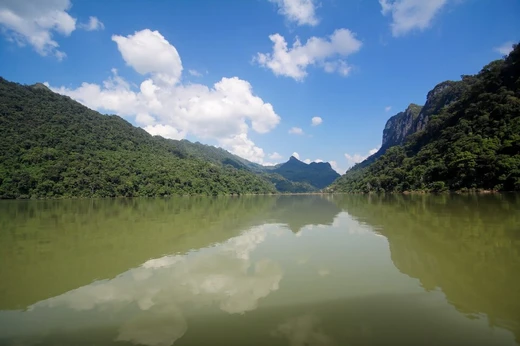
The park lies in the foothills of the northern Annamite Range, featuring karst mountains and valleys. Elevations range from 150 m to 656 m at May Bac Mountain. Limestone caves are numerous and many are open for exploration.
Flora and fauna
Cúc Phương hosts 97 mammal species, including endangered langurs; 300 bird species; 36 reptiles; 17 amphibians; 11 fish; 159 terrestrial mollusc taxa; 2,000 vascular plants; and thousands of insects. The park covers Northern Vietnam lowland rain forests and Northern Indochina subtropical forests. Primates include macaques, gibbons, François's leaf monkey, and slow loris. Other mammals include bats, porcupines, flying squirrels, and the rare black giant squirrel. Past inhabitants such as Asiatic black bears, elephants, and tigers have been lost to hunting; leopards and clouded leopards may remain. Birds include bar-backed partridge, silver pheasant, red junglefowl, hornbills, and migrant thrushes. An endemic cave fish subspecies and many invertebrates, including Zaxiphidiopsis bazyluki, are found here. Flora features a multi-layered canopy with trees up to 70 m tall, such as Tetrameles nudiflora and Carya sinensis, along with lianas, orchids, and ferns like Asplenium.
Conservation programs
Three conservation programs operate within the park. The primate center, established in 1993 with Frankfurt Zoological Society support, houses langurs, loris, and gibbons, including critically endangered Delacour's langur and black crested gibbon; it now holds 180 animals. The Carnivore and Pangolin Conservation Program (CPCP), founded in 1995 for the Owston's civet, expanded to cover all small carnivores and pangolins by 2006. It rescues and rehabilitates wildlife from the illegal trade, runs a conservation breeding program for the Owston's civet, and has field sites in Central and Southern Vietnam. The turtle conservation center, set up in 1998, shelters endangered turtles such as the nearly extinct Vietnamese pond turtle.
More in National Parks of Vietnam
Spotted an error? Know more?
Reader corrections go straight into our review queue. Suggest an edit · How this site is sourced