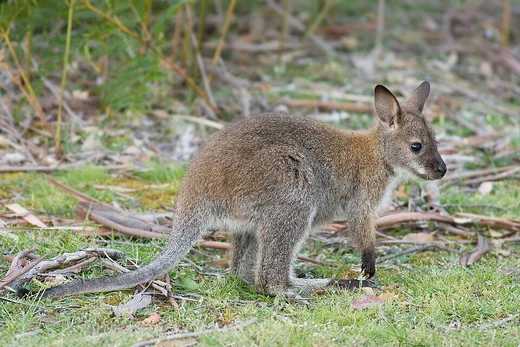
Cleland National Park
Protected bushland with wildlife park and scenic summit views.

via Wikipedia: Cleland National Park · see source
Cleland National Park, a protected area in South Australia’s Adelaide Hills, sits roughly 22 kilometres southeast of Adelaide’s city centre. It safeguards a large stretch of native bushland along the hills face, including Mount Lofty Summit and Waterfall Gully. Formerly Cleland Conservation Park, it was upgraded to a national park in November 2021 and is classified as an IUCN Category II protected area.
Quick Facts
- Location
- South Australia
- Established
- 1 January 1945
- Area (km²)
- 11.25
- Nearest city
- Adelaide city centre
Facts from the source article.
Geography
Cleland National Park, situated in the Adelaide Hills roughly 22 kilometres southeast of Adelaide’s centre, spans 1036 hectares. It ranks among the largest patches of native bush along the Mount Lofty Ranges hills face. Its landscape features creeks, steep gullies, stringybark forests, and woodlands. The park shelters some of the region’s last intact swamps and bogs. Waterfall Gully and Mount Lofty Summit sit within its boundaries, connected by a well-used walking trail.
History
Matthew Flinders sighted Mount Lofty on 27 March 1802. The first recorded European ascent was made in 1831 by Collet Barker, Kent, and Davis, who noted a tree with a girth of nearly 15 m. Road construction began in 1839 with Waterfall Gully Road, followed by Greenhill Road in 1858. Arthur Hardy used the land for sheep grazing in 1856 and built Mount Lofty House. Samuel Davenport later owned much of the area, establishing orchards and gardens and experimenting with tobacco, mulberry trees, and grapes. After 1903, the government declined an offer of 970 hectares from Davenport. By the 1930s, vegetation had been cleared for agriculture and housing, logging had removed much timber, and grazing had damaged understorey vegetation. The land was not purchased by the government until 1945. The park was established on 1 January 1945 and named after John Burton Cleland. It was declared the Cleland Wildlife Reserve in 1963 and proclaimed Cleland Conservation Park in 1978. On 26 November 2021, it was merged with Eurilla Conservation Park and designated Cleland National Park.
Flora and fauna
The park contains bogs, heathlands, forests, gullies, woodlands, grasslands, creeks, and waterfalls. Bogs host rare plants such as the king fern, coral fern, and naked sun orchid, and provide habitat for the endangered southern brown bandicoot. Heathlands support the endangered Mount Lofty Ranges chestnut-rumped heathwren. Forested gullies provide habitat for the vulnerable bassian thrush. Woodlands and grasslands support over 90 bird species, including the vulnerable yellow-tailed black cockatoo. Permanent creeks and waterfalls support the vulnerable mountain galaxias and Brown Toadlet. Threats include weeds, altered fire regimes, grazing pressure, and pest animals such as rabbits, foxes, feral cats, and deer.
Places of interest
Cleland Wildlife Park, a tourist attraction since 1967, is part of the shared boundary of the Kaurna and Peramangk people. It allows visitors to get close to native animals, with experiences such as being photographed holding a koala, interacting with reptiles, and joining guided walks. Animals that can be patted include red and western grey kangaroos and swamp wallabies. Other species present include Tasmanian devils, southern hairy-nosed wombats, western pygmy possums, bilbies, yellow-footed rock wallabies, dingoes, native birds, and reptiles. As of 2021, the park attracted approximately 100,000 tourists annually and is a member of the South Australian Tourism Hall of Fame. Mount Lofty summit is 727 m above sea level and provides sweeping vistas across the Adelaide Plains and Gulf St Vincent. Flinders Column, a white painted obelisk shaped like a lighthouse, is a landmark. Facilities include car parking, an information centre, a café, and public toilets. Waterfall Gully, on the park's western edge, features a waterfall accessible via a short walk from the car park, with a steep footpath continuing to Cleland Wildlife Park and Mount Lofty summit.
More in National Parks of South Australia
Spotted an error? Know more?
Reader corrections go straight into our review queue. Suggest an edit · How this site is sourced