Frequently Asked Questions
The most-asked questions about national parks of germany.
What exactly are the Nationalparks of Germany?
Germany's national parks are strictly protected wilderness areas where natural ecosystems are allowed to develop with minimal human interference. They represent the country's highest tier of nature protection, sitting above the more permissive Naturparks in the legal hierarchy.
How many national parks does Germany have?
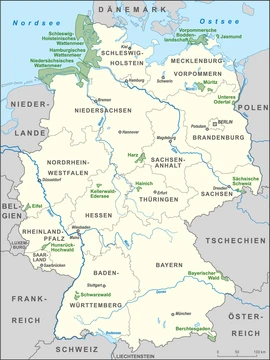
There are currently 16 national parks spread across the country. They range from coastal marshlands in the north to alpine terrain in the south and dense beech forests in the east.
Who is responsible for managing them?
Each park is overseen by its respective German state (Bundesland) through a dedicated national park administration office. The federal government sets overarching conservation law, but day-to-day trail maintenance, visitor services, and enforcement fall to the states.
Which is the oldest national park in Germany?
The Bayerischer Wald (Bavarian Forest) park, established in 1970, holds that title. It was created largely to protect old-growth beech forests that had been threatened by decades of intensive logging.
Where should a first-time visitor start?
The Saxon Switzerland (Sächsische Schweiz) park in the east is often recommended because its dramatic sandstone cliffs and well-marked trails make the landscape immediately striking. The Jasmund park on Rügen island is another accessible entry point, famous for the Königsstuhl chalk rock formation.
Do you need to pay an entry fee?
Most German national parks are free to enter, reflecting the principle that public wilderness should be accessible to everyone. A few locations charge small parking or shuttle-bus fees, but there is no general admission ticket.
What wildlife is most commonly spotted?
Depending on the park, visitors frequently encounter red deer, wild boar, and a wide variety of songbirds, while the alpine parks offer a chance to see marmots and ibex. The coastal parks are particularly notable for their rich seabird colonies, including gannets and oystercatchers.
How does a Nationalpark differ from a Naturpark?
A Nationalpark is a strictly protected zone where nature develops largely without human management, and activities like hunting or commercial forestry are banned. A Naturpark covers a much larger area and balances conservation with local agriculture, forestry, and tourism.
Are dogs and bicycles allowed?
Bicycles are generally permitted on designated trails but banned from sensitive wilderness zones, and dogs must be kept on a leash in most parks. Each park publishes its own specific rules, so checking the local administration's guidelines before a visit is wise.
What is the most iconic moment for fans of these parks?
Watching a full beech forest regenerate after decades of logging has ceased in the Bavarian Forest is often cited as the most powerful symbol of what these parks achieve. Equally memorable is the sight of the Königsstuhl chalk cliffs at sunset in Jasmund, which has become almost a national postcard image.