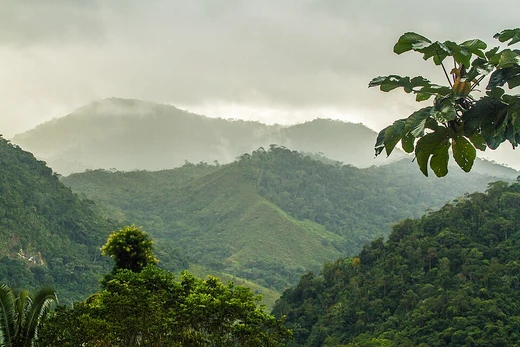
Aparados da Serra National Park
One of Brazil's first national parks, protecting dramatic canyons.
Aparados da Serra National Park is a protected area in the Serra Geral range of Rio Grande do Sul and Santa Catarina states in southern Brazil. Established in 1959, it was one of the country's first national parks, created to safeguard the Itaimbezinho canyon. The park covers 10,250 hectares and also includes the Fortaleza, Malacara, and Índios Coroado canyons.
Quick Facts
- Area
- 102.5 km² / 39.6 sq mi
- Established
- 1959
- Visitation num
- 38,000
- Visitation year
- 2002
- Governing body
- IBAMA
Facts from the source article.
Geology
The park's geology is dominated by volcanic rocks of the Paraná-Etendeka Large Igneous Province, grouped locally as the Serra Geral Group, which is divided into the Torres, Vale do Sol, Palmas, and Esmeralda formations. Sedimentary rocks of the Paraná Basin, including eolian sandstones of the Botucatu Formation, also occur. Geomorphologically, the park is a continental escarpment with an elevated plateau and deeply incised fluvial valleys. Erosion rates are low, ranging from 6 m/million years on the plateau to 50 m/million years in the escarpment.
Flora and fauna
Sitting where coastal forests, grasslands, and Araucaria moist forests meet, this small park packs in a wealth of wildlife thanks to its varied terrain. Scientists have recorded 143 bird species, 48 mammals, and 39 amphibians here. On the plateaus, look for endangered red-spectacled amazon parrots, maned wolves, and cougars. The slopes shelter neotropical otters, ocelots, and brown howling monkeys.
Conservation and threats
Originally 13,000 ha at creation in 1959, the park was reduced to 10,250 ha by a 1972 presidential decree. In 1992, the adjoining Serra Geral National Park was created, adding 17,300 ha, though Duke University's Center for Tropical Conservation considers the combined area still too small to protect representative samples of each distinct environment. The state holds title to only 67.5% of the land, with part of that occupied by farmers. Threats include cattle raising, use of fire to renew grasslands, banana plantations with pesticides, domestic animals, invasive flora, and poaching. A maximum of 1,500 visitors per day is allowed.
More in National Parks of Brazil
Spotted an error? Know more?
Reader corrections go straight into our review queue. Suggest an edit · How this site is sourced